Introduction
Your countertop wasn't built to be a parking lot for a toaster, stand mixer, coffee maker, and blender all at once. Yet that's exactly what happens in most kitchens.
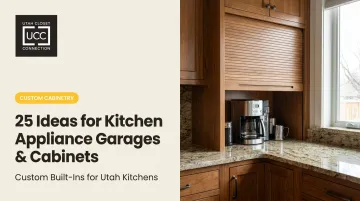
An appliance garage (a built-in cabinet that hides small appliances while keeping them plugged in and ready) has become one of the designer world's favorite fixes for this exact problem. It clears the counter without banishing your gadgets to a dusty pantry shelf.
This guide covers 25 practical ideas: door styles, placement strategies, and design details that make appliance garages work in real kitchens. We'll also answer the questions homeowners ask most — is it worth the cabinet space, and how deep should one actually be?
Key Takeaways
- Appliance garages hide small appliances behind cabinetry while keeping them plug-in ready
- Door mechanism choice (pocket, lift-up, tambour, sliding) depends on clearance, not just style
- Standard depth mirrors 24-inch base cabinets but should flex around your bulkiest appliance
- Licensed cabinet designers ensure correct sizing, outlet placement, and a seamless finish
What Is a Kitchen Appliance Garage—And Is It Worth It?
An appliance garage is a built-in compartment, usually tucked into a corner or under upper cabinets, designed with doors, lift mechanisms, or open shelving to store small appliances. The goal is storage that still lets you use the appliance without dragging it out every morning.
The payoff shows up in three places:
- Counter space: reclaims square footage currently occupied by countertop clutter
- Visual calm: a kitchen with fewer objects in sight reads as larger and more finished
- Resale appeal: clean counters matter to buyers, and 83% of buyers' agents say staging helps buyers picture themselves living in a home.
Are Appliance Garages Worth It?
Yes, for most households that own several daily-use small appliances or entertain often. Picture a family juggling a stand mixer, air fryer, and coffee maker every morning: the counter clutter piles up fast, and an appliance garage solves it in one move.
The trade-off: you're permanently dedicating cabinet or counter-adjacent space that could otherwise hold dishes or pantry goods. If your appliance collection is minimal, a simple pantry shelf might do the job just as well. Renters or households with just a toaster and coffee maker rarely need dedicated appliance storage.
Who Benefits Most from an Appliance Garage
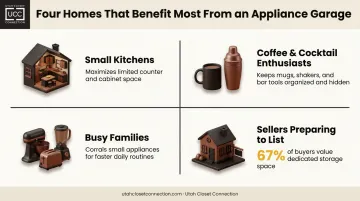
Some kitchens need one more than others:
- Small kitchens where every inch of counter matters
- Coffee and cocktail enthusiasts with multiple machines and accessories
- Families juggling blenders, air fryers, and waffle makers on rotation
- Sellers preparing to list: 67% of homeowners adding a butler's pantry now include small appliance storage, signaling rising buyer expectations.
Appliance Garage Door Style Ideas
The door mechanism you choose affects daily usability as much as looks. Here's how the main options break down.
Sliding & Pocket Door Styles
- Pocket doors slide sideways into the cabinet's side wall cavity, disappearing entirely for a minimalist look. Once open, you get full access.
- Sliding track doors move horizontally without swinging outward, a smart pick for narrow galley kitchens where a swing door would hit a walkway.
Lift & Roll Mechanisms
- Lift-up doors use spring-loaded or lift hinges that stay open hands-free, useful when multiple people are grabbing appliances during a busy morning.
- Tambour (roll-up) doors are made of slatted panels that roll up or sideways, letting you use the appliance right where it sits without removing it.
Classic & Display-Style Doors
- Flush cabinet doors match your existing cabinetry and sit level with the counter, best suited for smaller appliances you don't reach for every day.
- Glass panel doors show off a stylish espresso machine or stand mixer while keeping dust and splatter contained.
- Bi-fold doors fold flat against the interior walls when opened. They work best in larger kitchens with room for the fold-back swing.
Appliance Garage Placement & Layout Ideas
Where you place the garage matters just as much as the door style. These layouts solve specific space problems.
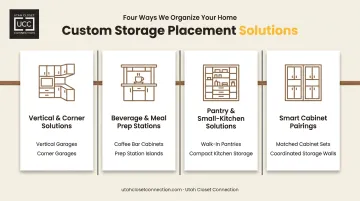
Vertical & Corner Solutions
- Vertical garages use the full height between counter and upper cabinets, ideal for tall stand mixers or stacked small appliances.
- Corner garages repurpose the dead corner space most kitchens waste, perfect for compact single-use gadgets.
- Stacked garages sit one atop another at the end of a cabinet run, doubling vertical storage in the same footprint.
Beverage & Meal Prep Stations
- Coffee stations house the machine, mugs, and filters behind one cabinet front, cutting the coffee-making footprint to a single door.
- Microwave niches fit tabletop microwaves precisely and sit at counter height, letting you pull out hot dishes safely.
- Double garages offer side-by-side compartments, so you can swap between two appliances mid-prep without shuffling anything.
Pantry & Small-Kitchen Solutions
- Pantry-integrated garages build appliance storage directly into existing tall pantry cabinetry.
- Multi-tiered garages dedicate an entire pantry section to a larger appliance collection, keeping bulky items like stand mixers and food processors together.
- Compact under-cabinet niches solve small-kitchen storage without eating into cabinet runs elsewhere.
- Open garages (no doors, just a dedicated shelf) suit homeowners who like displaying attractive appliances rather than hiding them.
Smart Cabinet Pairings
- Garage-over-drawer combos pair the appliance garage with drawer-base cabinets below for a combined appliance-and-utensil zone.
- Sink-adjacent garages work well for water-dependent appliances like blenders, keeping them near the tap.
- Refrigerator-adjacent garages sit beside a panel-ready fridge for a matched, built-in look across the whole wall.
Design Essentials: Depth, Lighting, Outlets & Heat Safety
Getting the ideas right matters less if the underlying build isn't sound. Four details separate a garage that works from one that becomes a junk drawer.
Depth. Most appliance garages match the standard 24-inch base cabinet depth recommended by the NKBA's kitchen planning guidelines. But that number is a starting point, not a rule — depth should be customized around your tallest or bulkiest appliance, especially stand mixers with attachments.
Lighting. Built-in LED strips or battery-powered puck lights keep the interior visible once the door closes and appliances are tucked out of direct sightline. Without it, you're fumbling for buttons in shadow.
Outlets. Plan for a dedicated receptacle inside or adjacent to the garage. A few electrical code notes worth knowing before your cabinet drawings are finalized:
- Outlets inside an appliance garage must have GFCI protection
- They don't count toward the required number of general countertop outlets
- Outlet placement should be finalized with an electrician before cabinetry is built, not after
Heat and steam safety. This one gets overlooked constantly. Many toaster ovens and air fryers explicitly warn against enclosed use, so check clearance specs before boxing one in.
- Custom depth planning based on your specific appliance lineup, not a generic template.
- Built-in lighting for visibility once the door is shut.
- Dedicated outlets installed inside or near the garage.
- Heat-safe clearance for appliances that generate warmth during use.
- Roll-out shelving that lets heat-producing appliances run in place without a full pull-out.
Planning Checklist Before You Add an Appliance Garage
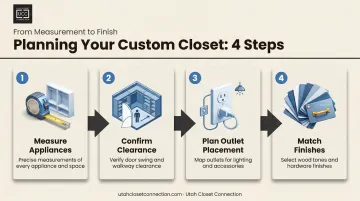
Before any cabinet drawing gets finalized, work through this list:
- Measure every appliance going into the garage: height, width, depth, and weight, including handles and cords.
- Confirm clearance for door swing, lift arcs, or pull-out shelving so daily access stays convenient, not awkward.
- Plan outlet placement with an electrician before installation, not as an afterthought.
- Match finishes to existing cabinetry so the garage reads as built-in, not bolted-on.
A licensed cabinet designer catches the details a generic template misses — outlet coordination, weight-bearing shelving, and a finish that actually matches your existing kitchen. Utah Closet Connection, for instance, offers a free design consultation and backs every installation with a lifetime workmanship warranty. That combination of consultation and warranty coverage is worth looking for in any installer you hire for a custom kitchen project.
Frequently Asked Questions
Are appliance garage cabinets worth it?
They're worth it for kitchens with several daily-use small appliances or frequent entertaining. The main trade-off is dedicating permanent cabinet space you could otherwise use for dishes or dry goods.
What depth should an appliance garage cabinet be?
Depth typically matches standard 24-inch base cabinets, but it should be customized to whatever appliance is largest or tallest in your lineup.
What is the best door type for an appliance garage?
Pocket doors offer the cleanest, fully hidden look. Lift-up, tambour, and sliding doors all work well depending on available clearance and kitchen layout.
Can you put a microwave in an appliance garage?
Yes, provided you plan for proper ventilation, a nearby outlet, and counter-level placement so hot dishes come out safely.
Do appliance garages need electrical outlets?
Most need at least one dedicated outlet. Plan this with an electrician before cabinet installation, since GFCI protection is required inside the garage.
Are appliance garages good for small kitchens?
Yes. Vertical, corner, and sliding-door garages are especially effective at reclaiming counter space without adding to the kitchen's footprint.