
Introduction
You know the feeling. You sit down to start work and spend the first ten minutes hunting for a pen, a sticky note, or last week's invoice. By the time you find it, your focus is already gone.
It's not just annoying — research from DePaul University found that office clutter predicted emotional exhaustion in 16% of variance and perceived stress in 17% among office workers. Disorganization carries a real cost, even if it's harder to measure than lost pens.
This guide covers 21 practical office supply storage ideas organized by zone: desk-level, wall and vertical, cabinet and closed storage, and creative hacks. Whether you manage a corporate office in Salt Lake City or run a busy commercial workspace anywhere in Utah, each idea is designed to reduce friction and keep your team working — not searching.
Key Takeaways
- Assign every supply a designated home — ambiguity is the root cause of clutter.
- Vertical and wall-mounted storage recovers floor space without adding furniture.
- Closed storage reduces visual noise; open storage keeps daily-use items reachable.
- Labeling turns any storage system into one the whole team can maintain.
- Custom built-ins solve the gaps that off-the-shelf products can't — especially in high-volume or irregular spaces.
Desk-Level Office Supply Storage Ideas (Ideas 1–7)
Your desk is the highest-traffic zone in the office. OSHA's ergonomics guidance recommends keeping frequently accessed items within easy reach — roughly elbow distance — and placing occasional-use items at nearly full-arm reach. That principle is the backbone of every idea in this section.
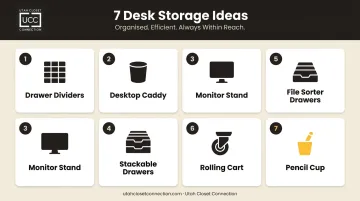
Idea 1: Drawer Dividers
Modular drawer dividers outperform pre-slotted organizers because they adapt to what you actually own. Clear, straight-sided bins let you configure compartments around your supply inventory rather than forcing your supplies into preset slots. Start by grouping by category — writing tools, fasteners, correction supplies, adhesives — then size each bin accordingly.
Idea 2: Desktop Organizer Caddy
A multi-compartment caddy groups pens, scissors, tape, and small tools into one accessible station. The payoff is behavioral: instead of spreading loose items across the desk surface, you return things to a single spot. Look for caddies with at least four compartments. Fewer than that and you'll be back to overcrowding within a week.
Idea 3: Monitor Stand with Built-In Storage
A monitor stand solves two problems at once. It raises your screen to a more ergonomic height — OSHA recommends positioning the monitor's top line at or below eye level — while creating a shelf or drawer underneath for frequently grabbed items like sticky notes and charging cables. No separate riser needed, and no desk real estate lost.
Idea 4: Stackable Desktop Drawer System
Stackable drawer units offer categorized paper and supply storage directly on or beside the desk, without the bulk of a traditional file cabinet. Choosing units in a single finish — matte white, charcoal, natural wood — cuts visual clutter compared to mismatched containers. The difference is more noticeable than most people expect.
Idea 5: Desktop File Sorter / Inbox-Outbox Tray
Paper piles accumulate when there's no physical decision point. A vertical file sorter or horizontal tray system creates that point by assigning locations for incoming paperwork, active files, and completed items.
When every document has a designated tray, "where did I put that?" stops being a daily time sink.
Idea 6: Under-Desk Rolling Storage Cart
A rolling cart slides out when you need it and disappears underneath the desk when you don't. This works particularly well for intermittently used supplies that don't need permanent desk real estate:
- Shipping materials and packaging tape
- Backup printer cartridges
- Reference binders and archived files
- Spare tech accessories (cables, adapters, batteries)
Idea 7: Pencil Cups with Compartments
A single open cup turns into a jumbled mess within a week. Multi-section pencil holders keep pens, markers, highlighters, and small instruments separated and upright. Match the finish to your other desk accessories and the whole setup looks intentional — for minimal cost.
Wall and Vertical Storage Solutions (Ideas 8–14)
Walls are the most underused storage surface in most offices. Vertical solutions free up floor space and desk surface simultaneously — particularly valuable in smaller offices or home workspaces where square footage is limited.
Idea 8: Floating Shelves
Floating shelves with concealed brackets create a clean, minimal look above desk height. Use lower shelves for binders and reference books; reserve upper shelves for decorative storage boxes or less frequently accessed materials. The tiered approach keeps frequently accessed items within reach.
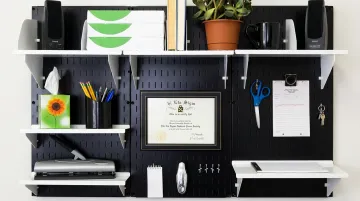
Idea 9: Pegboard Wall Organizer
For workspaces where supply needs shift often, pegboards are hard to beat. Interchangeable hooks, cups, shelves, and holders rearrange without tools — making them especially practical for creative professionals or anyone whose daily toolkit evolves. Common pegboard add-ons include:
- Hooks for scissors, headsets, and cord management
- Small cups for pens, markers, and sticky note pads
- Flat shelves for notebooks or a small planter
- Mesh pouches for loose tech accessories
Idea 10: Wall-Mounted File Organizers
Wall-mounted magazine files or vertical paper organizers positioned beside the desk keep active paperwork within arm's reach without occupying desk surface. Pair them with a labeling system — project name, client, or document type — for quick identification.
Idea 11: Hanging Wall Pockets and Pouches
Fabric or acrylic wall pockets handle the small, loose items that tend to scatter: sticky notes, notecards, envelopes, small tech accessories. Multi-pocket vertical organizers consolidate these into a single visible location and work well next to a desk or beside a printer station.
Idea 12: Over-the-Door Organizer
The back of an office door is typically wasted space. Over-the-door caddies — repurposed from shoe or bathroom organizers — provide clean, hidden storage for supplies that need to be accessible but kept out of sight. They're particularly effective in shared offices where desk surfaces need to stay clear.
Idea 13: Cubby or Cube Unit Shelving
Open cube shelving works as a mid-room divider or wall-adjacent solution. Alternate open cubbies (for display items or frequently accessed supplies) with closed bins (for supply storage) to balance function and appearance. The mix prevents the visual chaos of fully open shelving while keeping essentials visible.
Idea 14: Floor-to-Ceiling Built-In Shelving
Running shelving from floor to ceiling maximizes storage capacity in a dedicated office room. Matching containers and color-coordinated organization on built-in shelves create a professional appearance that open-box shelving rarely achieves. This is the logical bridge between off-the-shelf solutions and fully custom built-ins — and when storage needs are complex, professionally designed and installed cabinetry, like the home office systems offered by Utah Closet Connection, ensures the space is built to your exact workflow rather than adapted from a generic template.
Cabinet and Closed Storage Ideas (Ideas 15–18)
Closed storage reduces visual clutter — and that matters more than it might seem. The DePaul University study linking office clutter to reported stress and emotional exhaustion points toward a simple practical response: hide what you don't need to see. These four ideas use cabinetry and enclosed systems to do exactly that.
Idea 15: Flanking Storage Cabinets Around the Desk
Placing closed cabinets on either side of a desk creates a built-in look without full custom construction. Organize supplies by type inside labeled baskets or bins within the cabinets, so everything remains accessible behind closed doors. This configuration works especially well when the office doubles as a living or guest room.
Idea 16: Handled Baskets and Bins Inside Cabinets
Handled bins make shelves inside cabinets easy to navigate, letting you retrieve grouped supplies — shipping materials, stationery, tech accessories — without rummaging. Bins with interior dividers add a second layer of categorization without requiring additional shelves.
Idea 17: Concealed Cabinet-Desk (Murphy Desk)
A fold-out or pocket-door desk is the most space-efficient option for offices that share space with another room. When closed, the unit looks like a standard cabinet. When open, it functions as a complete workspace.
Idea 18: A Consistent Labeling System
Labels transform cabinets and drawers from ambiguous catchalls into defined storage zones. A handheld label maker or printed label set takes less than an hour to apply across an entire office.
The payoff is immediate in shared workspaces: anyone using the space knows exactly where to find and return supplies, keeping the system intact across multiple users.
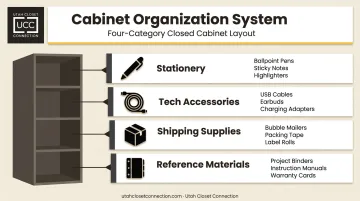
A consistent labeling approach works best when paired with grouped storage. Consider organizing by category:
- Stationery (pens, markers, notepads)
- Tech accessories (cables, adapters, batteries)
- Shipping supplies (tape, labels, envelopes)
- Reference materials (binders, manuals, forms)
Creative, DIY, and Tech Storage Hacks (Ideas 19–21)
Effective storage doesn't always require new furniture. These three ideas use repurposing and practical organization to close gaps that standard products miss.
Idea 19: Repurposed Household Items
Everyday objects work surprisingly well in an office context:
- Mason jars hold pens, scissors, and markers upright on a shelf
- Muffin tins line desk drawers as instant dividers for paper clips, tacks, and erasers
- Old dresser drawers become desktop organizers or under-desk supply bins
Before using any repurposed container, check for sharp edges and clean thoroughly. A quick inspection before placing items in use takes less than a minute and avoids preventable injuries.
Idea 20: Cable and Cord Management
Loose cords are more than an aesthetic problem. OSHA identifies cords in office walking areas as a common tripping hazard. A basic cord management approach eliminates that risk:
- Velcro cable ties to bundle cords by device
- Labeled cable flags to identify each cord without unplugging
- A dedicated cable box or drawer to consolidate power strips and adapters
Labeling each cord by device type saves time when you're reconfiguring a workstation.
Idea 21: Portable and Mobile Storage Cart
A wheeled cart works well for people who move through their workspace throughout the day, and it's equally practical in shared offices where supplies need to travel between workstations or conference rooms. Keep these guidelines in mind:
- Stock it with daily-use items only — leave bulk supplies in a cabinet
- Assign the cart a designated parking spot so it's always where you expect it
- Label each tier or bin so anyone in the office can find and return items quickly
When to Go Custom: Built-In Office Storage Solutions
Off-the-shelf products solve most organizational challenges — but not all of them. Workspaces with high supply volume, unconventional room layouts, or specific commercial requirements tend to hit the limits of standard furniture quickly. Shelves that are two inches too short, cabinets that don't reach an angled ceiling, drawer units that crowd a narrow wall — these are signs that a custom solution would serve better.
What separates custom built-in storage from generic options:
- Fits your room's exact dimensions, not an approximation of them
- Configured with the specific drawer depths, shelf heights, and file storage your workflow requires
- Built with premium woods, laminates, and hardware chosen for durability and appearance
- Installed level and secured — no shimming, no workarounds
- Backed by workmanship warranties, not just manufacturer defect policies
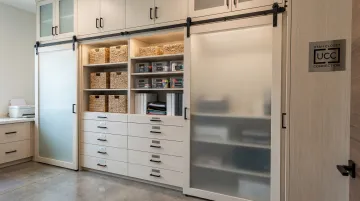
For businesses in Salt Lake County and surrounding areas, Utah Closet Connection offers a free commercial design consultation and a lifetime workmanship warranty on all installations. Their team serves corporate offices, retail environments, and growing businesses across Salt Lake, Utah, Summit, Davis, and Weber Counties.
Estimates are typically delivered within one to two weeks of the initial consultation — a practical first step if you're weighing a permanent organizational upgrade.
Frequently Asked Questions
What is the best way to organize office supplies?
Categorize supplies by frequency of use — daily items within arm's reach, occasional items further away. Assign each category a dedicated storage zone (desk, cabinet, wall), and use consistent containers or labels to maintain the system. A well-labeled system means anyone in the office can find and return items without guessing.
How do I maximize storage in a small office?
Vertical storage is your best tool: floating shelves, pegboards, and floor-to-ceiling shelving recover wall space without adding floor furniture. Pair these with dual-function pieces like a monitor stand with a drawer or a storage ottoman to get more from every square foot.
What is the difference between open and closed office storage?
Open storage (shelves, cubbies) keeps items visible and immediately accessible, but requires consistent tidiness to avoid looking chaotic. Closed storage (cabinets, drawers) hides clutter for a cleaner appearance and works best for supplies you don't reach for every day.
How do I organize office supplies without desk drawers?
Wall-mounted options — pegboards, floating shelves, and hanging wall pockets — effectively replace drawer storage. A desktop organizer caddy and a rolling under-desk cart fill any remaining gaps at surface level.
When should I invest in custom office storage instead of off-the-shelf products?
Custom storage is worth it when standard products don't fit your dimensions, your supply volume outpaces retail furniture, or you need a permanent solution for a commercial space. If you're cobbling together multiple products to approximate a system, a professional built-in consultation is likely the more efficient path.