Sound familiar? For most families, the mudroom is ground zero for household clutter. Without a system in place, that mess doesn't stay contained. It creeps into hallways, kitchens, and living rooms, turning your whole entryway into a daily source of stress.
This guide breaks down mudroom storage zone by zone, with space-saving strategies for small entryways, family-friendly organization systems, and custom cabinetry options built for Utah homes.
Key Takeaways
- Pair open hooks and cubbies for daily use with closed cabinets for seasonal gear
- Assign labeled zones per family member to eliminate morning searching
- Vertical storage and floating benches make even the smallest mudroom functional
- Custom cabinetry adapts to awkward layouts that off-the-shelf furniture can't handle
Why a Well-Organized Mudroom Matters
Think of your mudroom as a buffer zone. It's the space that's supposed to catch dirt, moisture, and clutter before any of it reaches your living room. When that buffer fails, everything else absorbs the overflow.
That failure has a real cost, measured in time, mood, and even resale value:
- The average American spends 2.5 days every year searching for misplaced items like keys, shoes, and wallets, many of which live in the entryway, according to a 2017 survey by Pixie Technology.
- Cluttered, stressful home environments are linked to worse mood patterns throughout the day, especially for whoever manages the household.
- NAR's 2025 Profile of Home Staging found that 91% of agents recommend decluttering before listing, and 83% of buyers' agents say staging helps buyers picture themselves living in a home.

A good storage system reclaims that lost time in seconds.
First impressions start at the front door. A mudroom that looks like a storage unit explosion doesn't help anyone picture their future in a home, or find their keys on the way out.
Essential Mudroom Storage Solutions for Every Zone
The fix is the right storage, organized by function, not simply more of it. Breaking your mudroom into zones means every item, from muddy boots to loose mail, has one designated home.
Here's how to tackle the four zones that matter most.
Shoe Storage Solutions
Shoe pile-up is the number one mudroom complaint, and for good reason. Between school shoes, work shoes, and whatever gets worn to the gym, footwear multiplies fast.
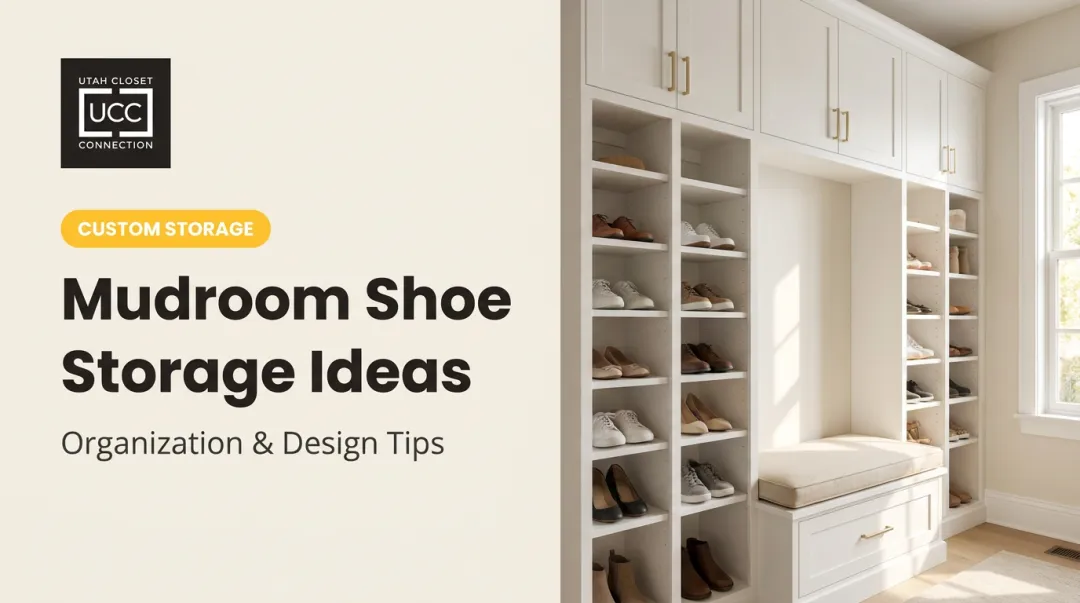
Cubbies or slanted shelving work well for daily wear since they keep pairs visible and grab-and-go accessible. For households that prefer things hidden, closed cabinets do the trick, especially for muddy boots you don't want on display.
Consider these options based on your household's habits:
- Open cubbies: Fast access, easy for kids to use independently
- Closed cabinets: Hide clutter, keep the space looking tidy
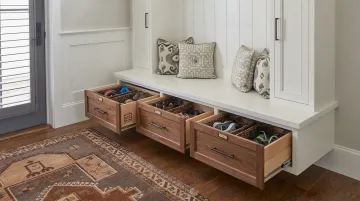
- Pull-out trays or drawers: Ideal for wet, muddy footwear, with surfaces that wipe clean in seconds
Bench & Seating with Hidden Storage
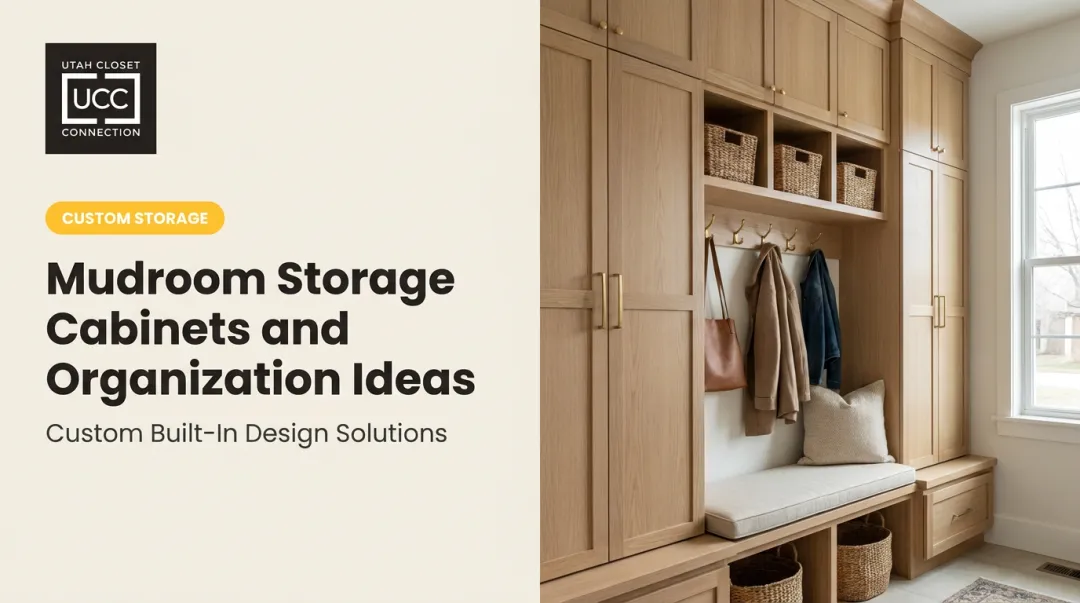
A bench does double duty: somewhere to sit while pulling on boots, and storage underneath for whatever doesn't need to live in a closet.
Built-in seating benchmarks from Better Homes & Gardens put a comfortable standard seat height and depth around 18 inches, a solid reference point for most family mudrooms. Custom-built benches, like the ones Utah Closet Connection designs, let you match that sizing to your exact entryway instead of settling for a stock unit.
Under-bench storage generally falls into a few categories:
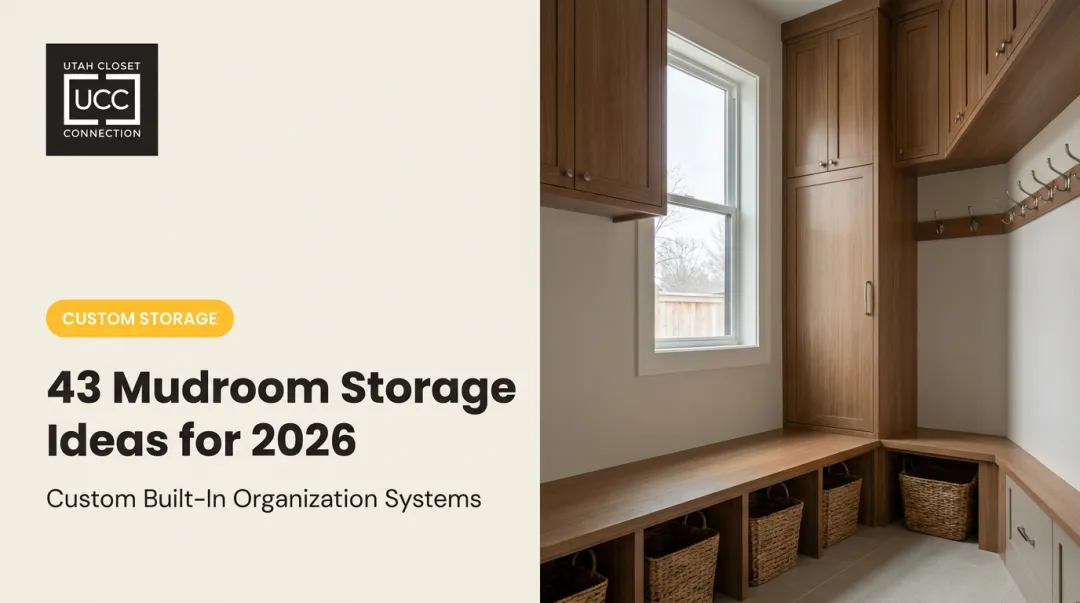
- Open shelves – budget-friendly and quick to access, though everything stays visible
- Drawers – concealed and tidy, typically the priciest option
- Baskets – flexible and textured, but offer less protection for delicate items
- Cubby inserts – modular slots that mix bins, baskets, and loose items in one frame
For smaller entryways, a floating bench frees up floor space and makes cleaning underneath far easier. No legs to sweep around, no dust bunnies collecting in corners.
Coat Storage: Hooks, Closets & Closed Cabinets
Coats need two things: quick daily access and a place for the bulky stuff that only comes out twice a year.
- Mix hooks at varying heights so both adults and kids can hang their own gear
- Reserve a tall cabinet or closet for seasonal coats that don't need daily access
- If you have an existing closet near the entry, consider converting it into a mini mudroom with cubbies, shelving, and a compact bench
Adjustable shelving is worth the extra thought here. It lets you rotate heavy winter coats out in spring and swap in lighter jackets, without redesigning the whole space every season.
Command Center: Keys, Mail & Charging Station
This is the zone that saves you from the classic "has anyone seen my keys?" scramble every single morning.
- A dedicated drawer, shelf, or wall hook near the door for keys, every time, no exceptions
- A small mail sorter or drawer for incoming bills, paired with a bulletin board or chalkboard for family schedules
- A built-in charging drawer to keep phones and tablets powered up and out of sight
Small additions like these turn a chaotic drop zone into something that actually runs itself.
Small Mudroom Storage Ideas to Maximize Every Inch
Not every home has room for a sprawling entryway, and that's fine. Small mudrooms can still work hard if you think vertically instead of horizontally.
- Floor-to-ceiling cabinetry captures overhead space for seasonal or rarely used items
- Slim, shallow-depth wall cabinets fit narrow hallways without blocking foot traffic
- Multi-functional built-ins, such as floating benches, built-in shoe cubbies, or a single wall-mounted drop-zone shelf, pack function into a tight footprint
Don't overlook the awkward spots either. Under-stairs nooks, dead corners, or wall space beneath a window are prime real estate for custom-built storage that a standard furniture piece could never fit.
One more trick: light, reflective cabinet finishes or a well-placed mirror can make a cramped mudroom feel noticeably brighter and more open, even without adding a single square foot.
Building a Family-Friendly Organization System
The best mudroom system is one your whole family actually uses, kids included.
Assign zones by person. Give each family member their own labeled cubbie or hook section so nobody has to dig through a shared pile to find their backpack. This alone cuts down on morning arguments more than you'd expect.
For younger kids, keep things at their level:
- Install low hooks they can reach without help
- Add kid-height shelving for shoes and bags
- Use simple, visual labels (pictures work great for pre-readers)
Seasonal rotation matters too. Combine everyday open storage with closed bins for off-season gear (think winter boots swapped for sandals each summer). This keeps the space from feeling overstuffed while giving every item, and every family member, a permanent home. A custom-built system, like those from Utah Closet Connection, makes this kind of family-specific layout possible without sacrificing style.
Choosing Custom Mudroom Cabinetry: Materials & Design Options
Off-the-shelf furniture assumes every entryway is a standard rectangle. Most aren't. Odd angles, low ceilings, narrow hallways—these are exactly where custom-built cabinetry earns its keep, because every inch gets designed around your actual space instead of a generic template.
Material choice matters more in a mudroom than almost anywhere else in the house. Between wet boots, road salt, and daily foot traffic, entryway storage takes a beating. Look for:
- Moisture-resistant surfaces that hold up to tracked-in snow and rain
- Durable hardware built for constant daily use, not occasional opening
- Finishes that resist scuffing and scratching over years of use
This is where Utah Closet Connection comes in for homeowners across the Salt Lake area. Since 1983, the team has designed custom entryway storage for households throughout Salt Lake, Utah, Summit, Davis, and Weber counties. Every cubbie, bench, and cabinet gets tailored to the specific space rather than forced into a standard size.
The design process follows a few straightforward steps:
- Free design consultation: a designer walks through your entryway, takes measurements, and asks how your household actually uses the space
- Licensed installation: contractors handle the build-out, backed by a lifetime workmanship warranty on every project
- Fast turnaround: estimates typically come together within one to two weeks, so you're not stuck waiting months for a plan

Frequently Asked Questions
What is the best way to organize a small mudroom?
Focus on vertical storage, slim-depth cabinets, and multi-functional furniture like floating benches. These choices maximize limited square footage without cluttering the floor or blocking foot traffic.
How deep should a mudroom bench be?
An 18-inch depth is a widely used benchmark for comfortable built-in seating. Some designs run shallower or deeper depending on available space and how the bench will be used.
What should be stored in a mudroom?
Shoes, coats, bags, keys, mail, and seasonal gear are the essentials. Keep only frequently used items in the space and store the rest elsewhere to avoid overcrowding.
Is it worth investing in custom mudroom cabinets?
Custom cabinetry outperforms generic storage furniture in long-term organization and durability, since it's built to fit your exact space, daily habits, and household wear.
Can a mudroom double as a laundry room?
Yes, combining the two works well with ceiling-height cabinetry, closed storage for supplies, and a bench positioned near the entry. The key is keeping laundry gear separate from daily drop-zone items.
What is the best flooring for a mudroom?
Durable, moisture-resistant options like porcelain tile or vinyl hold up best against tracked-in dirt and snow. Pairing either with a washable rug near the entry adds extra protection.