
This guide covers 45 corner shelf ideas organized by room and style, plus practical advice on choosing the right type, styling it well, and knowing when a custom solution makes more sense than a store-bought one.
Key Takeaways
- Corner shelves convert overlooked wall space into functional storage or a curated display area
- The best choice depends on the room's purpose, available wall depth, and your dominant design style
- Floating shelves offer the most versatility, built-ins deliver the most visual impact, and freestanding units require zero installation
- Good styling means layering heights, mixing textures, and leaving space between objects — not filling every inch
- Custom corner solutions — built-in nooks, closet systems, whole-wall storage — benefit from a professional design consultation
Corner Shelf Ideas for the Living Room
The living room is where corner shelving makes the biggest visual statement. Done right, a corner shelf here works simultaneously as a focal point and a storage workhorse — style and function work together rather than against each other.
Floating Shelves in the Corner
Idea 1 — Minimalist coastal floating shelves: Three stacked wooden shelves against white walls, each holding a single statement piece. One object per shelf keeps the arrangement feeling deliberate rather than accidental — limit yourself to three items total when starting out.
Idea 2 — Asymmetrical floating shelves over a sofa: A trio of long, thin black shelves extending at different lengths across each adjacent wall. Asymmetry adds energy without disorder, which makes this well-suited to contemporary interiors.
Idea 3 — Color-blocked corner wall with triangular shelf: Paint the corner wall in a contrasting tone — dusty rose, sage, or charcoal — so the shelf reads as intentional art rather than an add-on. The color does the framing work.
Statement and Built-In Corner Shelves
Idea 4 — Zig-zag corner shelf: A customizable design running across both adjacent walls with alternating shelf levels. Ideal for trailing plants and smaller accent pieces; solves large, bare corners that nothing else seems to fill.
Idea 5 — Corner shelf with integrated lighting: Overhead LEDs or recessed lighting built into each cubby of a corner unit create a warm, gallery-like glow. For ambient shelf displays, a color temperature around 2700–3000K (as ENERGY STAR classifies for warmer, yellower light) produces a relaxed, inviting effect.
Idea 6 — Matte-black unit with layered lighting: A clean-lined black shelf paired with a warm-toned wicker lamp nearby. Layering light sources around corner shelving reduces harsh shadows and makes the whole corner feel considered.
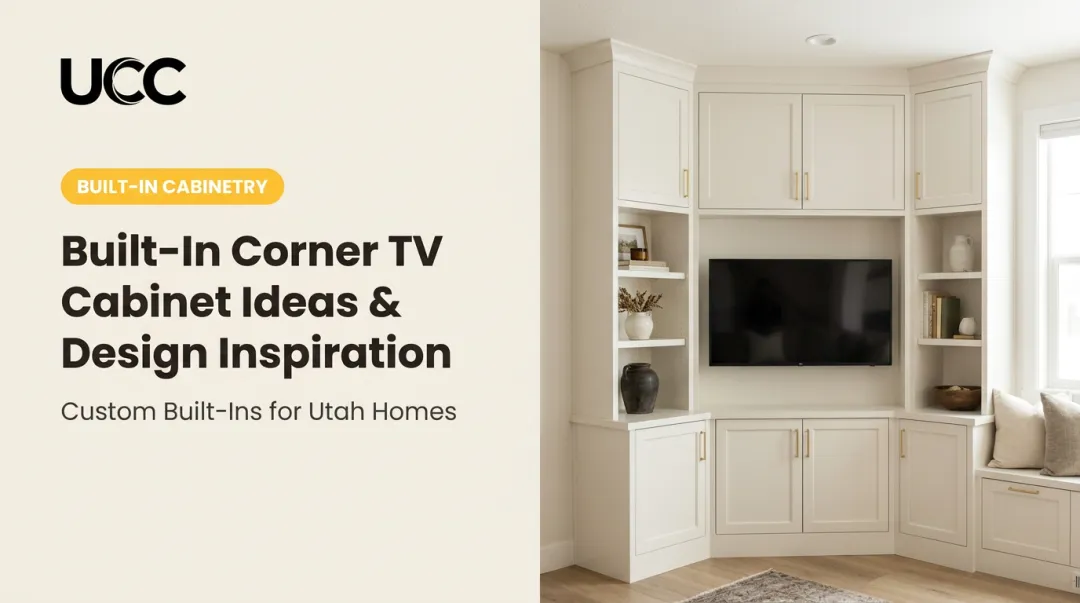
Idea 7 — Floor-to-ceiling corner bookcase: When you have both height and wall space, extending shelves from floor to ceiling on both walls creates a built-in library effect. Add a small chair at the center and you have a reading nook that didn't cost you any floor plan.
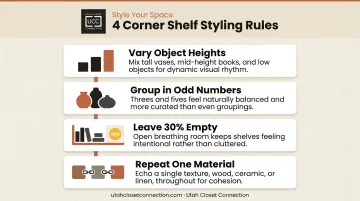
A few things that consistently elevate built-in corner shelves from functional to finished:
- Vary object heights — mix tall vases with low bowls to avoid a flat horizon line
- Group items in odd numbers (3 or 5), not even pairs
- Leave at least 30% of shelf surface empty to prevent a cluttered look
- Use one repeated material (wood, ceramic, glass) to tie mixed objects together
Idea 8 — Marble corner shelf: White stone with gray veining reads as elegant even in a minimal arrangement. Pair with pillar candles, tonal books, and one plant — the material carries most of the weight.
Idea 9 — Criss-cross wooden corner shelf: A custom design that widens toward the base, retaining natural wood grain and providing snug cubbies for decorative objects that would look lost on an open shelf.
Idea 10 — Tonal blending shelf: Match the shelf color to the wall tone for an almost architectural effect — the shelf "disappears" into the composition and lets the objects float visually.
Idea 11 — Pastel asymmetrical corner shelf: Staggered shelves in soft yellow or blue tones with generous white space between items. Aim for roughly one-third empty shelf space to keep the arrangement from reading as cluttered.
Idea 12 — Neutral geometric corner unit: Boxy metal-and-wood cubbies stacked vertically, softened with pampas grass and sculptural vases. The contrast between hard geometry and soft organic textures is what makes this combination work.
Corner Shelf Ideas for the Kitchen and Bathroom
Kitchens and bathrooms benefit from corner shelving more than almost any other room. Both are storage-starved and high-traffic, and both tend to have awkward dead zones between cabinetry or fixtures that standard storage completely ignores.
Kitchen Corner Shelves
Idea 13 — Custom floating kitchen corner shelf: A deep brown shelf tucked between two wall-mounted shelves for symmetry — cookbooks, glassware, and ceramics arranged on each. Matching the shelf tone to existing cabinetry creates cohesion rather than a "we added this later" look.
Idea 14 — Staggered dark-wood kitchen corner shelf: Shelves of slightly different lengths that terminate flush with adjacent cabinetry, creating the illusion of a purposeful built-in.
Idea 15 — Wall-to-wall kitchen nook shelving: White slats stretching fully from one wall surface to the other — pots, glassware, cookbooks, and everyday essentials all visible and accessible. Works best in kitchens with an actual architectural nook or alcove.
Idea 16 — Tonal gray kitchen floating shelf: Short shelves in a muted tone matching monochromatic walls. Blending in can feel more intentional than contrasting.
Idea 17 — Simple rounded floating shelf: A low-key, rounded-front wooden shelf with plenty of surface area — spices, measuring cups, small appliances. Ideal for tight kitchen corners where you need function without visual noise.
Bathrooms present their own corner shelf challenges — moisture, limited floor space, and the need to keep products accessible without looking cluttered. These ideas handle all three.
Bathroom Corner Shelves
Idea 18 — Slim brass-frame bathroom corner shelf: A curved triangular unit with a metallic sheen that complements fixtures and toiletries. Particularly effective in smaller bathrooms where floor space is limited.
Idea 19 — Glass and stainless steel tall corner shelf: Wide cubbies on glass bases supported by stainless cylinders. Stainless steel resists corrosion without rusting from water exposure alone, making it a practical bathroom material.
Idea 20 — Floating shelves wrapped around a structural beam: Turns an architectural obstacle into a feature. Shelves wrapped around a corner post or beam create a built-in look without a single structural modification.
Idea 21 — Tiled corner shelf with decorative backsplash: An octagonal tile background behind a mahogany-toned shelf adds texture and visual weight — ideal for bathrooms already featuring patterned tile where a plain shelf would look underdressed.
Idea 22 — DIY budget corner shelf: Dollar Tree-sourced materials assembled in a farmhouse style — gingham patterns, tweed texture, classic motifs on a simple black base — show that a tight budget doesn't mean skipping on character.
Corner Shelf Ideas for the Bedroom and Home Office
Bedrooms and home offices hold some of the most consistently underused corners in any home. Corner shelving keeps surfaces clear without sacrificing a calming, curated look.
Bedroom Corner Shelves
Idea 23 — Cottagecore floating shelves: Two slim shelves in mixed light and dark wood, holding drooping plants, star motifs, and oversized decorative pieces. Organic textures give the corner a whimsical, intentionally lived-in feel.
Idea 24 — Bohemian rattan corner shelf: A solid walnut base with rattan weaving — warm, textured, and immediately at home in a boho-leaning bedroom. Pair with trailing plants and natural-material décor for a unified look.
Idea 25 — Plant corner shelf/stand: A slatted wooden plant stand positioned at an angle in the corner, softening the 90-degree edge and bringing greenery into a spot that usually holds nothing.
Idea 26 — Serene built-in wall-integrated shelf: A shelf flush with the wall in matching texture and tone, positioned beside a window and a large houseplant. The seamless fit makes it look like the room was always designed this way.
Idea 27 — Gothic painted corner shelf: A white-painted unit with staggered pillar detailing. The paint color of the shelf — not just the wall — can reinforce a room's overall aesthetic with dramatic effect.
Idea 28 — Macrame hanging corner shelf: Natural cord with pine-wood shelves for a boho bedroom. Works especially well for trailing plants and candles in corners that don't need heavy storage.
Home Office Corner Shelves
Idea 29 — Floating office corner shelf for vertical storage: Floating shelves free up desk and floor space entirely while keeping books, binders, and supplies accessible at eye level — a practical win in compact home offices.
Idea 30 — Industrial corner shelf with fairy lights: A pipe-mounted rustic shelf adorned with string lights and dried florals. Turns a functional storage corner into an inspiring vignette without new furniture.
Idea 31 — Contrasted shelves against a moody wall: Three white floating shelves staggered against deep green walls above a home office desk. Staggering prevents the arrangement from looking too rigid or corporate.
Idea 32 — Gaming corner shelf with pastel criss-cross design: A playful criss-cross shelf in a bedroom-gaming setup with pastel plushies and accent colors — proof that corner shelving can carry a room's personality as much as its storage.
Idea 33 — Kids' room fanned corner shelf: A unit that fans out from top to bottom, housing small signs, toys, and faux plants. Position lower shelves within reach so kids can use the space on their own.
Corner Shelf Ideas by Style: From Rustic to Built-In
Style and material determine whether a corner shelf feels intentional or like an afterthought — here's how to match them to your space.
Rustic and Natural Styles (Ideas 34–38)
These five ideas lean into natural materials and organic textures — each one works well in spaces that favor warmth over minimalism.
- Idea 34 — Driftwood corner shelf: Bleached driftwood spanning door to door, preserved with a bleach-water soak to protect the natural grain. Top with black-and-white décor for a rustic-refined balance.
- Idea 35 — Live-edge teak corner shelf: Durable, earthy, and visually grounding — well-suited to natural, low-contrast interiors where the wood does the decorating.
- Idea 36 — Mid-century modern corner shelf: Clean lines, gentle curves, and a deep oaky hue across three equal-sized nooks. Teak and walnut are the go-to mid-century materials, and both translate naturally to corners.
- Idea 37 — Ladder-style corner shelf: Boxier and more structured than most corner designs. A solid choice when you want symmetry without sacrificing a rustic wood feel.
- Idea 38 — Vintage intricate woodwork corner shelf: Sourced from an antique or thrift shop, ornate carved curves make it a natural showcase for china, glassware, or collected objects.
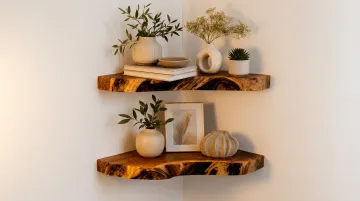
Modern, Built-In, and Statement Styles (Ideas 39–45)
These seven ideas range from sculptural statements to full built-ins — best suited to spaces where the corner becomes a design feature rather than dead space.
- Idea 39 — Enclosed corner cabinet with glass doors: A moody black cabinet with paneled glass doors and crown molding. Suits kitchens or dining rooms that lean traditional or maximalist.
- Idea 40 — Antique bar built-in corner cabinet: A built-in with oaky framing and individual cellars for spirits and wine. Elaborate and functional — a strong entertainment focal point.
- Idea 41 — Hidden nook corner shelf: Shelving built directly into a slanted or angled wall, converting an architectural quirk into a grand built-in bookshelf. Add a lounge chair at the base for a reading alcove.
- Idea 42 — Triangular mango wood and iron shelf: A sculptural piece on a black iron frame with a mango wood surface. Pair with dried florals and original art for a gallery-wall feel.
- Idea 43 — Two-texture shelf with industrial mounts: Bleached wood on black pipe mounts. The two-toned contrast adds visual depth without clutter.
- Idea 44 — 5-tier wall-mount espresso corner shelf: A tall stacked unit in a rich dark finish that draws the eye upward — ideal for collectibles, framed photos, and small plants.
- Idea 45 — Vintage hook-and-shoe hall tree: A freestanding unit combining shoe storage at the base with hooks for coats, hats, and bags. No wall mounting required — installs in minutes.
How to Style and Arrange Your Corner Shelf
Getting corner shelf styling right comes down to three principles:
- Vary the height — mix tall, medium, and short objects so the eye moves across the shelf rather than stopping at one level
- Mix textures — combine ceramic, metal, wood, and natural materials so the arrangement feels layered and lived-in
- Leave breathing room — space between objects matters as much as the objects themselves; an overcrowded shelf just creates a different kind of clutter
A simple color approach keeps things cohesive: choose one dominant tone and two accent colors. A warm-neutral shelf, for example, might pair terracotta as the lead with black iron accents and creamy white ceramics — enough contrast to feel intentional without any single color fighting for attention.
When it comes to floating shelf layouts, you have four main arrangements to choose from:
- Symmetrical — equal-length shelves on both walls for a formal, balanced look
- Asymmetrical — one wall longer than the other for visual interest and contemporary energy
- Single-wall — shelves on one side only, extending into the corner rather than wrapping it
- Staggered — some shelves touching the adjacent wall, some pulled back, creating depth
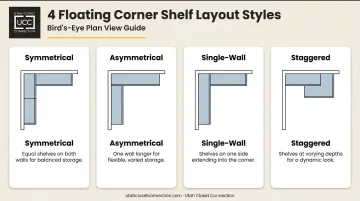
The arrangement style you choose will also affect how much you can display. On smaller corner shelves especially, restraint pays off — limit each shelf to one statement piece or a tight grouping of similarly scaled items. A single plant, a stack of books, or a small cluster of ceramics looks more intentional than a crowded ledge.
How to Choose the Right Corner Shelf
The right corner shelf comes down to four practical decisions before aesthetics even enter the picture:
| Factor | Questions to Ask |
|---|---|
| Room function | Is this primarily for display or active storage? |
| Wall depth | How much depth does the corner actually allow? |
| Mounting preference | Floating, freestanding, or built-in? |
| Weight capacity | Toiletries weigh far less than books and ceramics |
The Three Main Shelf Types
Floating shelves require anchoring into wall studs (stud spacing varies — locate actual studs rather than assuming a standard). They offer a clean look and work well for lighter loads. A 12-inch floating corner shelf from Home Depot, for example, carries a 35 lb total capacity — adequate for decorative objects but not for heavy cookware.
Freestanding shelves require no installation and are easy to reposition. The IKEA RAGRUND bamboo corner shelf ($26.99) is a good example: suited to humid bathroom areas and zero-tool setup.
Built-in or custom corner units deliver the highest visual impact and storage capacity, but require professional installation. For homeowners across Salt Lake County, Utah County, and surrounding Utah counties who want a permanent, tailored solution, Utah Closet Connection offers free design consultations, professional installation, and a lifetime workmanship warranty on custom closets, home offices, and whole-wall corner storage systems.
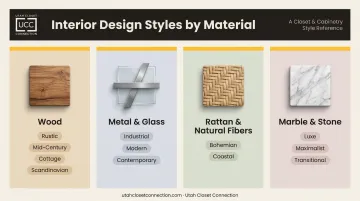
Once you've settled on a shelf type, material choice shapes how well it fits the room's existing style.
Material Matching Guide
- Wood — rustic, mid-century, cottage, and Scandinavian styles
- Metal and glass — industrial, modern, and contemporary spaces
- Rattan and natural fibers — bohemian and coastal aesthetics
- Marble and stone — luxe, maximalist, or transitional interiors
Frequently Asked Questions
Frequently Asked Questions
Are corner shelves a good idea?
Yes, corner shelves convert otherwise dead wall space into a functional storage or display area without claiming any floor space. They work in virtually every room and suit a wide range of styles, from minimalist floating shelves to elaborate built-in cabinetry.
How do you arrange shelves in a corner?
The main options are symmetrical (equal-length shelves on both walls), asymmetrical (one wall longer for visual interest), single-wall (shelves on one side only), and staggered. Floating shelves must be anchored into wall studs, so locate them before drilling.
What are the different types of corner shelving?
The three main types are floating wall-mounted shelves, freestanding floor units (ladder-style, 5-tier), and built-in or custom corner shelving. They differ significantly in installation complexity, visual impact, and load capacity.
What do you put on a small corner shelf?
Limit each shelf to one statement piece — a plant, a vase, a stack of books — or a tight grouping of similarly scaled items. Avoid overcrowding; the shelf should feel curated, not collected.
How do you make a corner shelf look good?
Mix heights, textures, and a consistent color palette. BHG's styling guidance recommends odd-number groupings and variation in shape and texture — and intentional empty space between objects matters as much as what's displayed.
Can you DIY a corner shelf?
DIY corner shelves are achievable with basic tools using wood planks, pipe brackets, or repurposed materials. Heavily loaded shelves or built-in systems are better left to professionals, who can ensure proper wall anchoring and a clean fit.