Concealed access points aren't a modern invention. The Great Pyramid at Giza, built around 2570 B.C. for Pharaoh Khufu, featured an entrance disguised with limestone to match the surrounding stone and a passage sealed behind granite plugs, according to Smithsonian Magazine. Concealed architecture has been part of human design for millennia.
Beyond the wow factor, hidden doors solve real problems: extra storage, added security, and cleaner-looking rooms. This guide covers the best styles, ideal placements, hardware essentials, and legal considerations before you start your own project.
Key Takeaways
- Popular styles include jib doors, bookcase doors, mirror doors, and dramatic feature doors
- Closets, under-stair spaces, and windowless rooms are the easiest, most budget-friendly locations
- Concealed hinges, hidden latches, and flush trim make a door truly disappear
- Hidden doors are legal in nearly every case, though bedrooms need code-compliant emergency exits
Coolest Hidden Door Ideas to Inspire Your Home
Hidden doors generally fall into a handful of categories, each with its own budget range and design complexity. Here's a breakdown of the standouts.
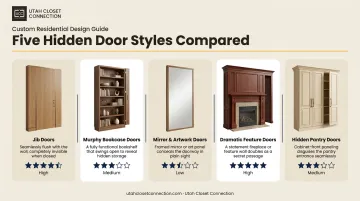
Jib Doors: The Invisible Wall Door
A jib door sits flush with the wall, without any casing or trim to give it away. It's typically painted, wallpapered, or paneled to match the surrounding surface so it visually vanishes.
Concealed hinges are the secret ingredient here. They mortise into the door and frame edges, eliminating the visible seam that would otherwise tip guests off. This makes jib doors a favorite for:
- Powder rooms tucked under staircases
- Hallway pass-throughs
- Home offices off a main living space
Murphy Bookcase Doors
Named for its resemblance to a Murphy bed mechanism, this classic pivots on a hinge to conceal a staircase, wine cellar, or reading nook. It's one of the more theatrical options because the shelving stays functional right up until the door swings open.
A quick construction tip: reinforce the shelf structure so it doesn't sag under the weight of real books over time. Keeping a handful of functional titles on the shelves (not just decorative spines) adds authenticity and helps the illusion hold up under scrutiny.
Mirror and Artwork Doors
An oversized wall mirror or a framed art piece mounted on a hinged panel works beautifully in primary bedrooms or dressing rooms, especially when it leads to a closet or small vault. Mirror doors have the added bonus of making a room feel larger and brighter.
One caution: two-way mirror versions are more novelty than true security. Light-blocking tricks and simple flashlight tests can reveal what's hidden behind them, so don't rely on this style if privacy is the main goal.
Dramatic Feature Doors: Fireplaces, Stone Walls & Staircases
Rotating fireplace doors and moving stone or brick accent walls are showstoppers, but they require custom engineering and a larger budget. A hidden switch, a poker pull, or even a piano-key sequence built into the mantel typically triggers the mechanism.
Lifting staircases represent the most technically complex option, requiring sensors and structural coordination that's best handled during a new build or a major renovation, not a quick retrofit.
Hidden Pantry and Cabinet Doors
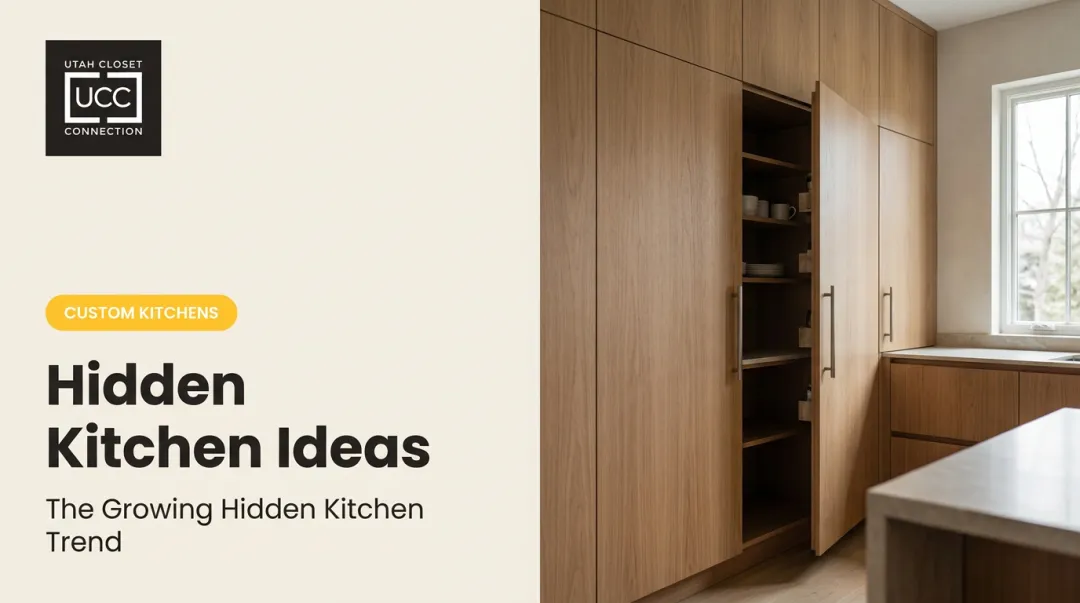
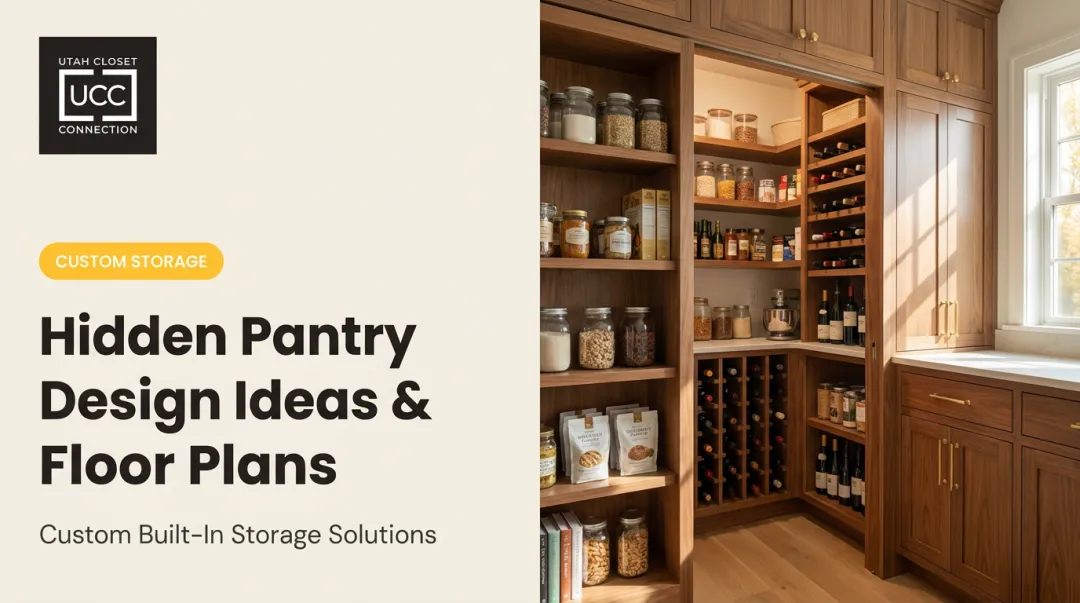
A section of kitchen cabinetry or a pantry wall can be built to swing open into a deeper walk-in pantry, keeping the kitchen's sightlines clean and clutter-free. This is one of the most practical secret door styles available since it doubles as everyday functional storage rather than pure novelty.
It's also the style Utah Closet Connection builds most often, blending concealed cabinet-style doors directly into a client's existing kitchen layout.
Best Places to Add a Hidden Door in Your Home
Not every room is a good candidate. Here's where hidden doors work best without requiring major structural changes.
- Closets — A closet's back or side wall is an easy spot to hide a doorway since it rarely gets close inspection, pairing naturally with a custom closet renovation.
- Under staircases — These compact, triangular spaces often go to waste, making them ideal for a small flush or wainscot door leading to storage or a reading nook.
- Central or interior rooms — Windowless rooms like basements or media rooms make ideal panic rooms or hidden dens, since there's no exterior clue giving away their location.
Hardware & Construction Essentials for a Seamless Hidden Door
The difference between a hidden door that fools everyone and one that reads as "obviously a secret door" comes down to hardware. Here's what actually makes it work.
- Invisible or concealed hinges — These mortise into the door and frame edges so no hinge knuckle shows when closed. They must be rated for the door's weight; undersized hinges cause sagging over time.
- Hidden latches and touch-release mechanisms — Magnetic catches, push-to-open latches, or electronic touch releases keep the door secure without a visible handle.
- Concealed handles or trigger objects — The "opener" can be a book spine, a light switch, or another intuitive object. It needs to stay easy for the homeowner to find while remaining invisible to guests.
- Flush trim and matching finishes — Baseboards, wallpaper, or panel moldings need to continue across the seam. Any visual break gives away the door's location instantly.
Professional installation matters more than most people expect. Precise clearance measurements, wall-cutting, and hinge alignment are best left to licensed contractors.
Budget overruns are common in home projects: the 2024 Houzz & Home Study found 39% of homeowners who set a 2023 renovation budget exceeded it, out of more than 30,000 surveyed. A precision project like a hidden door leaves even less room for guesswork.
Are Hidden Doors Legal? Building Codes & Safety Considerations
Hidden doors are legal in the vast majority of U.S. jurisdictions. They're a design choice, not a distinct legal category, so there's no blanket rule against building one.
The real regulatory concern is fire egress. Under Utah's residential code, bedrooms, basements, and habitable attics require an emergency escape and rescue opening. The primary dwelling egress door must also be at least 32 inches wide and 78 inches tall, operable without a key or special knowledge.
What this means in practice:
- A hidden door used as a room's only access point may not satisfy egress requirements for a bedroom or office
- Secret rooms intended as safe rooms typically don't need to meet the same egress rules since they're not classified as habitable sleeping spaces
- Local permit requirements vary, so checking with your municipality before finalizing plans is worth the extra step
Utah Closet Connection's free design consultation can help confirm whether your hidden door concept meets these requirements before installation begins, especially for rooms doubling as bedrooms or offices.
Bring Your Hidden Door Vision to Life with Utah Closet Connection
Utah Closet Connection has been building custom cabinetry and closet systems since 1983, and hidden doors have become a natural extension of that work.
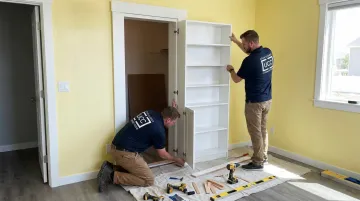
Rather than treating a secret door as a standalone novelty, the team integrates it into a broader storage project. Think a pantry wall panel, a bookcase door, or a closet entrance designed to blend with the surrounding wall.
Why homeowners in the Salt Lake area choose this route:
- A free design consultation to walk through placement, finish, and hardware options
- Licensed contractors handling the flush trim work and hinge alignment that make or break the illusion
- A lifetime workmanship warranty backing the installation
- Quick estimates delivered in one to two weeks
The team serves Salt Lake, Utah, Summit, Davis, and Weber counties. If you're picturing a hidden pantry door, a bookcase entrance, or a concealed closet feature, request a quote and start the conversation with a design specialist.
Frequently Asked Questions
What are some of the coolest hidden door ideas?
Rotating fireplace doors, pivoting bookcases, and mirror doors rank among the most jaw-dropping options. Each combines everyday function with a genuine surprise factor when triggered.
Are hidden doors legal?
Yes, hidden doors are legal in nearly all U.S. jurisdictions since they're a design feature, not a separate legal category. Rooms used as bedrooms or offices still need to meet fire egress code requirements.
How much does it cost to build a secret door?
Costs vary widely by complexity. A simple bookcase or pantry-style door tends to run far less than a motorized fireplace or a lifting staircase, which involve custom engineering and structural work.
What hardware do I need for a hidden door?
Three components matter most: invisible hinges rated for the door's weight, a concealed latch or touch-release mechanism, and a hidden trigger or handle that stays intuitive for the homeowner.
Can I add a hidden door to an existing closet?
Yes. Closets are among the easiest retrofit locations since the back or side wall rarely gets close inspection, allowing for minimal disruption during installation.
Do hidden doors add value to a home?
Unique architectural features can help a listing stand out. Real estate market research consistently shows that homes with distinctive custom features tend to sell above expected value, though this reflects general customization trends rather than hidden doors specifically.