Pick the wrong cabinets, and you'll end up with warped shelves, mildew smells, and clutter that creeps into your kitchen. A 2024 NAHB survey found that 86% of home buyers rate a laundry room as essential or desirable. That demand isn't about the room itself. It's about the storage inside it.
This guide covers cabinet types, moisture-resistant materials, smart layouts, and the practical factors Utah homeowners should weigh before investing in custom mudroom and laundry cabinetry.
Key Takeaways
- Moisture-resistant materials determine how long laundry cabinets last
- Layout should match your family's routines, not just the square footage available
- Matching cabinet finishes to nearby kitchen or entry spaces creates a cohesive look
- Custom cabinetry typically outperforms stock furniture in fit and durability
- A local design consultation helps translate daily chaos into functional storage
What Are Mudroom and Laundry Room Cabinets?
Mudroom and laundry cabinets are built-in or custom storage systems designed to organize outdoor gear, laundry supplies, and household overflow in high-traffic transitional spaces. Unlike freestanding furniture, they're built into the room's actual dimensions.
Common types include lockers, base and wall cabinets, utility sink cabinets, and bench seating with hidden storage underneath.
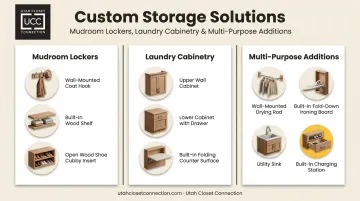
Mudroom Lockers and Cubbies
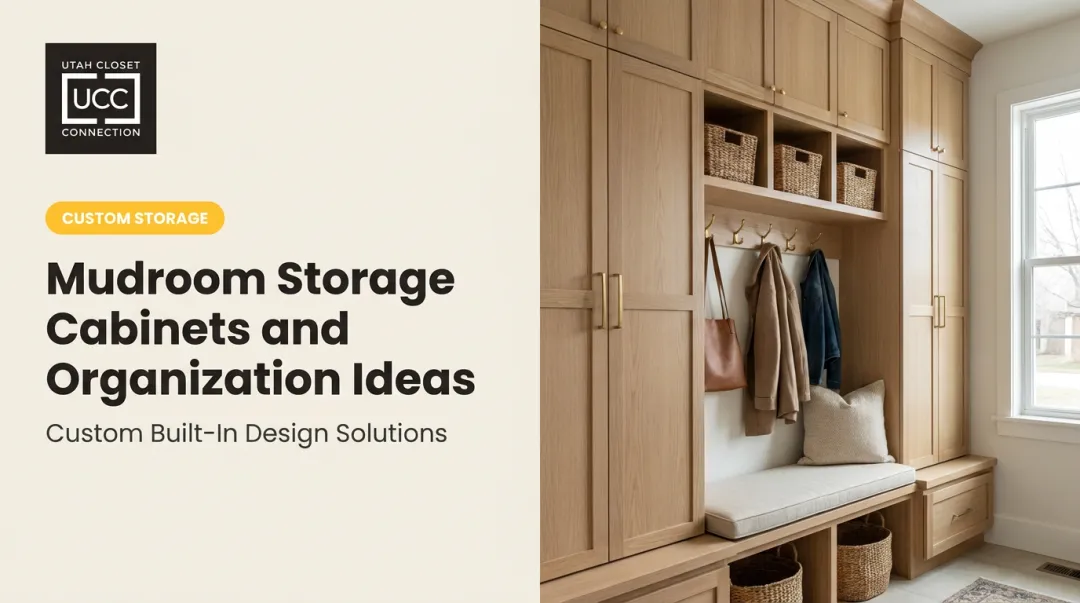
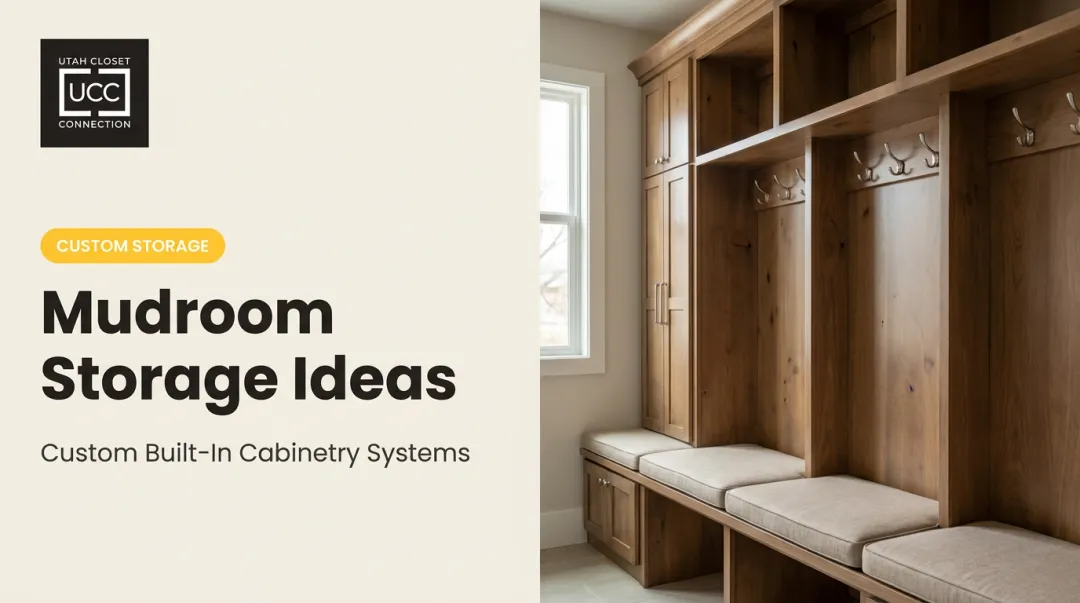
Individual lockers, one per family member, keep coats, backpacks, and shoes contained near the entry instead of scattered across the floor. Each locker typically combines:
- A hook or two for jackets and bags
- An open shelf for hats, gloves, or mail
- A shoe cubby at the base for boots and sneakers
This setup works especially well for larger families or homes with multiple kids coming and going at different times.
Laundry Room Upper and Lower Cabinetry
Once entryway gear is contained, the laundry room itself needs a similar system. Upper cabinets store detergent, dryer sheets, and bulk supplies up and out of the way. Lower cabinets and countertops do the heavy lifting: folding surfaces, hidden bins for dirty clothes, and closed storage for cleaning products kids shouldn't reach.
A countertop spanning the washer and dryer turns dead space into a functional folding station, something plenty of Utah laundry rooms lack entirely.
Multi-Purpose Additions
Beyond folding and storage, a few add-ons can stretch a laundry room's usefulness even further. Smart laundry cabinetry does more than store items. Features worth considering include:
- Pull-down hanging rods for air-drying delicates
- Fold-out ironing boards that tuck away when not in use
- Utility sinks for handwashing or rinsing muddy gear
- Charging stations for phones and tablets
These additions add function without eating into your square footage.
Benefits of Well-Designed Mudroom and Laundry Cabinets
Well-planned cabinets solve problems that generic shelving can't. Expect:
- Contained clutter: shoes, coats, and bags stay in one zone instead of migrating through the house
- Wall and floor protection: cabinetry absorbs the wear that walls and baseboards would otherwise take
- Faster daily routines: everything has a designated spot, so mornings move quicker
- Cleaner sightlines: a tidy mudroom or laundry room doesn't spill visual clutter into the kitchen
What to Consider When Choosing Mudroom and Laundry Room Cabinets
These factors connect design decisions to real household outcomes, not just aesthetics. Priorities shift depending on family size, home layout, and Utah's climate, which swings between cold winters and humid stretches that track wet gear indoors.
Material and Moisture Resistance
Laundry rooms and mudrooms face constant exposure to water, humidity, and wet outerwear. Material choice is the single biggest factor in cabinet longevity here.
Utah's climate makes this more than a theoretical concern. NOAA climate data shows Salt Lake City mornings average 71% to 78% relative humidity from November through February, with snowy boots and coats tracking that moisture directly into your mudroom.
Standard particleboard struggles in these conditions. Plywood resists moisture-related swelling better than particleboard, thanks to its layered, glued construction.
Laminate and thermofoil finishes add a protective surface layer, but remember: they're surface treatments, not substitutes for a solid substrate underneath. A laminated panel can still swell if water reaches its core through a seam or damaged edge.
Storage Capacity and Family Lifestyle
Cabinet configuration should reflect how your household actually functions. A family of five with two dogs and a soccer schedule needs different storage than a couple working from home.
Think through:
- Sports gear, backpacks, and seasonal outerwear per family member
- Pet supplies, leashes, and feeding stations
- Package overflow from daily deliveries
- Separate hampers for dirty and clean laundry
Get this right and clutter stops migrating into your kitchen.
Layout and Space Optimization
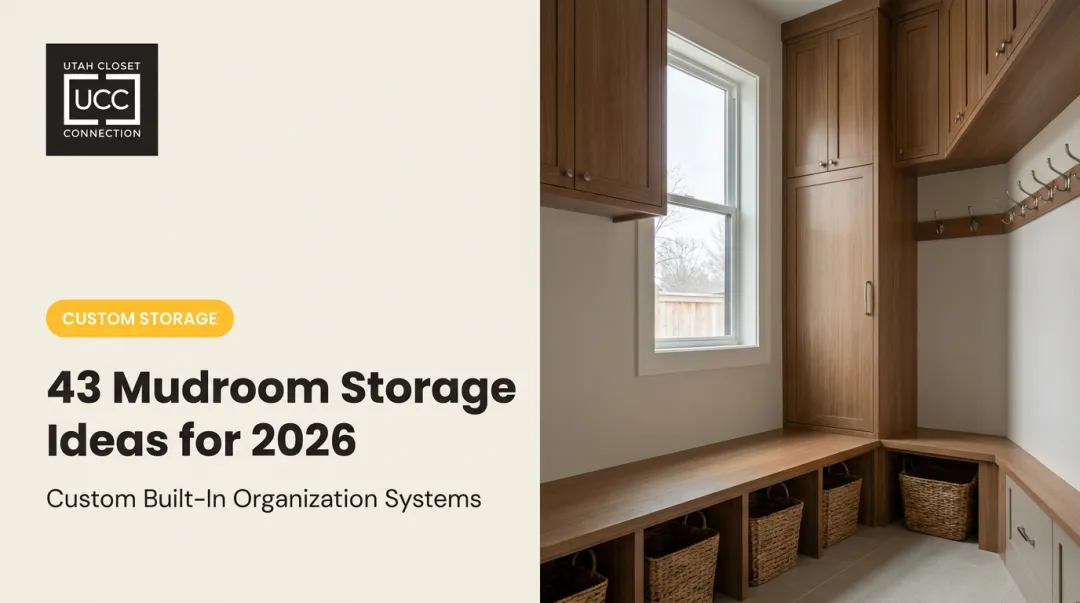
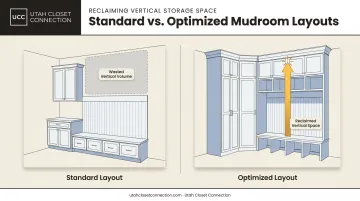
Smaller Utah homes benefit enormously from vertical storage. Floor-to-ceiling cabinets use wall height that would otherwise sit empty, while corner cabinets and locker-cubby combinations squeeze extra function out of tight footprints.
A narrow cabinet extending to the ceiling in an awkward corner can hold just as much as a wider cabinet elsewhere in the room. Combining open shelving with closed cabinets also keeps frequently used items accessible while less-used supplies stay tucked away up top.
Style Cohesion with Adjoining Rooms
Door style, finish, and hardware should complement your kitchen or entry, especially if the mudroom or laundry room is visible from main living areas. A laundry room with mismatched cabinetry can feel like an afterthought, even when it's perfectly functional.
Common coordinating options include:
- White or gray finishes that pair with most kitchen palettes
- Brushed metallic or matte black hardware for a transitional look
- Matching door profiles between spaces for visual flow
Functional Add-Ons
Utility sinks, drying rods, folding counters, and charging stations reduce the need for separate furniture elsewhere in the house. A drying rod mounted between two upper cabinets, for instance, replaces a bulky standalone rack entirely.
Adding a utility sink requires proper plumbing coordination. Talk to your cabinet designer early so the sink base cabinet is built to resist water damage from day one, not retrofitted later.
Budget and Cabinet Type
Stock, semi-custom, and custom cabinetry differ in fit, durability, and cost per linear foot.
| Cabinet Type | Definition | Typical Fit |
|---|---|---|
| Stock | Premanufactured in limited sizes and finishes | Standard rooms only |
| Semi-custom | Factory-made with some size and finish flexibility | Moderate customization |
| Custom | Built to order for your exact space | Full flexibility |
Cheap stock furniture might save money upfront, but it rarely handles Utah's humidity swings or oddly shaped mudroom nooks. Custom cabinetry costs more per linear foot initially, though it typically avoids the replacement cycle that cheaper furniture demands.
How Utah Closet Connection Can Help
Utah Closet Connection has designed custom storage for Salt Lake area homes since 1983. With over 50 years of combined team experience, the designers understand how Utah's cold winters, wet gear, and humidity swings affect cabinet materials and layouts.
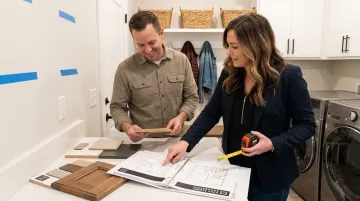
That climate expertise shapes every project, which starts with an in-home consultation. A designer measures your space, asks how your family actually uses it, and builds a plan around your routines rather than a generic template.
Here's what sets the process apart:
- Free design consultation at your home, followed by a virtual review of the proposed layout
- Fully custom cabinetry built to your exact dimensions, no stock sizing compromises
- Lifetime workmanship warranty on every installation
- Installation by licensed contractors who protect your home throughout the project
- Quick estimates, typically delivered within one to two weeks
If your mudroom or laundry room needs a real plan instead of another shelf from a big-box store, request a free design consultation or call (801) 939-3088.
Conclusion
Choosing the right cabinets means prioritizing layouts and materials that fit your family's daily routine and hold up against Utah's climate year after year, rather than chasing magazine trends.
Storage needs shift as families grow, pets join the household, or hobbies change. Revisit your mudroom and laundry setup every few years rather than assuming the original design will always fit.
Before committing to a cabinet investment, talk to a local expert like Utah Closet Connection, who understands the design and climate challenges specific to your area and offers free design consultations.
Frequently Asked Questions
What is the best material for laundry room cabinets?
Moisture-resistant options like laminate, painted plywood, or thermofoil hold up best against humidity. Avoid standard particleboard in damp areas since it swells more easily when exposed to water.
How much storage do I need in a mudroom?
Storage needs depend on family size and activities, but a mix of individual lockers, shoe cubbies, and closed cabinets typically covers most households comfortably.
Should mudroom and laundry room cabinets match the kitchen?
Matching or complementary door styles and finishes create a cohesive look, particularly if these spaces are visible from main living areas.
Can I add a utility sink to my laundry room cabinets?
Yes, with proper plumbing planning and a sink base cabinet designed to resist water damage over time.
What's the difference between stock, semi-custom, and custom cabinets?
Stock cabinets are the most affordable, standardized option, while semi-custom adds flexibility in size and style. Custom cabinets, by contrast, are built entirely around your specific space and needs.
How do I protect mudroom and laundry cabinets from moisture damage?
Use moisture-resistant materials, sealed finishes, and proper ventilation. Inspect hinges and surfaces periodically to catch early signs of wear before they become bigger problems.