
Introduction
Most basements start with good intentions and end up as the room nobody talks about — a maze of cardboard boxes, holiday bins, and sports equipment with no real system holding any of it together.
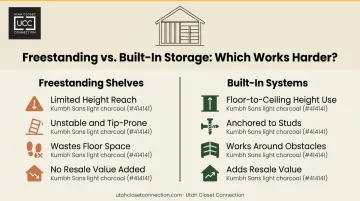
That's the gap built-in storage solves. Unlike freestanding shelves that wobble, tip, and take up floor space, fixed built-ins:
- Use every inch of wall height from floor to ceiling
- Work around structural posts, pipes, and odd angles
- Stay anchored and level for decades
- Add resale value that freestanding units never do
According to NAR's 2025 Remodeling Impact Report, converting a basement to finished living space recovers roughly 71% of project costs. Purpose-built storage is what makes that finished space actually functional.
This guide covers 23 specific built-in ideas organized by zone, plus practical organization tips to make any system work harder. Each idea is matched to a real basement challenge — low ceilings, utility obstructions, awkward corners — so you can find what fits your space.
Key Takeaways
- Built-ins use fixed wall space and vertical height that freestanding units ignore
- The 23 ideas are organized by zone — walls, under-stair, multi-purpose, and overhead
- Material choice matters: moisture-resistant or sealed products outperform untreated wood below grade
- Zone mapping before you build — and consistent labeling after — keeps the system working long-term
- Custom built-ins can be designed around posts, pipes, and irregular basement footprints
Why Basement Built-Ins Are Worth It
Freestanding shelves have one job: hold things. Built-ins do considerably more.
A fixed wall system uses the full height of your basement, not just the 6 feet a freestanding unit reaches. It anchors to studs, distributes weight properly, and stays put when someone bumps it. For basements with structural posts, angled soffits, or awkward pipe runs, custom built-ins work with those obstacles rather than forcing you to work around them.
The resale case is real. NAR's data on finished basements applies broadly, not to cabinetry alone, but the pattern is consistent: an organized, finished basement is a selling point. Buyers who see labeled storage systems, clean flooring, and purpose-built zones read the space as usable square footage.
For Utah homeowners specifically, the practical argument is hard to ignore:
- Ski gear, camping equipment, and hiking supplies need dedicated, accessible storage
- Seasonal climate swings make moisture-resistant materials a genuine requirement
- Homes in Salt Lake County, Utah County, and surrounding areas often have full-depth basements with serious storage potential
The goal is to build the right systems once and have them work for years — not to implement every idea at once.
Ideas 1–10: Wall Systems, Cabinets & Built-In Shelving
Wall-based built-ins are the workhorse of basement storage — they hold the most, take up the least floor space, and can be configured for nearly any use case.
Idea 1: Floor-to-Ceiling Shelving Wall
Run open shelves from floor to ceiling along one full wall and you'll be surprised how much you can clear from the rest of the basement. Best for utility storage, labeled bins, or books. Add a rolling library ladder for upper-shelf access — Putnam's systems support at least 300 lb and require 7 inches of clearance between the track centerline and the ceiling.
Idea 2: Custom Built-In Cabinetry (Upper + Lower)
Base cabinets handle heavy or hidden items; upper cabinets take seasonal goods and lighter loads. This combination delivers the cleanest look and the most flexibility in a finished basement.
Professional design makes the biggest difference here. A custom layout from Utah Closet Connection accounts for pipe locations, ceiling height variations, and the exact footprint of your space — their free design consultation is a practical starting point for scoping this type of project.
Idea 3: Built-In Bookcase Flanking a TV or Fireplace
Flanking shelves on either side of a TV or fireplace anchor the room visually while doubling as storage. Keep upper shelves open for display; use lower closed cabinets for gaming systems, media, or electronics.
Idea 4: Glass-Front Display Cabinets
When you want to protect collectibles from dust and humidity but still see them, glass-front built-ins are the answer. Pair with interior LED strips for a clean, gallery-style finish.
Idea 5: Floating Shelves in a Staggered Arrangement
Lower cost, modern aesthetic, easier installation. Staggered heights accommodate varied item sizes and break up visual monotony. Floating shelf capacity is system-specific. One Rakks low-profile system is rated at 20 lb per linear foot — that's fine for books and décor, not for heavy tool bins or dense seasonal storage.
Idea 6: Full-Length Horizontal Shelving Wall
A single deep, continuous shelf running the full length of a wall at one consistent height works well for sports equipment, large bins, or fitness gear. It's a natural fit for basement gym zones where floor space is at a premium.
Idea 7: Corner Built-In Shelving Unit
Most basement corners go completely unused. Tiered corner shelving fills that gap with display or utility storage, and works well in finished basements with angled ceiling lines where a standard cabinet wouldn't fit cleanly.
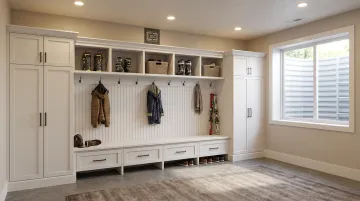
Idea 8: Built-In Drop Zone / Mudroom Cubby System
Basements with walk-out or side-entry access are natural candidates for a built-in cubby wall. A well-designed drop zone typically includes:
- Hooks for coats, bags, and outdoor gear
- Bench seating with storage underneath
- Cubbies sized for shoes, ski boots, and helmets
For Utah families storing ski boots, hiking packs, and camping gear, this is one of the highest-utility investments in the list. Utah Closet Connection offers custom mudroom solutions designed for exactly this purpose.
Idea 9: Wall-to-Wall Built-In Desk + Storage Combo
A built-in desk surface with surrounding shelves and closed cabinets creates a proper home office or homework station without claiming a dedicated room. The desk surface blends naturally when designed with matching cabinetry above and below.
Idea 10: Sliding-Door Cabinet Wall (Concealed Storage)
When the basement serves as both living space and storage zone, a full wall of cabinets behind sliding barn-style panels keeps clutter completely out of sight. Closed, it looks like a deliberate design choice. Open, it gives you a fully accessible storage wall without sacrificing the finished feel of the room.
Ideas 11–18: Under-Stair, Nook & Multi-Purpose Built-Ins
The space under a staircase is among the most overlooked real estate in any home. These ideas convert ignored micro-spaces into purposeful storage.
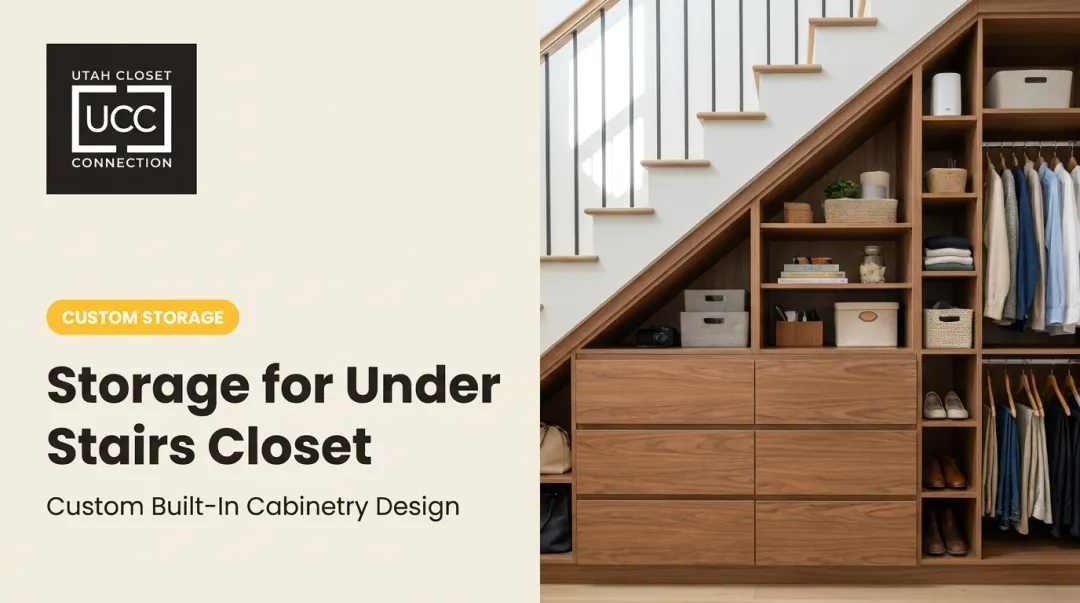
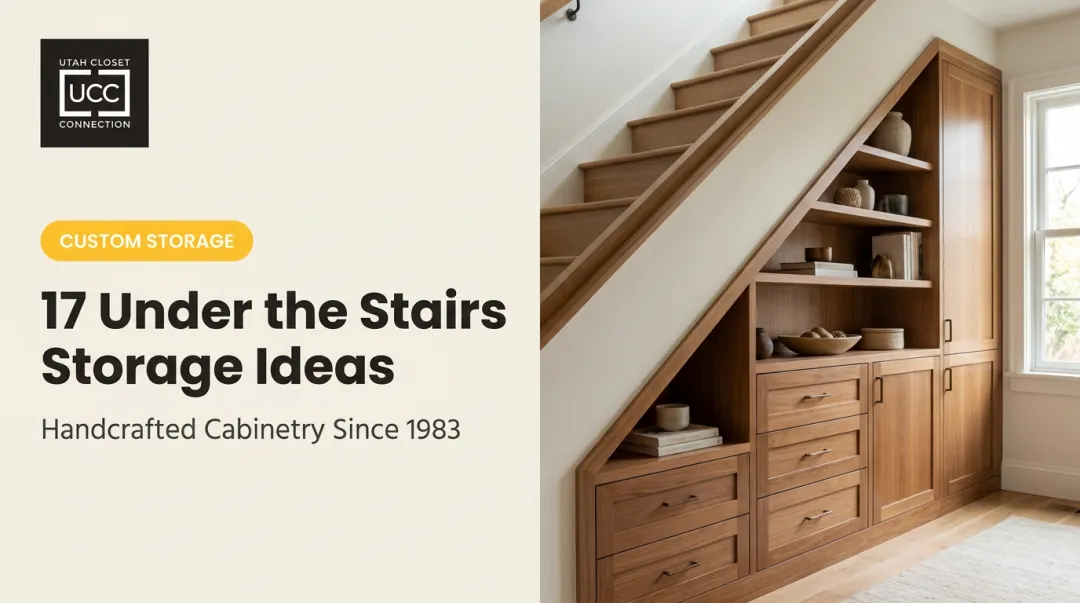
Idea 11: Pull-Out Drawer System Under Stairs
Custom stepped drawers fitted under each riser create smooth, accessible storage for seasonal items, tools, or kids' toys. This requires professional carpentry — the drawer geometry must align precisely with the stair pitch. Per IRC R302.7, any enclosed accessible under-stair space also requires ½-inch gypsum board on walls, soffits, and the under-stair surface for fire protection. Don't skip this step.
Idea 12: Open Cubby Shelving Under Stairs
Open cubbies are the simpler alternative: easier to build and easier to access. Works well for kids' toy bins, recycling containers, or sports bags. Baskets with labels keep the visual noise manageable.
Idea 13: Hidden Mini-Pantry Under Stairs
Add a door and deep shelves under the staircase and you have a concealed pantry for canned goods, cleaning supplies, or holiday wrapping supplies. Under-stair depth is usually substantial. Plan the shelving carefully rather than letting it become a dumping zone.
Idea 14: Under-Stair Wine Cellar or Bar Storage
For entertaining-focused basements, converting the under-stair zone into a built-in wine rack or bar cabinet is worth the investment. Wine Spectator recommends 45–65°F with humidity around 70% RH, which means dedicated insulation and conditioning, not just open cubbies.
Idea 15: Murphy Bed with Flanking Built-In Cabinets
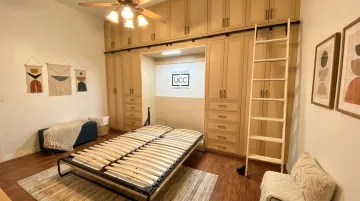
A Murphy bed integrated into a built-in wall unit transforms a storage-heavy basement into a functional guest room. Flanking cabinets provide wardrobe-style storage and nightstand surfaces. Utah Closet Connection's portfolio includes exactly this configuration: a Murphy bed framed by custom cabinetry with drawer and door storage, all backed by a lifetime workmanship warranty.
Idea 16: Window Well Alcove Shelving
Basement window wells create a shallow recess that's almost always ignored. Build shallow shelves into that nook and you gain usable storage near natural light, ideal for books, small plants, or decorative items that benefit from daylight.
Idea 17: Built-In Storage Around Basement Support Posts
Posts don't have to be eyesores. Frame them with built-in shelving on adjacent faces or wrap them with a cabinet unit. Done right, a structural post becomes a storage column you actually plan around.
Idea 18: Built-In Craft or Hobby Station with Closed Cabinet Storage
A built-in workbench with upper and lower cabinets handles craft, sewing, or hobby storage without the chaos. Deep lower drawers for supplies, upper cabinets to conceal everything when not in use. Hobby spaces accumulate fast. Closed storage keeps the room presentable even mid-project.
Ideas 19–23: Living Area, Hobby & Vertical Space Solutions
These ideas cover vertical space, integrated entertainment walls, and modular systems — approaches that keep the basement's living areas open without sacrificing storage capacity.
Idea 19: Overhead Ceiling-Mounted Storage Racks
Heavy-duty ceiling racks suspended from joists handle seasonal bins, luggage, or holiday items that don't need frequent access. Fleximounts and SafeRacks both rate configurations at 600 lb — but that rating applies only when anchored into verified wood framing or solid concrete, with joists properly located. IRC R305.1 requires 7-foot ceilings in habitable basement areas; the rack must not reduce that clearance for egress or circulation.
Idea 20: Wall-Mounted Pegboard System for Tools or Sports Gear
A full pegboard panel mounted on a utility wall creates a reconfigurable storage system that changes as your needs do. Wall Control's heavy-duty hooks are rated at 25 lb per hook, with capacity depending on installation quality and substrate. For Utah households with a rotating cast of tools and outdoor gear, pegboard is one of the most practical utility-zone investments.
Idea 21: Built-In Media Wall with Hidden Cable Management
A custom entertainment unit built around the TV conceals A/V equipment, gaming systems, and cords behind closed cabinet panels. Open display zones sit above; closed cabinets handle everything else. Cabinet depths of 16–20 inches typically accommodate most A/V receivers and gaming consoles without protruding into the room.
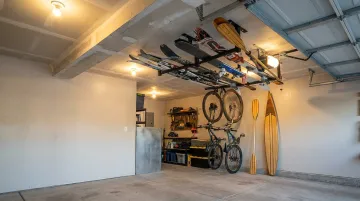
Idea 22: Hanging Bike or Sports Equipment Rack Built-In
Wall-mounted or ceiling-hung bike racks integrated into a utility wall save significant floor space. For households with multiple bikes, skis, or paddleboards — common across the Wasatch Front — this approach works especially well:
- Stores 2–4 bikes vertically without floor footprint
- Accommodates skis, poles, and paddleboards on the same wall
- Keeps gear accessible without moving other items out of the way
It's a straightforward upgrade that reclaims floor space without requiring a full renovation.
Idea 23: Modular Built-In Shelving with Labeled Bin System
A modular shelving frame fitted with standardized clear or color-coded bins scales easily as the household's needs shift. As priorities change, the bins relocate without rebuilding the system. A consistent labeling system — printed labels or a label maker — is what prevents the bins from becoming a grab-all. This setup works especially well as the backbone of a utility storage zone.
Organization Tips That Make Built-Ins Even More Effective
Zone Your Basement Before You Build
The biggest mistake in basement storage: building without a plan, then retrofitting categories into wherever things fit. Map how the space is actually used — utility storage, recreation, home office, hobby — and align each built-in system to its zone. Storage that matches how you actually use the space stays organized long-term.
Use a Consistent Bin and Label System
Standardize bin sizes across shelving units so they stack without gaps. Clear bins show contents at a glance. Label by category and subcategory, for example:
- "Holiday – Christmas" / "Holiday – Halloween"
- "Sports – Summer" / "Sports – Winter"
- "Tools – Power" / "Tools – Hand"
Revisit the system each season to pull anything that no longer belongs.
Address Basement-Specific Storage Risks
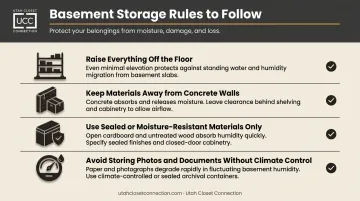
Below-grade environments create real material risks. A few rules to follow:
- Keep everything off the floor — shelves protect against moisture wicking up from concrete
- Don't store wood, paper, or untreated fabric directly against concrete walls
- Use sealed or painted MDF, moisture-resistant plywood, or powder-coated metal for the built-in frames
- Avoid storing photographs, important documents, or sensitive electronics in uncontrolled basement environments — the Library of Congress recommends 30–50% RH at 70°F or below for photo preservation, conditions most basements can't meet without climate control
Conclusion
Twenty-three ideas is a long list. The right answer for your basement is four or five of them — the ones that fit how the space is actually used, sized to your real storage needs, and built with materials that hold up in a below-grade environment.
For homeowners in the Salt Lake City metro area, Utah Closet Connection has been designing and installing custom built-in storage since 1983, with a team carrying over 50 years of combined experience and a lifetime workmanship warranty on every project. A free design consultation is a practical starting point if you want a system built around your exact basement layout — pipes, posts, and all. Reach them at (801) 939-3088, Monday through Thursday, 9 AM–4 PM, or request a consultation at utahclosetconnection.com.
Frequently Asked Questions
What is the best material for basement built-in storage?
Sealed MDF (moisture-resistant rated), exterior-grade plywood with a waterproof finish, or powder-coated steel are all solid choices for below-grade environments. None of these are fully waterproof — address any water intrusion first, and seal all cut edges. Untreated solid wood against concrete is a reliable path to warping and rot.
How much does basement built-in storage cost?
HomeAdvisor's 2025 data puts installed built-in bookshelves at a $1,399–$4,925 typical range, with fully custom work running approximately $400–$1,200 per linear foot. Basement projects may add costs for moisture remediation, scribing around structural features, and specialty hardware.
Can I add built-in storage to an unfinished basement?
Yes. Metal shelving and sealed-wood utility shelving work well in unfinished spaces. For finished cabinetry with painted or laminate faces, address drywall and moisture control first — cabinetry installed against damp masonry will fail regardless of material quality.
What items should never be stored in a basement built-in?
Photographs, paper documents, valuable textiles, and electronics without climate control are all poor candidates for uncontrolled basement storage. Humidity and temperature swings damage them faster than most people expect. Use sealed archival containers or a climate-controlled space for these items.
How do I plan built-in storage for a small or low-ceiling basement?
Prioritize wall-mounted systems over floor-standing units to preserve walking clearance. Shallow-depth shelving keeps the floor plan open. Under-stair solutions reclaim hidden space without touching ceiling height — one of the best moves in a constrained basement.
Do basement built-ins add value to a home?
A finished, organized basement with purpose-built storage increases buyer appeal and perceived square footage. NAR's 2025 data estimates 71% cost recovery for a full basement conversion — and built-ins are what make that finished space feel functional to buyers, not just complete.