Introduction
Walk into most Utah entryways in January and you'll find the same scene: snow melting off boots, mismatched mittens on the floor, and a coat pile that's taken over the bench nobody sits on.
Add mud season and spring rain, and the mudroom becomes the hardest-working, most chaotic room in the house.
Many families struggle with lost shoes, tangled backpacks, and mornings that start with someone yelling "has anyone seen my other glove?" That chaos comes down to one missing piece: a system built for how your household moves through the door.
This guide covers the cabinet types that solve these problems, organization strategies for busy families, small-space solutions for tight entryways, and how custom cabinetry can turn a cluttered entry into a functional landing zone.
Key Takeaways
- Mudroom cabinets cut clutter, protect flooring, and speed up daily routines
- Mixing open storage (hooks, cubbies) with closed cabinets suits nearly every home
- Custom cabinetry, like designs from Utah Closet Connection, fits tight entryways and adds home value
Why Mudroom Storage Cabinets Are a Smart Investment
Utah's climate isn't uniform. Annual precipitation ranges from under 5 inches in the Great Salt Lake Desert to more than 40 inches in parts of the Wasatch Mountains, according to the Western Regional Climate Center.
Whether you're in Park City dealing with heavy snowpack or Salt Lake dealing with spring mud, your entryway takes a beating for a good chunk of the year.
A mudroom acts as a buffer. It catches snow, mud, and rain before they reach your hardwood or carpet, which means less daily mopping and fewer ruined floors.
Beyond flooring protection, a well-organized mudroom solves recurring friction points:
- Shoe piles blocking the doorway
- Missing keys during the morning rush
- Backpacks and sports bags dumped on the floor
- Coats draped over furniture because there's nowhere else to put them
Solving these daily headaches does more than restore order: it also affects what your home is worth. Angi's 2026 cost guide reports an average mudroom ROI of approximately 50% (a figure specific to Angi's data, not a broader industry consensus, but a reasonable benchmark for homeowners weighing the investment).
That return on investment depends on the storage itself. Generic, off-the-shelf furniture rarely solves the actual problem. A store-bought bench might look nice, but it won't account for three kids' worth of backpacks, a golden retriever's leash collection, and ski gear that needs to dry without soaking the floor.
Custom-built cabinetry designed around your family's specific habits (how many people use the space, what gear you store, how much you need hidden versus accessible) consistently outperforms one-size-fits-all solutions. Utah Closet Connection designs mudroom systems around those exact details, backed by a lifetime workmanship warranty.
Best Mudroom Storage Cabinet Solutions & Types
Not every household needs the same setup. Here's a breakdown of the main cabinet types and where each one fits.
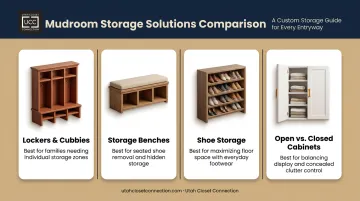
Mudroom Lockers & Cubbies
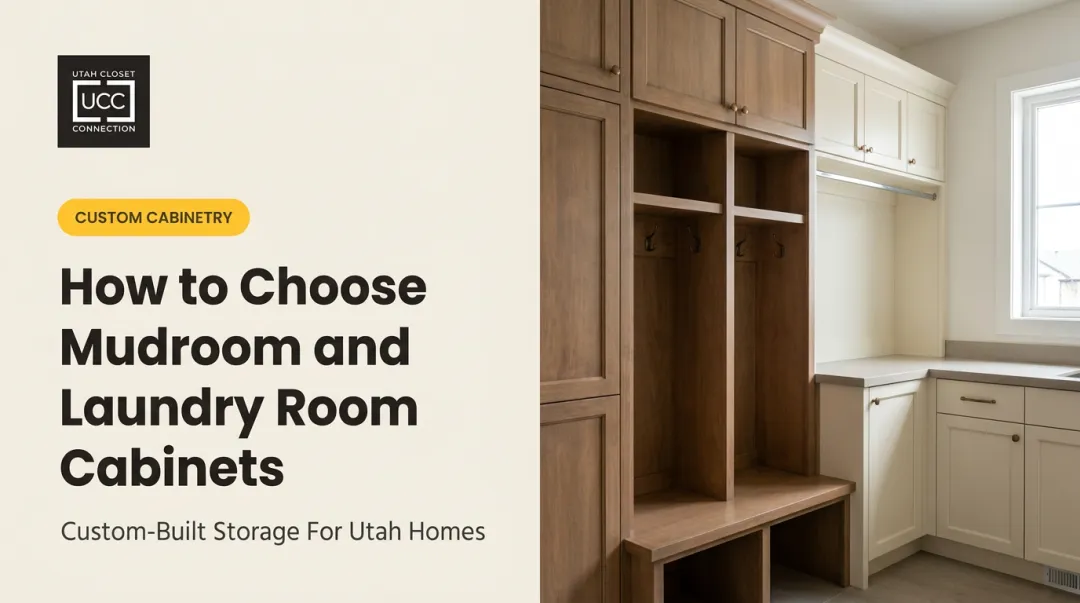
A mudroom locker is an individual storage bay, typically combining a hook, a cubby, and sometimes a small bench seat, assigned to one family member. Think of it as a mini closet built into the wall.
Industry cabinetry guides suggest planning around 15 to 24 inches of width per bay and roughly 14 to 24 inches of depth, depending on whether the locker includes a hanging rod or just hooks. These are useful starting benchmarks, but actual dimensions should be based on your entryway's footprint and your family's gear. Utah Closet Connection's design team measures your space directly and builds each locker to fit, rather than forcing a standard size.
Storage Benches with Built-In Storage
Benches do double duty: a place to sit while pulling on boots, and hidden storage underneath. Common styles include:
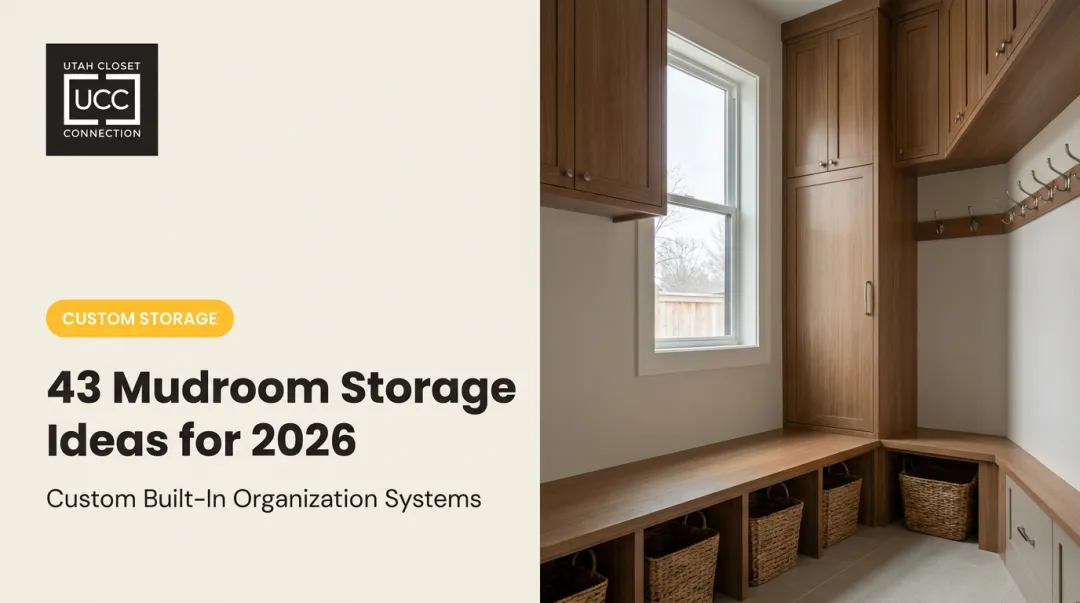
- Open cubby benches: gear stays visible and grab-and-go accessible
- Closed built-in benches: doors or drawers conceal bulkier items
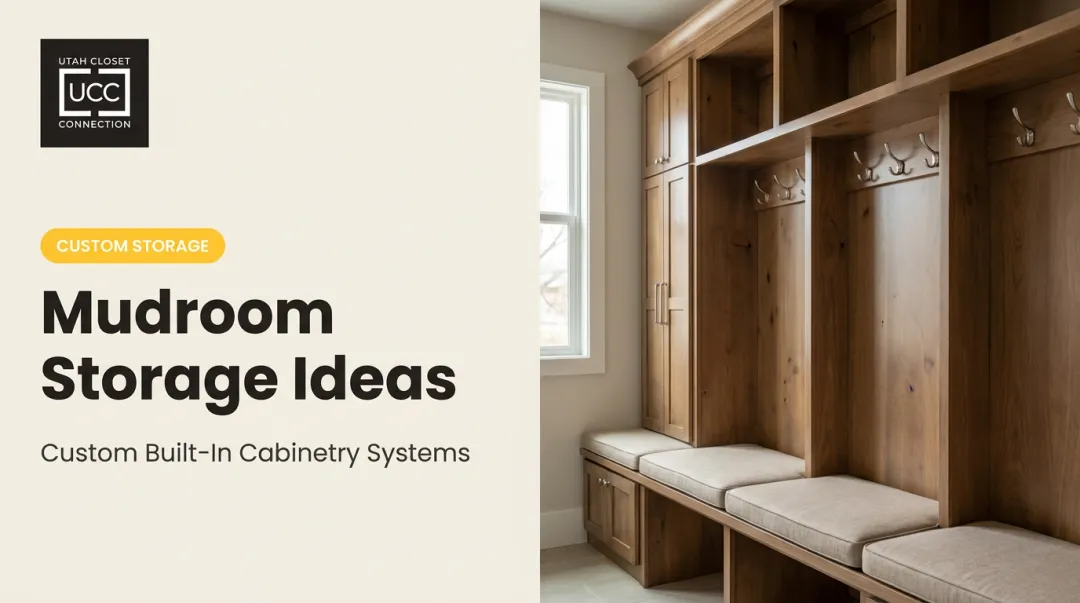
- Upholstered seat tops: a softer touch over a built-in storage base
Shoe Storage Solutions
Beyond seating, footwear needs its own system — shoes are usually the biggest clutter culprit in any entryway. Practical configurations include:
- Pull-out drawers or trays for keeping pairs contained
- Slanted shelves with a front bumper to stop shoes from sliding forward
- Stackable racks for households with a rotating shoe collection
- Fully enclosed cabinets when you'd rather not see shoes at all
Open vs. Closed Cabinet Storage
The best mudroom storage combines open and closed elements rather than leaning fully into one or the other. Open shelving and hooks work for items you grab daily, like coats and bags. Closed cabinets hide the stuff you don't want on display: seasonal gear, cleaning supplies, or the overflow nobody wants to look at every morning. Balancing both keeps the space functional without feeling cluttered.
Mudroom Organization Ideas for Busy Families
A cabinet system only works if it matches how your family actually lives. Here's where most of the daily chaos gets solved.
Start with assigned zones. Give each family member their own cubby, hook, or locker bay. When everyone has a designated spot, morning arguments over missing shoes drop fast.
Layer in labeled storage. Bins or baskets sorted by person or activity (sports gear, hats and gloves, dog supplies) keep seasonal items contained without turning into a junk drawer.
Other upgrades worth considering:
- A command center with a bulletin board, mail sorter, or calendar keeps schedules visible near the door
- Add a hidden charging drawer to keep phones and tablets powered without cluttering the counter
- Households with dogs or cats benefit from a dedicated pet zone with leash hooks and enclosed food storage
The general rule: open storage for what you touch every day, closed storage for what you touch a few times a season. Utah Closet Connection's mudroom systems are built around exactly this mix — a combination of open and closed storage, hooks, benches, and cubbies tailored to how each family actually uses the space.
Small Mudroom Ideas: Maximizing Limited Space
Not every home has room for a full locker bank, and that's fine. Small entryways just need smarter design choices.
- Floating benches and slim wall-mounted cabinets free up floor space instead of eating into it
- Vertical, floor-to-ceiling cabinetry makes use of height in narrow hallways where floor space is tight
- Hooks over lockers in truly tight spots, where a few well-placed hooks often beat a bulky cabinet
- Closet conversions turn an unused coat closet into a mini mudroom with shallow shelving, small cubbies, and a compact bench
The key is designing around your actual footprint rather than forcing a full-size layout into a space that can't support it. Utah Closet Connection offers free design consultations to map out what fits before you commit to anything.
Custom Cabinetry: Materials, Cost Factors & Choosing the Right Professional
What Affects Mudroom Cabinet Pricing
Custom locker and cabinet pricing depends on several variables:
- Material quality — premium woods cost more than laminate or melamine
- Size and configuration — more bays and deeper cabinets add cost
- Finish level — powder-coated hardware and higher-end finishes increase price
- Installation complexity — built-ins with electrical integration or custom millwork take more labor
For context, Fixr's 2025 mudroom guide prices custom lockers between $500 and $1,500 per linear foot, with open lockers running toward the lower end and fully enclosed units toward the higher end. Treat this as a planning range — your actual quote depends on the factors above.
Materials Built for Utah's Climate
Material quality drives much of that price range, and in Utah, durability isn't just a budget line item: snow, mud, and seasonal moisture make it a practical necessity. Look for:
- Industrial-grade melamine or TFL panels with sealed edges
- Powder-coated metal hardware, which resists scratching, chipping, and corrosion
- High-pressure laminate surfaces rated for wear and impact resistance
Why Work With a Local Professional
Choosing durable materials is only half the equation, though. A generic prefab locker system still can't account for your entryway's exact dimensions or your family's routines — that's where local expertise comes in. Utah Closet Connection offers:
- Free design consultations, including an in-home walkthrough and measurement
- Custom-tailored cabinetry built around your household's specific gear and habits
- A lifetime workmanship warranty on every installation
- Quick estimates, typically delivered within 1 to 2 weeks
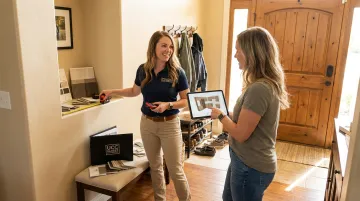
If you're in Salt Lake, Utah, Davis, Weber, or Summit County, scheduling a free consultation is the fastest way to find out what a mudroom system tailored to your home would actually look like.
Frequently Asked Questions
What is the average price of mudroom lockers?
Custom mudroom lockers typically run $500 to $1,500 per linear foot, depending on material, size, and finish level. Open locker designs tend to fall toward the lower end, while fully enclosed units cost more.
What is the best storage for a mud room?
A mix of open and closed storage works best. Use open hooks and cubbies for daily-use items like coats and shoes, and closed cabinets for bulkier or off-season gear.
Does a mudroom increase home value?
According to Angi's 2026 cost guide, mudroom additions carry an average ROI of approximately 50%. That figure is specific to Angi's estimate rather than an industry-wide standard, but it supports the investment case.
What is a mudroom locker?
A mudroom locker is an individual storage compartment, usually combining a hook, a cubby, and sometimes a small bench seat, assigned to one family member.
How do I organize a small mudroom on a budget?
Individual hooks per family member and labeled baskets by activity or person are low-cost, effective starting points. Even a small closet can be converted into a mini mudroom with shallow shelving and a compact bench.
What should be stored in a mudroom?
Shoes, coats, bags, keys, and seasonal gear are the essentials. Store daily items on open hooks or shelves, and keep bulkier or seasonal items in closed cabinets or bins.