This overlooked square footage is exactly why closets overflow, bathroom counters get buried in toiletries, and pantry shelves turn into a jumbled mess. The clutter isn't always a storage shortage. It's often a door problem.
This guide covers the main types of over-door organizers, the best options room by room, how to pick the right system for your door, and when it's time to stop patching the problem and invest in something built to last.
Key Takeaways
- Over-door storage adds real capacity without drilling, construction, or major cost.
- The right organizer (hooks, wire baskets, fabric pockets, or hinge-mounted cabinets) depends on your door type
- Pantries, laundry rooms, kids' rooms, and bathrooms typically see the biggest payoff
- Outgrown the quick fixes? A custom closet system offers a permanent, scalable solution
Types of Behind-the-Door Storage Solutions
Most over-door organizers use hooks that rest over the top and bottom edge of the door, so there's no drilling involved for the majority of products on the market. A smaller category, hinge-mounted units, attaches differently and handles heavier loads.
Here's how the four main types stack up:
Over-the-Door Hook & Rail Systems
Adjustable rail-and-hook systems, similar to Elfa-style tracks, let you customize shelf and basket height to fit closets, pantries, or laundry rooms. You can rearrange components as your storage needs change.
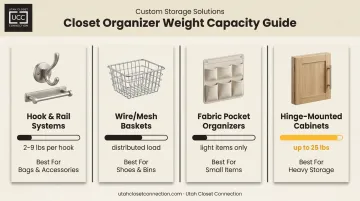
- Weight capacity: Product-specific hooks range from roughly 2.2 to 9 lbs each, depending on the brand
- Door fit: Most rail systems fit doors between 1.375 and 1.625 inches thick
Wire & Mesh Basket Shelving
Lightweight, ventilated wire or mesh baskets work well for shoes, cleaning supplies, and toiletries. The open design allows airflow, which matters for damp items like shower shoes or cleaning rags, and lets you see contents at a glance.
Fabric & Clear Pocket Organizers
Soft fabric or clear vinyl pocket organizers are built for small items like makeup, hair accessories, or kids' toys.
A 24-pocket model typically holds around 12 pairs of shoes, since each pocket fits one shoe. Deeper 10-pocket versions may only hold 8 pairs, so pocket count alone doesn't tell you the full story.
Hinge-Mounted Cabinets & Racks
Heavier-duty cabinets mount to the door's hinges instead of hanging over the top edge, usually held closed with a magnetic latch. This makes them a strong option for bathrooms and pantries that need more storage capacity than a hanging rack can offer.
Cabidor's hinge-mounted cabinet system recommends a maximum of 25 lbs of stored contents, since the weight transfers through the hinges rather than a lightweight hook.
| Organizer Type | Typical Weight Limit | Best For |
|---|---|---|
| Hook & rail systems | 2-9 lbs per hook | Bags, towels, light accessories |
| Fabric pocket organizers | Light items only (shoe-count based) | Shoes, small accessories, toys |
| Wire/mesh baskets | Distributed load, no fixed rating | Cleaning supplies, canned goods |
| Hinge-mounted cabinets | Up to 25 lbs total | Toiletries, pantry staples, tools |
These off-the-shelf options work well for rentals or quick fixes, but they max out fast in larger households. For built-in storage tailored to your exact door, closet, or laundry room dimensions, Utah Closet Connection designs and installs custom solutions backed by a lifetime workmanship warranty.
Best Behind-the-Door Storage Ideas by Room
The right organizer depends heavily on the room and what tends to pile up there. Here's a breakdown by space.
Bedroom & Closet Doors
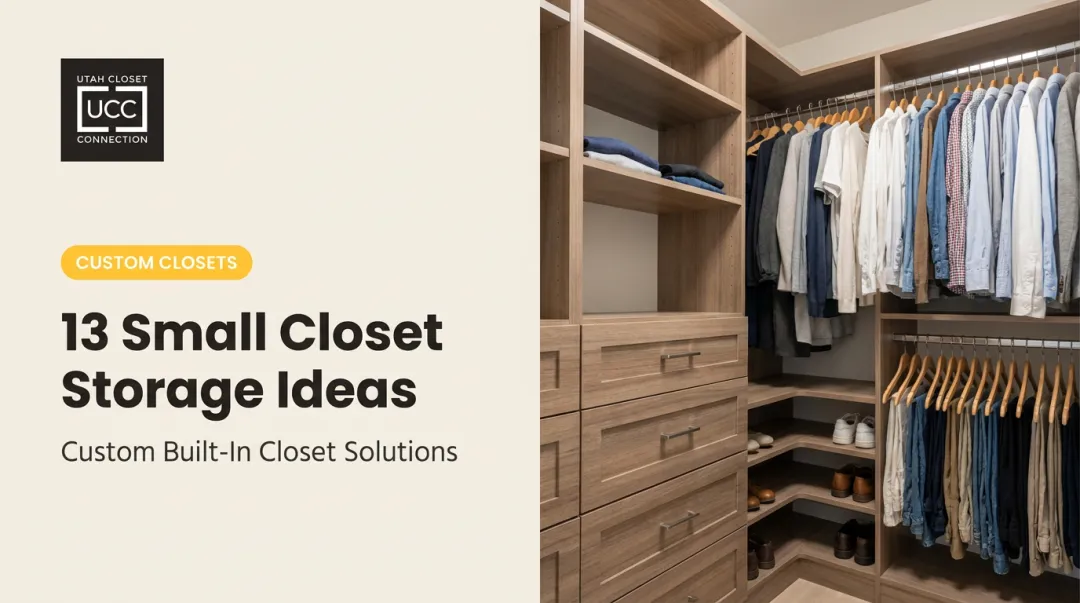
A shoe organizer can hold a dozen-plus pairs without taking up a single inch of closet shelf. Add a hook rail for handbags, belts, or scarves, and you've freed up real floor and shelf space for everything else.
Bathroom Doors
Small bathrooms benefit most from hinge-mounted cabinets or slim over-door shelving for toiletries. Simple hook racks work well for towels and robes, keeping them off the floor and out of the way.
Pantry & Kitchen Doors
Adjustable wire shelving reclaims pantry space for canned goods, spices, and cleaning supplies. Better Homes & Gardens recommends wire baskets for exactly this purpose, noting how much shelf real estate it frees up in a standard pantry.
Laundry Room Doors
Mesh baskets are ideal for stain removers, dryer sheets, and cleaning cloths you reach for constantly. Wall-mounted hangers handle tall items like ironing boards or step stools that otherwise lean awkwardly in a corner.
Kids' Rooms & Playrooms
Stuffed-animal nets and clear zippered pouches keep floors clear of toys and art supplies. Both are easy to unhook and empty when it's time for a deeper clean.
Home Office & Craft Rooms
Pocket organizers handle craft supplies or loose paperwork, while gift-wrap racks put otherwise wasted vertical door space to work storing rolls and ribbon.
These ready-made options work well for quick fixes, but custom-built cabinetry offers a longer-lasting solution. Professional installers like Utah Closet Connection design shelving and hooks that fit your exact doors and storage needs.
How to Choose the Right Over-the-Door Organizer
Picking the wrong door storage means it won't fit your space or hold what you need. A few measurements up front help your designer nail the fit and function from the start.
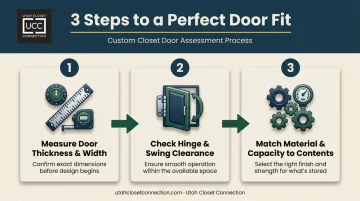
- Measure door thickness and width first. Interior doors typically run 1-3/8 to 1-3/4 inches thick, and your designer needs both this thickness and the door's full height for a precise fit.
- Check hinge and swing clearance before installing hinge-mounted units. Make sure the cabinet won't interfere with your doorknob, deadbolt, or trim when the door opens and closes.
- Match material and capacity to contents. Lightweight designs suit everyday items, but heavier tools or supplies need reinforced, cabinet-grade materials like industrial-grade melamine or powder-coated metal rated for the load.
When Behind-the-Door Storage Isn't Enough: Custom Closet Solutions
Over-door organizers solve a lot of problems, but they have limits. If your closet is still overflowing after adding hooks and baskets, or your home has no dedicated storage zones at all, it's a sign you've outgrown the quick fixes.
Common signs it's time for something more permanent:
- Closets stay cluttered no matter how many add-on organizers you install
- You're storing items in multiple rooms because nothing has a real "home"
- Your business is dealing with ongoing inventory disorganization that hooks and baskets can't fix
That's where Utah Closet Connection comes in. Rather than working around a door or a rod, our team designs built-in shelving, drawers, and full layouts around your household's or business's actual storage needs, from floor to ceiling. Every project is backed by a lifetime workmanship warranty and installed by licensed contractors.
Homeowners and businesses across Salt Lake, Utah, Summit, Davis, and Weber counties can request a free design consultation, with estimates typically delivered in one to two weeks. It's a practical next step once you've maxed out what a door can hold.
Frequently Asked Questions
What to do with space behind a door?
Use it for hanging organizers, shelving, hooks, or hinge-mounted cabinets to store shoes, toiletries, cleaning supplies, or accessories. It's one of the easiest ways to add storage without renovating.
What to use instead of a closet?
Wardrobes, open shelving units, garment racks, or built-in cabinetry all work as closet alternatives. Homes without a traditional closet often turn to custom-built cabinetry, like the systems Utah Closet Connection designs, for a tailored fit.
Why are people removing closet doors?
Open-concept closets have become popular for easier access and a more streamlined look. Curtains or open shelving often replace swinging doors as both a stylistic and functional choice.
What is a closet with doors called?
A closet you can't walk into, typically accessed through sliding or swinging doors, is called a reach-in closet. This differs from a walk-in closet, which is large enough to enter.
Do over-the-door organizers damage the door or frame?
Most hook-and-rail systems include felt or rubber padding to avoid scratching the door finish. Check hinge-mounted units against their weight limits, since overloading them can strain the hinges over time.
How much weight can a behind-the-door organizer hold?
Capacity varies by product type: fabric pockets hold only a few pounds, while reinforced wire racks and hinge-mounted cabinets can hold up to 25 lbs. Always check the manufacturer's specifications before loading one up.