The good news? A cramped bedroom, coat, or linen closet can function almost like a walk-in once you rethink the layout. It's less about square footage and more about vertical space, smart categorization, and a few well-placed products.
This guide walks through 13 practical small closet storage ideas, how to match solutions to your closet's actual size, and when it makes sense to call in a custom closet company.
Key Takeaways
- Vertical thinking and category-based organizing beat buying more bins
- Tension rods, dividers, and slim hangers solve most problems without a renovation
- Doors, walls, and floor space are storage zones most people ignore completely
- A custom closet system pays off longer than any bin or organizer purchase
- Editing your inventory first makes every other tip work better
13 Small Closet Storage Ideas to Maximize Every Inch
These ideas range from completely free tweaks to small purchases you can pick up this weekend. Mix and match based on your closet's shape, depth, and what you actually store in it.
Idea 1: Edit Before You Organize
Decluttering is the cheapest storage upgrade you'll ever make. A 2022 UK study by WRAP found that 26% of items in the average wardrobe, or 31 out of 118 pieces, hadn't been worn in over a year.
Before buying a single organizer, pull everything out and sort into keep, donate, and toss piles. Fewer items means every other idea on this list works better.
Idea 2: Take Off the Closet Door
A swinging door eats floor space and blocks light. Interior designers have leaned into this trick for years, sometimes converting an awkward reach-in into an open "secret vanity" by removing the door entirely and wallpapering the interior.
For a coat closet or linen closet, going doorless (or swapping in a curtain) instantly makes the space feel bigger and easier to access.
Idea 3: Add Shelves Above the Hanging Rod
That blank wall above a standard rod is wasted real estate in most reach-in closets. Adding one or two shelves there gives you a spot for folded sweaters, shoeboxes, or labeled baskets.
Designers typically place the upper storage zone around 80 inches off the floor, roughly a foot below the ceiling, so it stays clear of hanging clothes below.
Idea 4: Install Double or Adjustable Hanging Rods
Splitting one long rod into two stacked rods doubles your hanging capacity for shirts, folded pants, and skirts. Keep one full-length rod on the side for dresses and coats.
If you're planning shelving to go with it, folded shirts and pants need about 16 inches of width, so an 18-inch shelf handles most folded items comfortably.
Idea 5: Use Uniform, Slim Hangers
Mismatched wire and plastic hangers waste lateral space and look chaotic. Testing from Good Housekeeping found slim hangers measuring around 0.25 inches thick, compared to standard wood hangers under 0.5 inches and contoured styles reaching 2.25 inches at their widest point.
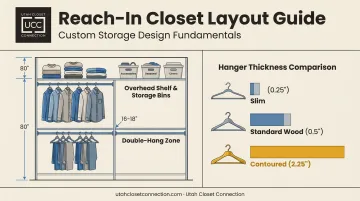
Switching every hanger to the same slim style reclaims real hanging space and creates instant visual order.
Idea 6: Use the Back of the Closet Door
The inside of the door is prime, underused territory. An over-the-door shoe organizer holds 12-24 pairs without touching your shelves. Command hook systems work well for:
- Scarves and belts
- Baseball caps
- Small handbags
- Jewelry pouches
Idea 7: Add Shelf Dividers and Drawer Organizers
Stacked sweaters topple the moment you pull one from the middle. Shelf dividers keep piles upright and separated by category. Inside drawers, small compartmentalized organizers stop socks, jewelry, and accessories from turning into a jumbled mess.
Idea 8: Use Stackable, Labeled Storage Bins
Clear or uniform-colored bins turn dead shelf space into organized storage. Label each one by season or category, such as:
- Off-season clothing
- Extra bedding
- Winter accessories
- Sentimental keepsakes
Stackable bins let you use vertical space efficiently while keeping contents visible or clearly marked.
Idea 9: Add Floor-Level Storage for Shoes
The floor of a reach-in closet is often just a pile of loose shoes. A full-extension rollout shelf makes the back of the closet accessible instead of a black hole. Shoe racks or open baskets under hanging clothes work just as well if you're not ready to install hardware.
Idea 10: Hang Hooks for Bags, Belts, and Accessories
Mount a row of hooks on a side wall or the closet frame itself. This holds purses, belts, and scarves without stealing an inch of shelf or rod space, and it keeps frequently grabbed items within easy reach.
Idea 11: File-Fold Instead of Stacking
Instead of stacking sweaters in a tall pile, fold each item into a compact rectangle and stand it upright, front to back, like files in a drawer. This is the folding style behind the KonMari method, and it means you can see every single item at a glance instead of digging through a stack.
Idea 12: Store Like With Like
Group items by category rather than scattering them across the closet. Athletic wear, swimwear, and workwear each get a defined "home." This single habit does more for long-term maintenance than any product purchase, because everything has an obvious place to return to.
Idea 13: Consider a Custom Closet Design
Sometimes the closet itself is the limiting factor, not your organizing system. Built-in cubbies, custom shelving, and a layout designed around your exact dimensions solve problems that bins and rods can't fix. That's where a professional system comes in: Utah Closet Connection designs and installs custom closets built around your exact space, backed by a lifetime workmanship warranty.
How Do You Choose the Right Storage Solution for a Small Closet?
Start with a tape measure, not a shopping cart. According to Angi's reach-in closet guide, most reach-in closets run about 6 feet wide and 24 inches deep, though some stretch to 8 feet wide and 30 inches deep. Measuring first prevents buying shelving or bins that simply don't fit.
Next, think about what actually lives in the closet:
- Mostly dresses, coats, or long items? Prioritize a full-length hanging rod.
- Mostly folded shirts, pants, or sweaters? Prioritize shelving and drawer space over rod length.
- A mix of both? A double-rod-plus-shelf combo usually works best.
Finally, resist the urge to pack the closet completely full. Professional organizer Pamela Meluskey recommends keeping closet inventory around 80% of capacity. Anything more, and items get lost, wrinkled, or impossible to find when you're in a hurry.
When to Upgrade to a Custom Closet System
DIY hacks solve a lot of problems, especially for renters or anyone testing a layout before committing. But if you own your home and want a permanent solution, a professionally designed system pays off over time in ways tension rods and stackable bins can't match.
A custom closet design accounts for your exact wall dimensions, ceiling height, and door swing. Built-in shelving, drawers, and rods go exactly where they're useful instead of wherever a pre-fabricated kit happens to fit.
This is where Utah Closet Connection comes in. Based in South Salt Lake, the company serves Salt Lake, Utah, Summit, Davis, and Weber counties. It has been designing and installing custom storage since 1983, backed by over 50 years of combined team experience.
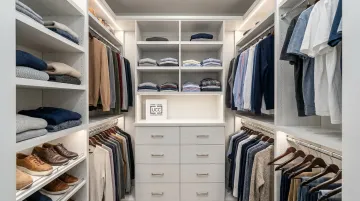
What that looks like in practice:
- Free, in-home design consultations to assess your actual space
- Estimates delivered in just 1-2 weeks
- Professional installation by licensed contractors
- Lifetime workmanship warranty on every system installed
You can redesign even the smallest reach-in closet or awkward coat closet around exactly what you own, rather than forcing your belongings into a generic layout.
Frequently Asked Questions
What can I use instead of a closet?
Freestanding wardrobes, open clothing racks, armoires, and under-bed storage bins all work well in homes without adequate closet space. Garment bags are also useful for protecting off-season items stored elsewhere.
What is a good size for a small closet?
Most reach-in closets measure roughly 6 feet wide by 24 inches deep, sometimes up to 8 feet wide and 30 inches deep. Anything beyond that generally moves into walk-in territory.
What are the closet design trends for 2026?
Trends for 2026 include bold interior paint or wallpaper, layered lighting for dark corners, and built-in systems that use every inch of space. These reflect emerging style choices rather than confirmed industry-wide forecasts.
How much does it cost to organize or redesign a small closet?
Costs range from a few dollars for bins and tension rods to a few thousand for a full custom-built system, depending on materials and layout complexity. A free consultation gives you an accurate, project-specific number.
How do I maximize vertical space in a small closet?
Add shelving above the hanging rod, install a double rod for shirts and pants, and use stackable labeled bins on any remaining shelf space. Vertical thinking almost always beats adding more floor-level storage.
Should I use open shelving or closed cabinets in a small closet?
Open shelving works best for frequently used, bulkier items like sweaters and bags. Closed cabinets or drawers hide clutter and protect delicate items from dust and light exposure.