
Introduction
The living room pulls double duty as the home's social center and its most visible space — yet it's often the hardest room to organize without sacrificing style. A pile of books here, a stack of remotes there, and suddenly the room feels cluttered rather than curated.
Shelving solves both problems at once — the right configuration turns bare walls into purposeful display space while keeping everyday clutter off the floor. According to Houzz's 2025 US Houzz & Home Study, 20% of renovating homeowners remodeled their living rooms in 2024. How storage is integrated often determines whether the finished room feels intentional or simply improved.
Whether your home leans modern, farmhouse, traditional, or eclectic, there's a shelving approach that fits. This guide covers 12 of the most effective, on-trend options — plus practical advice on choosing, styling, and installing the right solution.
Key Takeaways
- Match shelf type (floating, built-in, corner) to both the room's layout and your actual storage needs
- Built-in and custom shelving deliver more visual impact than pre-made units
- Mixing open display shelves with closed cabinetry is the most practical family-friendly configuration
- Material, lighting, and styling choices determine whether shelves become a focal point or an afterthought
- Planning shelf placement before decorating saves time, money, and wall repairs down the line
12 Clever Living Room Shelving Ideas for Every Style
These 12 ideas span a wide range of design styles, budgets, and room configurations — from minimalist apartments to traditional homes with high ceilings and original millwork.
1. Floating Shelves for a Clean, Modern Look
Floating shelves use concealed mounting hardware to create a light, uncluttered appearance on the wall. No visible brackets — the shelf becomes the design element, not the hardware.
They work particularly well in:
- Open-plan living areas where visual weight matters
- Smaller rooms where floor space is precious
- Displays mixing books, plants, framed photos, and curated objects
One practical note: Lowe's recommends fastening floating shelves directly into wall studs wherever possible. When studs aren't available, use anchors rated for both the wall type and the combined weight of the shelf and its contents.
2. Floor-to-Ceiling Built-In Shelving
Few shelving options make as immediate an architectural statement as floor-to-ceiling built-ins. They draw the eye upward, maximize vertical storage in high-ceilinged rooms, and work especially well for large book collections, travel mementos, or display pieces that deserve room to breathe.
Architectural Digest documents designers using this approach to anchor reading-focused rooms and add a sense of grandeur that pre-made units simply can't replicate. The trade-off is installation complexity — a seamless, polished result requires professional fitting and finishing.
3. Fireplace Flanking Shelves
Framing a fireplace with symmetrical shelving on either side is one of interior design's most enduring techniques. It anchors the fireplace as the room's focal point while adding practical surface area on both sides.
The configuration can range from:
- Sleek floating boards for a contemporary, minimal look
- Full built-in cabinetry with doors and drawers for a more traditional feel
- Open shelving with trim detail that matches existing molding and millwork
Symmetry is non-negotiable. Uneven flanking throws off the entire wall composition, so plan both sides together before committing to any single shelf.
4. Mixed Open and Closed Storage
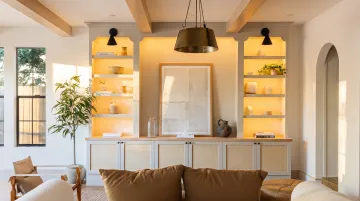
Open shelving on top, closed cabinets below — this combination is one of the most practical configurations for family living rooms. The upper shelves display curated decor, plants, and books. The lower cabinets handle everyday clutter: remotes, games, chargers, and everything else that accumulates.
Houzz describes this combination as a "design game-changer" for living areas, noting that it balances visual appeal with real-world functionality. Utah Closet Connection builds exactly this kind of mixed-storage cabinetry — designed around how a household actually uses its space, not just how it looks.
5. Corner and Wraparound Shelving
Corner shelves and wraparound designs reclaim wall space that typically sits empty. In smaller living rooms, this can add meaningful storage without consuming floor area.
Custom corner configurations can flow around:
- Windows and door frames
- Architectural columns or beams
- Existing built-in features like window seats
The real advantage is continuity. A wraparound design creates one cohesive visual line instead of isolated boards dotted across separate walls.
6. Asymmetrical Shelf Arrangements
Uniform rows are predictable. Staggered, asymmetrical arrangements introduce visual movement — varying shelf lengths, heights, and spacing creates a dynamic composition rather than a storage grid.
This approach suits eclectic, contemporary, and bohemian interiors well. The challenge is making it look deliberate rather than haphazard, which is why mapping out the layout with a designer before installation makes a real difference.
7. Shelves with Integrated LED Lighting
Under-shelf or backlit LED lighting transforms ordinary shelves into a genuine design feature. Light draws the eye directly to displayed objects and adds ambient warmth to the room — especially effective in the evening.
House Beautiful recommends LED strip lighting for illuminating display cabinets and bookshelves, and Architectural Digest documents walnut built-ins with integrated LED strips used to emphasize both the wood grain and the displayed objects.
Two practical options:
- Smart-home-compatible LED strips — accessible, DIY-friendly, and increasingly affordable
- Professionally wired in-shelf lighting — cleaner result with no visible cords or adhesive strips
8. Two-Tone or Painted Shelving
Painting built-in shelves is one of the fastest ways to make them feel intentional. Two approaches work well:
- Tonal/monochromatic — paint shelves the same color as the surrounding wall for a seamless, architectural look. House Beautiful identified color drenching — painting built-ins, walls, trim, and molding in a single color — as an enduring paint trend.
- Contrasting — use a bold or complementary color to make the shelving pop as a distinct design feature.
Matching painted shelves to existing trim is the quickest route to making a built-in look like it was always part of the room rather than added later.
9. Natural Wood and Live-Edge Shelves
Wood shelves bring warmth and organic texture that painted or laminate options can't replicate. Live-edge slabs add character — each one is distinctly different, making the shelf itself a decorative object.
Wood works well against:
- Painted plaster or drywall walls
- Stone fireplace surrounds
- Concrete or tile accents
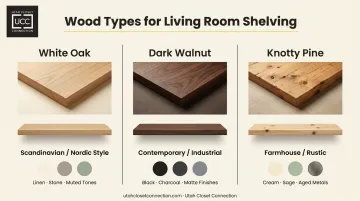
The wood tone and grain significantly influence the result. White oak reads as warm Scandinavian. Dark walnut skews contemporary or industrial. Knotty pine goes farmhouse. Stain choice matters almost as much as species selection.
10. TV Wall Shelving
A television mounted alone on a wall tends to dominate the room in a way that feels incomplete. Flanking it with floating shelves — or building a full media wall — gives the screen context and makes the entire wall feel designed rather than purely functional.
Books, plants, framed art, and decorative objects around the TV create a cohesive composition. The screen becomes one element among many instead of the room's sole focal point.
11. Nook and Alcove Shelving
Recessed walls, alcoves, and awkward corners are ideal candidates for custom-fit shelving. Unlike standard shelf systems that approximate a fit, custom alcove shelving is built precisely to the recess dimensions — no gaps, no filler panels.
Homes & Gardens recommends measuring an alcove's width, height, and depth carefully before sizing shelves, then customizing vertical spacing to suit the intended contents. Shelf spacing need not be uniform — varying the heights as shelves rise toward the ceiling is both practical and visually interesting.
12. Minimalist Picture Ledges and Display Rails
Picture ledges are shallow, rail-style shelves that let artwork, frames, and small plants lean rather than hang — making rearrangement effortless. IKEA describes them as a "minimum-drill" solution that's far easier to update than individually hung frames.
These suit minimalist and Scandinavian-influenced interiors particularly well. They require minimal wall impact compared to deeper shelving systems, though they do require some installation — they're not entirely hole-free.
How to Choose the Right Living Room Shelving Style
Function First
Before selecting a style, identify the primary purpose:
- Display only → shallower shelves, more open spacing, focus on aesthetic
- Active storage → deeper shelves, closed cabinet options, adjustable heights
- Combination → mixed open-and-closed configuration with varying depths
This single decision shapes every other choice: depth, height, material, and whether open or closed storage makes more sense.
Room Scale and Proportion
Shelf size must relate to the wall and the furniture around it. Oversized shelving overwhelms a modest room; undersized shelves feel disconnected from the space. In smaller living rooms especially, a well-sized built-in can anchor the space more effectively than several smaller, scattered pieces.
Negative space plays a role here too. Deliberately empty sections read as intentional, not unfinished.
Material and Finish Alignment
The shelving material should complement — not compete with — the room's existing flooring, furniture, and wall tones. Warm walnut can clash against cooler gray palettes, while white oak pairs naturally with linen, stone, and muted finishes. Painted built-ins that match existing trim tend to disappear into the architecture, creating seamless continuity.
Built-In vs. Freestanding
| Factor | Built-In | Freestanding/Floating |
|---|---|---|
| Visual impact | Higher | Moderate |
| Flexibility | Lower | Higher |
| Cost | Higher | Lower |
| Rental-friendly | No | Often yes |
| Adds home value | More likely | Less likely |
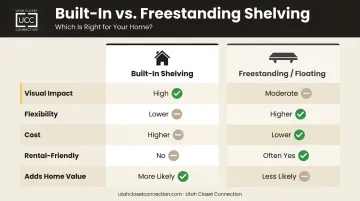
Built-ins are the better long-term investment for homeowners who plan to stay. Freestanding and floating options make more sense for renters or those who want flexibility.
Tips for Styling Your Shelves Like a Designer
Group in Odd Numbers
Designers consistently recommend grouping objects in odd numbers. A tall vase, a medium book stack, and one small decorative object read as a natural composition. Even numbers tend to feel symmetrical in a way that looks staged rather than collected.
Layer Textures and Materials
Flat, uniform displays look boring no matter how nice the individual pieces are. Mix:
- Ceramic and glass
- Woven baskets and raw wood
- Matte finishes with reflective surfaces
Plants are the single easiest way to add life and organic contrast to any shelf arrangement.
Leave Deliberate Space
The most common shelving mistake is filling every inch. Negative space makes a display feel curated rather than crowded. Style a section, step back, and remove one item — you'll almost always find the edit makes the whole arrangement stronger.
Custom Built-In vs. Pre-Made Shelving: Which Is Right for You?
Pre-made shelving units offer two practical advantages: lower upfront cost and immediate availability. But they rarely fit wall dimensions precisely, leave visible gaps at ceiling or floor level, and are difficult to finish in a way that looks intentional.
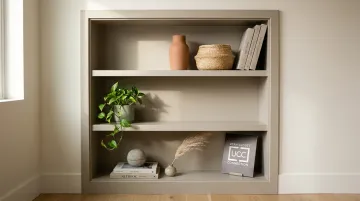
Custom built-ins are designed to the exact dimensions of the room. They match existing millwork, accommodate architectural quirks, and deliver results that look like they were always part of the structure — because, in effect, they were.
HomeAdvisor's 2025 cost guide puts fully custom built-ins at $400–$1,200 per linear foot versus $150–$300 per linear foot installed for pre-made units nationally. The gap is real. So is the difference in finished results, particularly in living rooms that serve as a home's centerpiece.
For Utah homeowners who want a truly tailored result, Utah Closet Connection designs and installs custom shelving and cabinetry solutions with professional installation by licensed contractors, backed by a lifetime workmanship warranty. Start with a free design consultation; estimates typically come back within one to two weeks.
Conclusion
The right shelving approach — whether floating boards, floor-to-ceiling built-ins, alcove shelves, or a mixed open-and-closed configuration — can turn the most underused wall in a living room into its most defining feature. Getting there takes more than picking a style — the scale, material, and purpose all have to work together for shelving to feel like it belongs rather than was simply added.
When you're ready to move from inspiration to installation, Utah Closet Connection's design team can help translate any of these ideas into built-in shelving custom-fitted to your space. They serve homeowners across Salt Lake, Utah, Davis, Weber, and Summit Counties.
Call (801) 939-3088 (Monday–Thursday, 9AM–4PM) or request a free consultation at utahclosetconnection.com to get a solution built specifically for your home.
Frequently Asked Questions
How do you style shelving in a living room?
Group items in odd numbers, mix textures and heights within each grouping, and leave deliberate negative space between arrangements. Anchor each section with one larger piece before adding smaller objects around it.
What are the latest trends in display shelves?
Integrated LED lighting, warm natural wood finishes (particularly white oak and walnut), asymmetrical arrangements, and color-drenched built-ins painted to match the surrounding wall are all prominent in 2024–2025 design coverage.
What can I use instead of shelves?
Wall-mounted cabinets with glass fronts, ladder-style leaning bookcases, pegboard systems, or console tables paired with baskets offer similar open-storage effects without fixed wall shelving.
Do built-in shelves add value to a home?
Built-ins made from quality materials with professional installation generally improve buyer appeal, though no precise premium has been reliably measured. Low-grade DIY built-ins typically do not add value. Craftsmanship and material quality are what buyers notice.
What is the standard depth for living room shelves?
Most living room shelves range from 8 to 12 inches deep. Shallower shelves (6–8") work well for books and decor; deeper shelves (10–12") accommodate baskets, media equipment, or larger display objects.
How much space should there be between floating shelves?
Spacing should match what you're storing. This Old House recommends 8 inches of clear height for paperbacks, 10.5 inches for standard hardcovers, and 15 inches for coffee-table books. Going 18–24 inches between shelves reads as intentional and airy rather than cramped.