Choosing between them isn't just a style preference. It affects your budget, how much work goes into installation, whether you get a full-comfort mattress, and how easily you can reconfigure a room later. This guide breaks down both options so you can match the right one to your space, your guests, and your wallet.
Key Takeaways
- Murphy beds are wall-mounted, permanent fixtures ideal for daily use.
- Cabinet beds are portable, freestanding units with a foam mattress.
- Cost, installation complexity, and mattress comfort separate the two most.
- Your choice depends on needing a permanent bed or a movable guest solution.
Murphy Bed vs. Cabinet Bed: Quick Comparison
Here's how the two options compare across the factors that matter most:
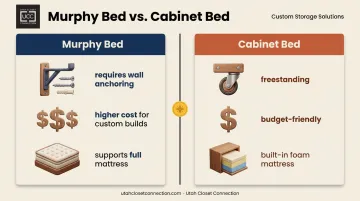
| Factor | Murphy Bed | Cabinet Bed |
|---|---|---|
| Cost | Higher for finished/custom builds ($3,500-$15,000+ for custom cabinetry); DIY hardware kits can start around $599 | More budget-friendly; finished queen units typically run $1,900-$3,100 |
| Installation | Requires anchoring to wall studs; often needs a licensed contractor | Freestanding, no wall or floor bolting required |
| Mattress | Supports a real mattress, often up to 10-12 inches thick | Includes a built-in 6-inch tri-fold foam mattress |
| Portability | Permanent once installed; cannot relocate | Easy to move between rooms or homes |
| Space needs | Needs wall height plus full fold-down clearance | Needs floor clearance in front of the cabinet |
In practice: price ranges actually overlap. A hardware-only Murphy kit can cost less than a finished cabinet bed, while a custom-built wall bed can run well past either option. The real differentiator is permanence, not just price.
What Is a Murphy Bed?
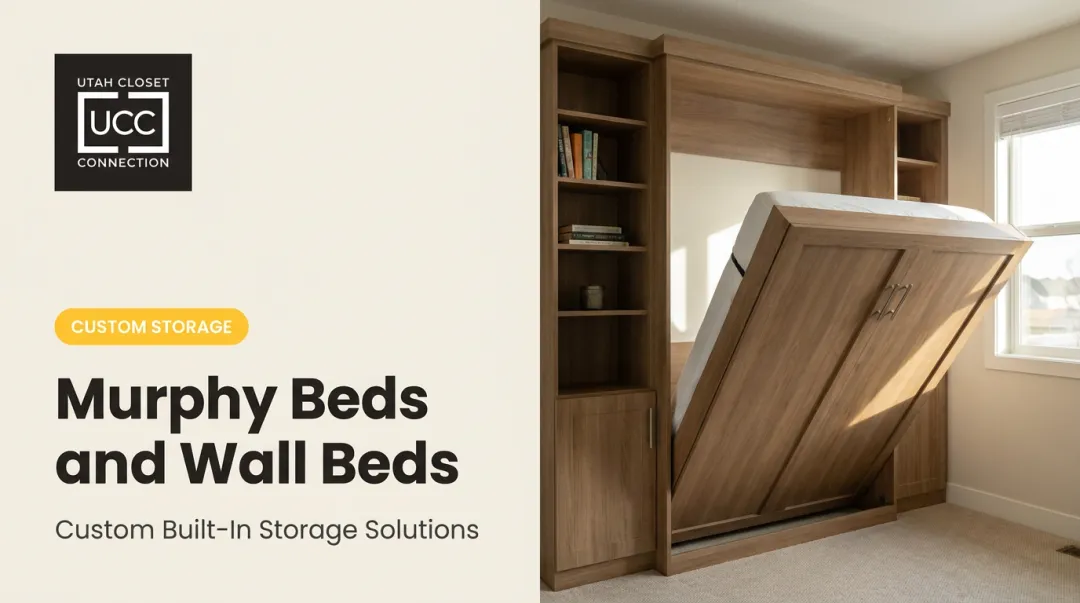
A Murphy bed is a wall-mounted bed frame that folds up vertically or horizontally, tucking away to free up floor space when it's not in use. Rather than folding the mattress itself, the frame rests on a platform that swings against the wall, which is why these beds can support a real mattress rather than a thin foam pad.
The design isn't new. Cabinetmaker William Lawrence Murphy invented the disappearing bed for his one-room San Francisco apartment and patented it in 1911, and the concept has barely changed since. Only the finishes and mechanisms have improved.
Why Homeowners Choose Murphy Beds
- Maximizes usable floor space by folding entirely against the wall
- Supports full-size, customizable mattresses for genuine everyday comfort
- Disguises as furniture, hiding behind desks, bookcases, or cabinet panels
- Integrates with built-in storage, turning a spare room into a functional space
Common variations include panel beds, desk-combo beds, bookcase beds, and sofa Murphy beds, each blending the sleeping function into a different daily-use piece. Because these builds are custom and wall-anchored, working with an experienced cabinetry team (like Utah Closet Connection) ensures the mounting hardware is secure and the finished look matches the rest of your room.
Where Murphy Beds Work Best
Murphy beds shine in spaces that need to do double duty every single day:
- Guest rooms that double as home offices
- Urban apartments where every square foot counts
- Staged real estate listings, where flexible rooms boost perceived value
A 340-square-foot New York apartment featured in Architectural Digest illustrates this well. A custom Murphy bed folds away to reveal built-in shelving that functions as a mini library. The room serves as both bedroom and living space, depending on the hour.
What Is a Cabinet Bed?
A cabinet bed is a freestanding, furniture-style unit that looks like a dresser or cabinet when closed but unfolds into a sleeping platform when needed. Unlike a Murphy bed, nothing attaches to the wall. The whole unit (frame, platform, and mattress) lives inside the cabinet and rolls or unfolds out onto the floor.
Most cabinet beds include a compact tri-fold or memory foam mattress built into the design, so there's no separate mattress purchase required. This makes them a fast, no-installation option for renters and occasional guests.
Why People Choose Cabinet Beds
- No installation required: no studs, no bolts, no contractor visit
- Easy to relocate between rooms or even to a new home
- Doubles as furniture when closed, blending into any decor
- Lower upfront cost compared to custom Murphy bed builds
Subtypes include cabinet beds with built-in storage drawers, sofa-style units, and desk-cabinet combinations that convert from a standing desk to a bed in under a minute.
Where Cabinet Beds Work Best
Cabinet beds fit spaces where sleeping is occasional, not nightly:
- Studio apartments and small condos
- Rental units where tenants can't modify walls
- Vacation rentals needing flexible guest capacity
- Craft rooms or home offices that occasionally host overnight guests
The Spruce tested a freestanding cabinet bed for a full year and found it a strong fit for multipurpose rooms. It held up well for occasional use, though it wasn't built for nightly sleeping.
That's the tradeoff: cabinet beds handle guest weekends well, but a Murphy bed's real mattress wins out for anyone sleeping there most nights.
Murphy Bed vs. Cabinet Bed: Which One Should You Choose?
Weigh these five factors before deciding:
- Budget: how much you're willing to spend upfront
- Frequency of use: nightly sleeping versus occasional guests
- Permanence: do you own the space long-term, or rent it?
- Mattress comfort priorities: full mattress flexibility versus built-in foam
- Available space: wall height and clearance versus floor clearance
| Choose... | If you... |
|---|---|
| Murphy bed | Want a permanent, daily-use sleeping solution with full mattress flexibility and built-in storage, ideal for turning a guest room into a dual-purpose office or den. |
| Cabinet bed | Prioritize affordability, portability, and occasional guest use over nightly comfort, ideal for renters, vacation properties, or spaces where wall modifications aren't possible. |
A Practical Example
Consider a Salt Lake County homeowner converting a rarely used formal dining room into a guest suite that also functions as a craft space. If guests stay several times a month and comfort matters, a built-in Murphy bed with surrounding cabinetry solves the daily-use problem while adding storage for craft supplies.
If guests are rare, just a couple weekends a year, a freestanding cabinet bed avoids the investment in wall-mounted construction entirely.
The deciding factor almost always comes down to usage frequency and the room's permanence. A free design consultation with a storage specialist can help you evaluate wall space, room function, and budget before committing either way.
Conclusion
Neither bed is universally better. A Murphy bed wins on permanence and mattress comfort, integrated seamlessly into your cabinetry. A cabinet bed counters with affordability, portability, and zero-installation setup.
The right call depends on your specific room, guest frequency, and budget. If you're leaning toward a custom, built-in Murphy bed, Utah Closet Connection can help. The company has designed storage and cabinetry solutions across Salt Lake, Utah, Summit, Davis, and Weber Counties since 1983, backed by a lifetime workmanship warranty. A free consultation can turn your underused room into a space that works for you every day.
Frequently Asked Questions
Are cabinet beds as comfortable as Murphy beds?
Murphy beds offer more comfort since they support a full mattress of your choosing. Cabinet beds work fine for occasional use but rely on a built-in tri-fold or foam mattress, which isn't designed for nightly sleeping.
Where does the mattress go in a cabinet Murphy bed?
The mattress folds and stores inside the cabinet unit when not in use. When needed, it unfolds along with the frame to form a sleeping platform on the floor.
Which is cheaper, a Murphy bed or a cabinet bed?
Cabinet beds are typically more affordable thanks to simpler construction and no installation costs. Custom Murphy beds cost more due to materials, cabinetry, and wall-mounting labor.
Can a cabinet bed be moved easily to another room?
Yes. Cabinet beds are freestanding and portable, unlike Murphy beds, which are permanently anchored to a wall once installed.
Do Murphy beds require professional installation?
Most Murphy beds need secure anchoring to wall studs, which is best handled by a licensed contractor or cabinetry expert. This ensures the mechanism is safe and durable for daily use.
What size mattress fits in a cabinet bed?
Cabinet beds usually use a compact 6-inch tri-fold mattress sized to the cabinet, most commonly in twin or queen dimensions depending on the model.