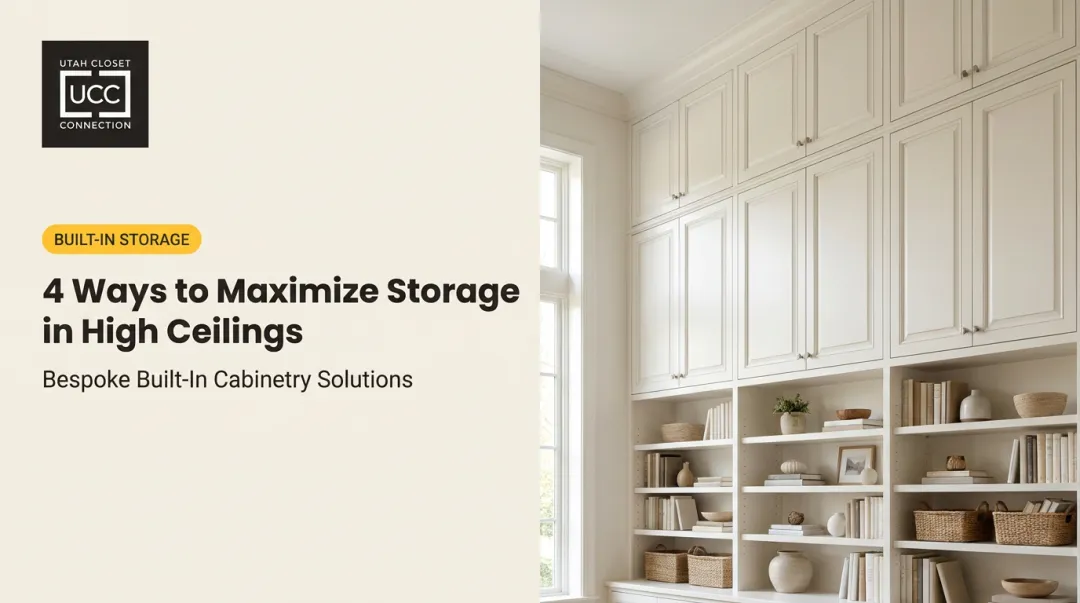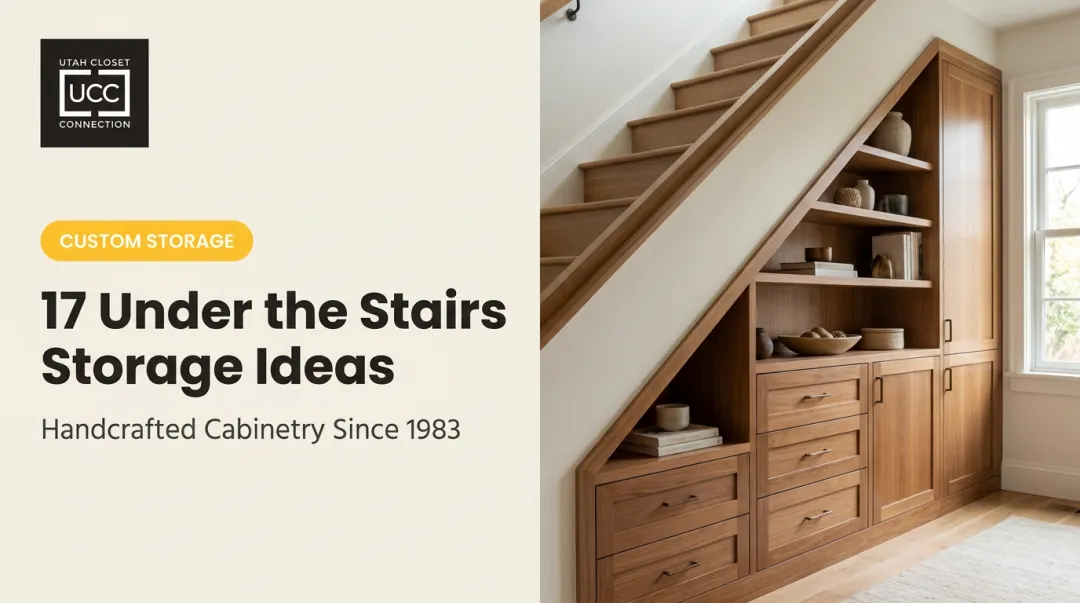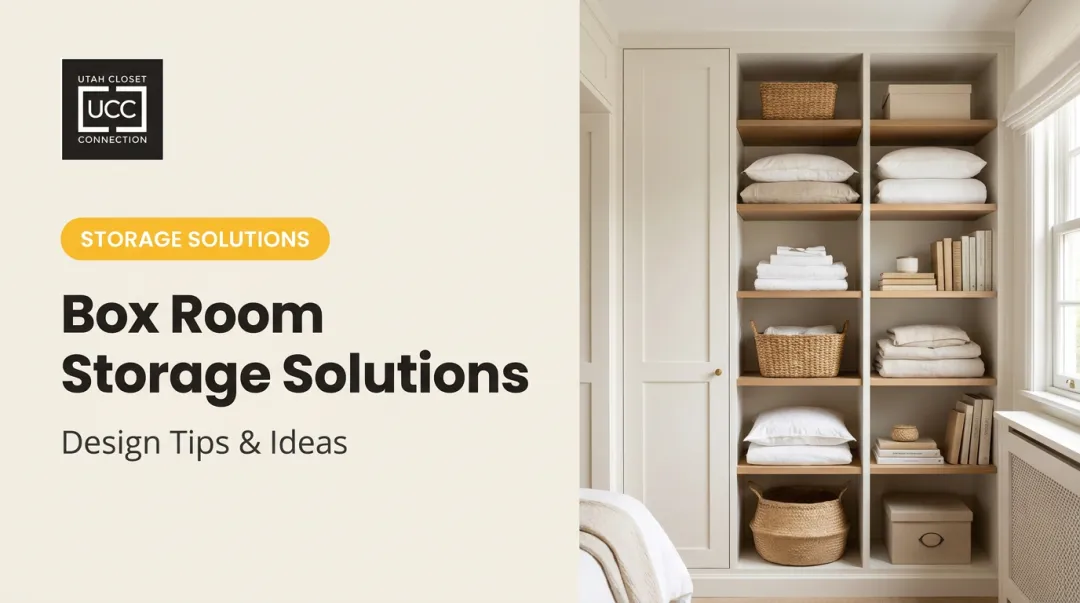

Introduction
Your counters are buried. Your closet door barely closes. And somehow, despite all that clutter, there are several feet of empty wall space staring at you above the highest shelf in every room.
That gap between your tallest furniture and your ceiling is wasted storage — and most homes are full of it. According to a 2024 OnePoll survey, 73% of homeowners felt overwhelmed when their home was untidy, and 40% admitted they avoid confronting their clutter altogether.
That overwhelm has a practical answer most people skip right over: vertical storage. Instead of buying more furniture or renting a storage unit, you use the height your rooms already have — walls, doors, and ceiling space — to add real capacity without touching your floor plan.
This guide covers 20+ vertical storage solutions organized by scale: small (no tools needed), medium (some wall mounting), and large (built-in, long-term). Whether you rent or own, there's an option that fits your space and your weekend schedule.
Key Takeaways
- Vertical storage uses wall height and door backs — not floor space — to expand capacity in any room.
- Small solutions like under-shelf baskets and over-door organizers cost under $25 and require zero drilling.
- Medium options like pegboards and floating shelves add serious capacity with minimal installation.
- Large systems like custom closets and floor-to-ceiling shelving deliver the biggest long-term impact.
- Start with your most frustrating room, then scale up from there.
What Is Vertical Storage and Why Does It Matter?
Vertical storage means using the height of a room — walls, door backs, and ceiling space — rather than relying solely on floor area or countertops to hold your belongings.
Most homes have more unused vertical space than people realize. The NAHB reported an average first-story wall height of 9 feet, yet most furniture and shelving tops out well below that. Everything between your highest shelf and the ceiling is storage space going to waste.
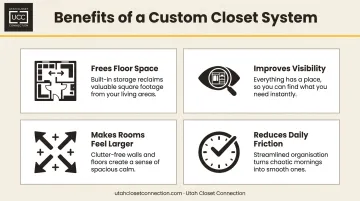
The practical benefits are straightforward:
- Frees floor space — reducing the cramped, cluttered feeling in small rooms
- Improves visibility — items stored at different heights are easier to scan and find
- Makes rooms feel larger — drawing the eye upward creates a sense of height and openness
- Reduces daily friction — when everything has a logical place, putting things away takes seconds
The payoff isn't just aesthetic. A 2016 study published in Personality and Social Psychology Bulletin found that people who described their homes as cluttered showed higher cortisol levels throughout the day. Getting your space organized is a health decision as much as a design one.
Small Vertical Storage Solutions
Small-scale solutions require little to no installation, work inside existing cabinets or on shelves, and are ideal for renters or anyone starting on a tight budget. Most cost under $30.
Stacking Drawers and Containers
Acrylic or plastic stackable drawers placed inside cabinets — under the sink, in the pantry, inside a closet — turn a single shelf slot into two or three usable layers. The Container Store sells acrylic stackable organizers starting at $3.99–$8.99 each. Stick to uniform containers; mismatched sizes undercut the vertical gain.
Under-Shelf Baskets
Clip-on baskets attach to existing shelf edges and create a bonus storage layer in the dead air below. They're ideal for kitchen cabinets, pantries, and closets where shelf spacing leaves room to spare. IKEA's clip-on basket runs $8.99; wire and steel options at The Container Store range $12.99–$24.99.
Over-the-Door Organizers
Pocket-style organizers and over-door racks hang without drilling and convert every door back into usable storage. Common applications:
- Pantry doors: spices, snacks, foil, and wrap
- Closet doors: shoes, accessories, and folded items
- Bathroom doors: toiletries, hair tools, and cotton products
- Laundry room doors: detergents, dryer sheets, and cleaning supplies
Basic over-door organizers run $13–$22 at most home improvement retailers.
Wall-Mounted Spice Racks (Repurposed)
A standard wall-mounted spice rack — installed inside a closet or on a bathroom wall — organizes far more than spices. Makeup, nail polish, small toiletries, craft paints, and office supplies all fit neatly in the slots. They mount in minutes and hold considerably more than their footprint suggests.
Magnetic Strips
A magnetic strip on a kitchen backsplash or bathroom wall keeps metal items — knives, scissors, bobby pins, tweezers — visible, accessible, and off the counter. IKEA's HULTARP magnetic knife rack is $17. No shelf space required.
Under-Shelf Stemware and Cup Holders
Rail-and-cup systems or hanging stemware holders mount underneath cabinets, freeing shelf space for other items. Useful in kitchens, home bars, and craft rooms where tools or glasses would otherwise eat up a full shelf level.
Shelf Risers and Organizers
Shelf riser inserts split a single cabinet level into two, effectively doubling storage capacity without any installation. Target's Brightroom stackable shelf starts at $10; The Container Store carries riser options up to $29.99. They work well across a surprising range of spaces:
- Kitchen cabinets: mugs, plates, and canned goods
- Pantry shelves: boxed dry goods and spice overflow
- Closets: folded clothing and accessories
- Office shelves: binders, notebooks, and small bins
Medium Vertical Storage Solutions
Medium-scale solutions involve some mounting or basic assembly but no major renovation. Most homeowners can handle them in an afternoon, and some are renter-friendly with landlord approval.
Pegboards
Once mounted on a wall, a pegboard's real advantage is flexibility — hooks, bins, cups, and shelves can be rearranged endlessly as your storage needs change. A standard 4x8 hardboard panel runs $23.98 at Home Depot; Wall Control's metal panels start at $49.99 with a starter accessory kit around $70.
Where it works:
- Kitchen: utensils, lids, measuring cups
- Home office: cords, headphones, supplies
- Garage or craft room: tools, scissors, spray paint
- Kids' bedroom: craft supplies, small toys
Hooks, Pegs, and Command Strips
Wall hooks and peg rails work in every room — coats and bags in the entryway, towels in the bathroom, sports gear in the garage, accessories in the bedroom. For renters, Command adhesive hooks offer a damage-free alternative with capacities ranging from 0.5 to 10 lbs per hook, depending on the model. Large utility hooks run $3.98–$9.97.
Ladder Shelves
Leaning ladder-style bookshelves require no drilling and provide tiered storage that draws the eye upward. They work well in living rooms, bedrooms, and home offices for books, plants, and baskets. Prices range $39.99–$130 depending on material and tier count.
Rolling Multi-Tier Carts
A three-tier rolling cart provides vertical, portable storage for craft supplies, kitchen overflow, cleaning products, or a kids' art station. Target's Brightroom metal cart is $40, with each shelf rated at 20 lbs. Roll it to wherever it's needed, then slide it out of sight when it's not.
Cabinet Above the Toilet
The over-toilet cabinet (or etagere) claims dead vertical space in bathrooms without taking a single square foot of floor area. It stores toilet paper, towels, toiletries, and medicine. Freestanding units run $104–$120 and require no wall anchors.
Floating Shelves
Floating shelves work in nearly every room — kitchen, bathroom, living room, bedroom, laundry room. Group them in vertical columns to maximize height rather than spreading them horizontally. Sets run $89.99–$129.99 at major retailers.
Weight limits vary significantly by product and wall attachment. IKEA's LACK shelf is rated at 33 lbs, while heavy-duty concealed brackets can handle 110–230 lbs.
Safety note: Always anchor shelves to wall studs when possible. When studs aren't available, use wall anchors rated for the load. Toggle bolts can hold up to 50 lbs per pair in drywall; expansion anchors can handle up to 100 lbs per pair in concrete or masonry.
Track Systems for Tools and Equipment
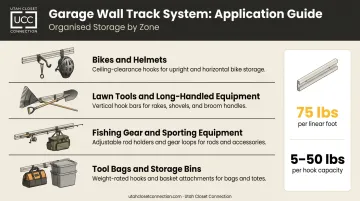
Wall-mounted track and hook systems convert garage walls into organized vertical storage. Gladiator's GearTrack channels are rated at 75 lbs per linear foot, with hook-specific capacities of 5–50 lbs per hook. Common applications include:
- Bikes and helmets
- Lawn tools and long-handled equipment
- Fishing gear and sporting equipment
- Tool bags and storage bins
Large Vertical Storage Solutions
Large-scale solutions require more investment but deliver the most dramatic, lasting results. These are the options that genuinely transform a room's function.
Tall Freestanding Cabinets
Floor-to-ceiling or extra-tall freestanding cabinets anchor a room and maximize height without any wall mounting. They work across living rooms, bedrooms, home offices, kitchens, and laundry rooms — open shelving for display, closed doors for concealment. The height is the feature; most standard furniture stops well short of the ceiling.
Wall Shelving Systems (Floor-to-Ceiling)
Modular wall shelving systems like IKEA BOAXEL ($125–$262 per combination) or The Container Store's Elfa (from $169.99, with larger configurations reaching $519–$720) can be configured from floor to ceiling in closets, garages, basements, and home offices. Adjustable shelving means you can reconfigure as your storage needs evolve — seasonal bins one year, file boxes the next.
Metal Shelving Units for Basements and Garages
Heavy-duty metal wire or solid shelving units are the workhorses of basement and garage storage. They hold seasonal bins, tools, paint supplies, and sports gear at multiple height levels without requiring permanent installation. Weight capacities are significantly higher than standard residential shelving, making them the right tool for heavy loads.
Under-Stair Storage
The triangular space beneath a staircase is often completely wasted.It can become pull-out drawers, built-in shelves, or an enclosed closet, creating substantial storage without changing a room's footprint. This Old House documents options including pull-out bins, modular cubbies, and hinged-door enclosures that work with various stair configurations.
Entertainment Built-Ins and Media Units
A wall-spanning media unit using modular systems like IKEA BESTA ($240–$485 per verified combination) or custom cabinetry adds substantial vertical storage to a living room while keeping everything visually organized. Built-ins also eliminate the cable clutter and mismatched shelving that make most living rooms feel chaotic.
Custom Closet Systems
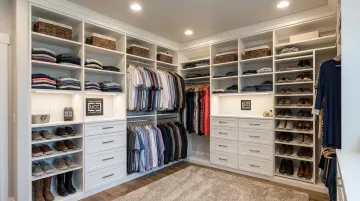
A professionally designed closet system is the highest-impact vertical storage upgrade most homeowners can make. It replaces inefficient wire shelving with a fully configured system built to the exact dimensions of your space, combining adjustable shelving, double hanging rods, pull-out drawers, and shoe storage in a single cohesive installation.
According to Angi's 2026 data, professional custom closet installation averages $2,136, with a normal range of $1,046–$3,226 and walk-in closets running $1,000–$8,000 depending on size and configuration.
Utah Closet Connection, serving Salt Lake, Utah, Davis, Weber, and Summit counties since 1983, installs custom systems up to 105 inches tall — built to the exact dimensions of your space. Their process includes a free in-home consultation, a virtual design review, and estimates returned within one to two weeks. All work is performed by licensed contractors and backed by a lifetime workmanship warranty.
Key details at a glance:
- Free in-home consultation with a designer who measures and assesses your space
- Virtual plan review to refine the design before installation begins
- Estimates in 1–2 weeks
- Lifetime workmanship warranty on all installations
- Licensed contractors across Salt Lake, Utah, Davis, Weber, and Summit counties
How to Choose the Right Vertical Storage Solution
Start with Two Questions
1. Do you own or rent? Renters should focus on no-drill and freestanding options: over-door organizers, ladder shelves, rolling carts, and Command hooks. Homeowners have access to the full range, including permanent wall-mounted and custom-installed systems.
2. Which room causes the most daily frustration? Start there. A cluttered kitchen or overflowing closet affects your routine every single day — solving it first delivers the most immediate quality-of-life improvement.
Assess Your Vertical Potential
Walk through the room and measure:
- Wall height vs. current furniture height — the difference is your dead zone
- Door backs — are they completely bare?
- Nooks and odd spaces — above the toilet, under the stairs, beside the washer/dryer
Before selecting any system, sketch the space and note floor-to-ceiling height, wall-to-wall width, and the location of outlets, vents, and other obstructions. That 15-minute exercise catches conflicts before anything gets ordered or installed.
Scale Up Gradually
If you're unsure where to start, begin with a pegboard or a set of floating shelves. The investment is low, the installation is reversible, and seeing the result firsthand makes the case for going further.
When you're ready for a permanent upgrade — a closet system, garage wall, or built-in cabinetry — a professional designer gets the configuration right the first time, saving both time and material costs.
Frequently Asked Questions
What is vertical storage and how does it help with home organization?
Vertical storage means using wall height, door backs, and ceiling space — rather than just floor area — to store items. It reduces visible clutter, increases total storage capacity, and can make small rooms feel noticeably larger without any construction.
Can I use vertical storage solutions in a rental apartment?
Yes. Over-door organizers, freestanding ladder shelves, rolling carts, and Command adhesive hooks all require no drilling and leave no wall damage. These options give renters meaningful storage gains without risking their security deposit.
Where should I start if I want to add vertical storage to my home?
Start with the room causing the most daily clutter frustration — typically the kitchen, a bedroom closet, or the bathroom. Begin with one small solution (an under-shelf basket or over-door organizer), see the impact, then scale up from there.
How do I make sure wall-mounted shelves are safe and secure?
Anchor shelves to wall studs whenever possible using an electronic stud finder. When studs aren't available, use wall anchors rated for the load — toggle bolts handle up to 50 lbs per pair in drywall. Always follow the weight limits specified for the shelf and bracket, not a general estimate.
What is the difference between a freestanding shelf and a custom closet system?
A freestanding shelf is portable and requires no installation — it's flexible but limited in capacity. A custom closet system is permanently installed and built to the exact dimensions of your space, offering significantly more storage, better organization, and a configuration tailored to how you actually use the room.
How much can vertical storage solutions cost, from budget to premium?
Budget options like shelf risers and adhesive hooks run under $10, while over-door organizers and pegboards fall in the $13–$130 range. Modular DIY systems (BOAXEL, Elfa) run $125–$720, and professionally installed custom closet systems average $2,136 — with walk-ins reaching $1,000–$8,000 depending on size and materials.