A 2022 CRAFTSMAN/Atomik survey found that 62% of U.S. adults consider the garage their home's most cluttered space, and 36% said clutter had actually pushed their vehicle out of the garage entirely. That's not a minor inconvenience. That's an entire room of the house going to waste.
A well-planned cabinet system fixes this. This guide walks through the best materials, the storage layouts that actually work, and how to decide between a retail kit and a custom build. We'll also cover how Utah-based specialists like Utah Closet Connection design tailored systems for homeowners dealing with Utah's temperature swings and unpredictable garage conditions.
Key Takeaways
- Cabinets shield tools and gear from moisture, dust, and temperature swings
- Powder-coated steel and melamine outlast wood or plastic in temperature-swinging garages
- Combining wall, overhead, and floor cabinets maximizes every square foot
- Custom systems fit uneven walls and odd layouts better than off-the-shelf kits
Why Invest in Garage Cabinet Storage
Garages consistently rank as the messiest room in the house, and it's easy to see why. There's no closet system, no drawers, no logical place for anything — so items pile up wherever there's floor space.
Cabinets solve this by giving every item a designated spot. That alone changes how the space functions.
Reclaimed floor space matters more than people expect. Once tools, seasonal boxes, and sports gear move into cabinets, the floor opens up for parking, a workbench, or simply room to move without tripping over a snow blower.
Safety and Protection Benefits
Enclosed cabinets do more than tidy up. They:
- Keep sharp tools, power equipment, and chemicals locked away from kids and pets
- Shield stored items from moisture, dust, pests, and Utah's swing between summer heat and winter freeze
- Protect valuables like sporting equipment or seasonal decor from warping or corrosion
- Reduce fire and trip hazards from loose clutter near vehicles
Open shelving leaves everything exposed to garage humidity and dust. A sealed cabinet door is a simple barrier that makes a real difference over years of storage.

The Resale and Aesthetic Angle
A finished garage with matching cabinetry looks intentional, not improvised. Buyer research from the National Association of Home Builders lists garage storage among the features today's buyers actively want in a home. While no major resale report puts a specific dollar figure on cabinetry alone, the organizational upgrade regularly ranks as a desirable feature during walkthroughs and open houses.
Best Materials for Garage Cabinets
Material choice determines whether your cabinets last five years or twenty. Garages aren't climate-controlled rooms — they swing between summer heat and freezing winter nights, and that stress wears down cheaper materials fast.
Steel: The Heavy-Duty Standard
Steel cabinets, typically 16- to 18-gauge and powder-coated, are the most durable option for garages dealing with humidity, dents, and daily heavy-duty use. According to the Powder Coating Institute, powder coatings are engineered to resist corrosion, UV damage, and physical wear when properly applied, which is exactly the kind of protection Utah garages need through freeze-thaw cycles.
Steel is the go-to choice for:
- Workshop garages with power tools and heavy equipment
- Households storing chemicals or items sensitive to pests
- Anyone wanting a finish that resists dents and scratches long-term
Wood, Plastic, and Laminate Options
Not every garage needs steel. Here's how the alternatives stack up:
- Wood/plywood: Offers a warm, custom-home look that matches finished basements or living spaces. Requires sealing, since untreated wood can warp, crack, or deteriorate under humidity and temperature swings.
- Plastic/polymer: Budget-friendly, lightweight, and immune to rust. Not ideal for very heavy tools or dense storage loads.
- Thermofoil/laminate: A mid-range option that balances appearance with moisture resistance, often built over industrial-grade melamine boxes for added durability.
Matching material to your garage: If you're running a workshop with power tools, steel wins on durability. If you want cabinets that blend with a finished, hobby-room aesthetic, sealed wood or laminate finishes make more sense. Budget-conscious buyers doing light storage can start with polymer and upgrade later.
Top Garage Cabinet Storage Ideas to Maximize Your Space
The best garage layouts never rely on a single cabinet type. Combining placements lets you use every wall, corner, and overhead gap instead of cramming everything into base cabinets alone.
Wall-Mounted Cabinets
Wall cabinets keep the floor completely clear while putting frequently used tools and supplies at eye level. They're ideal for items you reach for weekly, not the stuff you store once a year.
Pair them with slatwall panels or pegboard for hanging smaller tools, extension cords, or gardening equipment. This combination gives you enclosed storage plus flexible, visible access in the same footprint.
Overhead Storage Cabinets
Ceiling-mounted cabinets are perfect for seasonal or rarely used items — holiday decorations, camping gear, luggage that only comes out twice a year. Getting these items off the floor and out of eye-level cabinets frees up valuable space for daily-use items.
That extra space only pays off with correct installation. One critical rule: overhead cabinets must be anchored directly to ceiling joists, not just drywall. Manufacturer installation guides consistently require stud- or joist-level anchoring for any wall or overhead unit carrying real weight. This isn't a spot to cut corners.
Floor-to-Ceiling Tall Cabinets
Tall cabinet runs handle long or bulky items that don't fit anywhere else — brooms, ladders, hockey sticks, fishing rods. In narrow garages, going vertical instead of wide is often the only way to fit adequate storage without blocking a parking space.
Modular Base Cabinets with Drawers
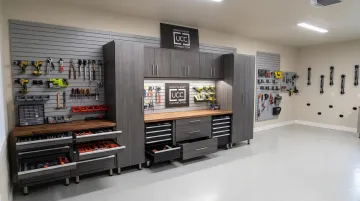
Base cabinets with heavy-duty drawer sliders are built for small parts, hardware, and hand tools that need to stay organized and easy to find. Many systems pair these with a durable countertop surface, such as butcher block or stainless steel, turning the cabinet top into usable workspace for projects.
Cabinets with Integrated Workbenches
For garages doing double duty as a workshop, combining storage with a built-in workbench creates a dedicated zone for DIY projects or hobbies. Everything you need is within arm's reach, and tools go back into drawers instead of piling up on the bench surface.
Utah Closet Connection builds this configuration around your exact space, sizing the workbench and surrounding cabinets to match how you actually use the garage, whether that's woodworking, auto repair, or seasonal projects.
How to Choose the Right Garage Cabinet System
Retail kits and custom-built systems solve the same problem in very different ways.
| Factor | Retail/Prefab Kits | Custom-Built Systems |
|---|---|---|
| Fit | Standard module sizes | Built to your exact wall and floor dimensions |
| Cost | Generally lower upfront | Higher upfront, better long-term value |
| Installation | Often DIY | Professional, licensed installation |
| Adjustability | Limited to available modules | Fully adjustable to layout quirks |
According to Angi's 2026 cost research, installed garage cabinets typically run $505 to $2,156 per cabinet, depending on size, material, and project complexity. That range covers everything from simple modular boxes to fully custom builds.
Before choosing a layout:
- Measure your garage's full dimensions, including ceiling height and any sloped sections
- List everything you need to store: tools, seasonal gear, sports equipment, chemicals
- Decide whether the space needs to double as a workshop
- Note any support posts or other structural quirks that could affect cabinet fit
Why Professional Design and Installation Matter
Uneven walls, sloped floors, and irregular garage dimensions are common, and they can throw off a retail kit fast. A professional consultation catches these issues before cabinets are ordered, not after they don't fit.
Utah Closet Connection offers free design consultations, professional installation by licensed contractors, and a lifetime workmanship warranty on every project. Since 1983, the company has designed 100% custom cabinetry for homeowners across Salt Lake, Utah, Summit, Davis, and Weber counties.
Each system is tailored to the specific garage rather than forced into a standard module, with estimates typically arriving within one to two weeks of the initial consultation.
Garage Cabinet Organization and Maintenance Tips
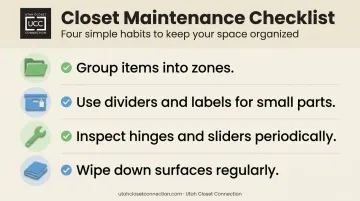
Cabinets only stay organized if what's inside them has a system too. A few habits keep things functional for years:
- Group items into zones first: tools in one section, sports gear in another, seasonal items in a third. Assign cabinet space based on these zones, not randomly.
- Use drawer dividers, bins, and labels inside cabinets so small parts like screws, bits, and fasteners stay easy to find instead of buried in a junk drawer.
- Inspect hinges, sliders, and seals periodically, since Utah's temperature swings put real stress on hardware. Catching a loose hinge early prevents bigger repairs later.
- Wipe down surfaces regularly to keep dust and moisture from building up inside enclosed cabinets, especially in unfinished garages.
These small habits keep the cabinets working the way they were designed to, year after year.
Frequently Asked Questions
What is the best material for garage cabinets?
Powder-coated steel is generally the most durable choice, offering strong resistance to corrosion and physical wear. Wood and plastic work well for lighter use or tighter budgets, especially when sealed properly.
Are garage cabinets worth the investment?
Cabinets improve organization, protect belongings from moisture and pests, and make the space usable for parking again. They also add to a home's overall appeal during resale.
How much does it cost to install garage cabinets?
Costs vary by material, size, and cabinet style, typically ranging from about $500 to over $2,000 per cabinet. Utah Closet Connection offers free, no-obligation estimates tailored to your specific garage layout.
Should garage cabinets be wall-mounted or floor-standing?
Most efficient garages use a mix of both. Wall and overhead cabinets clear the floor for parking, while base cabinets handle heavier items and everyday tools.
Can garage cabinets be customized to fit any space?
Yes. Custom cabinetry can be designed around uneven walls, sloped floors, support posts, or other unusual layout challenges that standard kits can't accommodate.
What is the standard height for garage cabinets?
Wall cabinets typically run about 30 inches high, while base cabinets are shorter and deeper for workspace use. Tall units can extend to the ceiling, reaching up to 75-80 inches for maximum storage.