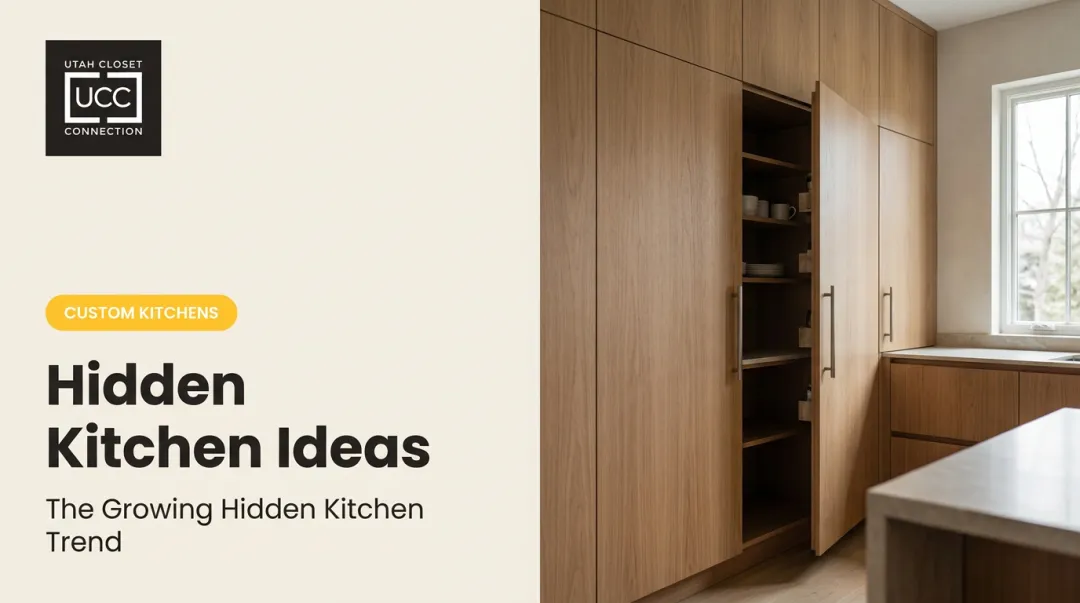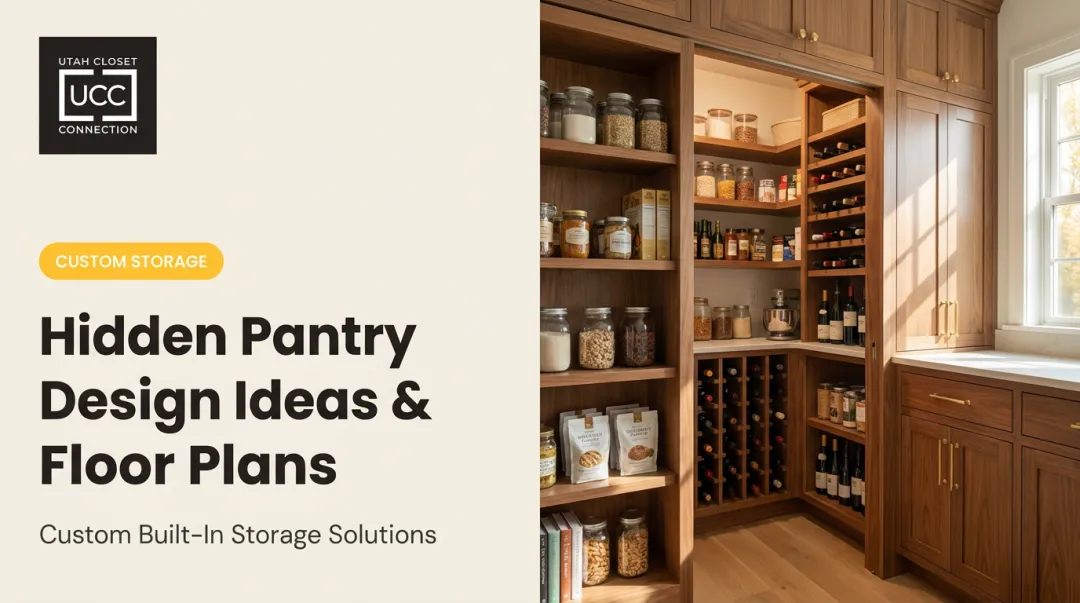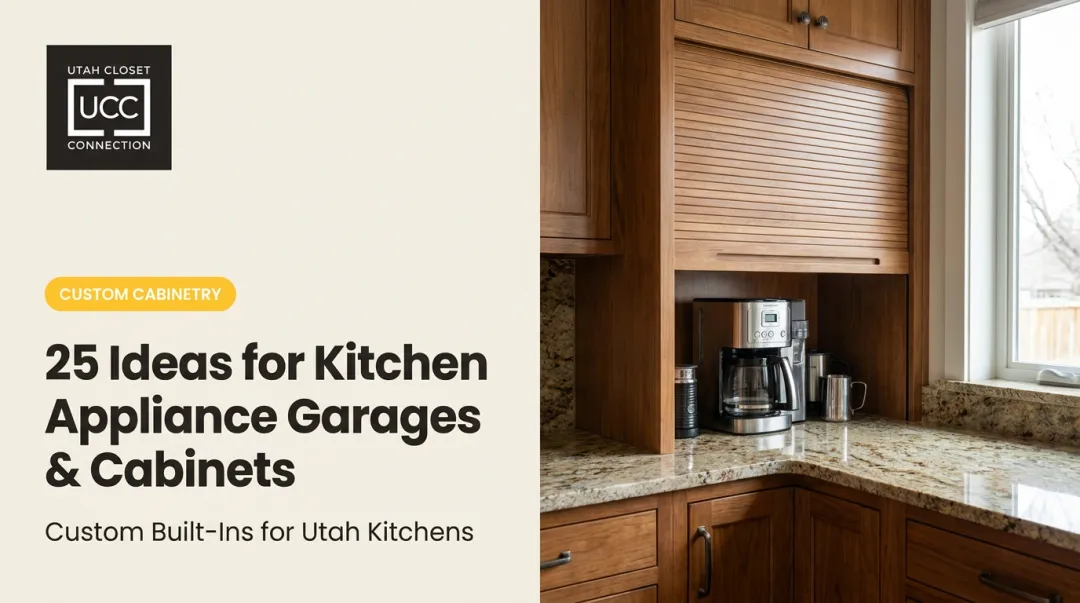
This trend isn't just aesthetic preference. According to NKBA's 2026 Kitchen Trends Report, 60% of surveyed industry professionals identified contemporary and minimalist styles as popular, with 69% pointing to flat slab doors as a rising feature. Concealed design has moved from niche to mainstream.
In this guide, we'll break down what concealed cabinets actually are, the design ideas gaining traction, the hardware that makes them work, and how to plan a project that fits your kitchen and your budget.
Key Takeaways
- Flat, handle-less fronts dominate kitchen trends, using hidden hinges over visible hardware
- Panel-matched pantries and appliances create continuous, wall-like elevations
- Concealed cabinetry blends disguised finishes with recessed wall construction
- Retrofitting existing kitchens works, though new builds achieve more seamless results
- Experienced cabinet makers prevent alignment and durability issues over time
What Are Concealed Kitchen Cabinets?
Concealed kitchen cabinets are cabinetry designed to blend into their surroundings rather than announce themselves. Think flush panels, hidden hardware, and finishes that match the walls or adjacent surfaces so tightly that the cabinet almost vanishes from view.
This is a design description, not a formal construction category. Concealment can happen through:
- Flat-front doors with no visible knobs or pulls
- Panels finished to match wallpaper, paint, or paneling
- Hidden hinges and full-overlay construction that hide gaps
- Doors that retract or slide away entirely
Concealed vs. Recessed: What's the Difference?
Here's where people often get confused. "Recessed" refers to placement, not appearance. A recessed cabinet sits inside a wall cavity so its face lands flush with the surrounding wall surface, rather than protruding outward.
Concealed cabinets frequently use recessed construction to achieve that flush look, but the terms aren't interchangeable. You can have a concealed cabinet that isn't recessed, like a flat-front cabinet mounted normally with disguised hardware. You can also have a recessed cabinet that's still visibly a distinct feature.
The two concepts solve different problems: concealment is about how a cabinet looks, while recessing is about where it lives in the wall.
Benefits of Concealed Kitchen Cabinets
The appeal goes beyond looking sleek in photos. Concealed cabinetry solves real, practical frustrations that homeowners deal with daily.
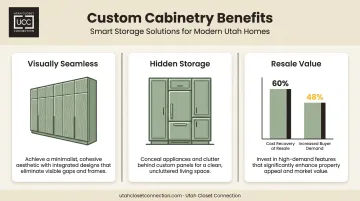
A visually seamless, spacious feel. Eliminating knobs, pulls, and mismatched panel lines removes visual clutter. Kitchens read as calmer and larger, even when square footage stays the same.
Storage without the "cluttered" look. Hidden compartments let you keep everyday items accessible while maintaining a minimalist aesthetic. You're not sacrificing function for form:
- Small appliances stay out of sight but within reach
- Pantry goods are organized without an open, visible wall of boxes and cans
- Charging stations and specialty storage tuck into the design instead of sitting on the counter
Stronger resale appeal. Clean, modern kitchens consistently rank high with buyers. The National Association of Realtors' 2025 Remodeling Impact Report found that kitchen upgrades recover roughly 60% of project cost at resale. It also found that 48% of Realtors reported increased buyer demand for updated kitchens over the prior two years. That data covers kitchen projects broadly, not concealed cabinetry specifically, but it confirms that modern, cohesive kitchens hold real value with buyers. Custom design services, like those offered by Utah Closet Connection, help homeowners achieve this look without sacrificing storage.
Top Concealed Kitchen Cabinet Design Ideas
This is where concealed kitchen design gets fun. Here are the approaches Utah Closet Connection sees homeowners request most often for custom kitchen builds across Salt Lake County and beyond.
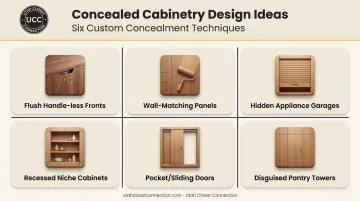
Flush, Handle-less Cabinet Fronts
Push-to-open mechanisms and finger-pull channels eliminate the need for knobs or handles entirely. A light touch pops the door open, and the front stays flat and uninterrupted. This is the single most common way homeowners achieve a hardware-free look without sacrificing usability.
Wall-Matching Cabinet Panels
Finish your cabinet fronts in the same paint, wallpaper, or paneling as the surrounding walls, and the cabinets visually disappear. It's one of the most dramatic concealment techniques because there's no contrast for the eye to latch onto. A pantry door painted to match the adjacent wall reads as wall, not storage.
Hidden Appliance Garages
Tambour or pocket doors conceal countertop appliances like toasters, mixers, and coffee makers behind cabinetry that matches the rest of the kitchen. According to design coverage from Architectural Digest, appliance garages keep small appliances accessible while eliminating countertop clutter, often with a built-in outlet inside for convenience.
Recessed Niche Cabinets
Built-in nooks recessed into the wall create small, purposeful storage: spice cabinets, charging stations, or open display shelving. These tie directly back to the "recessed cabinet" concept, since the cabinet body actually occupies the wall cavity rather than mounting on the surface.
Pocket and Sliding Door Cabinets
Pocket doors slide fully into the cabinet body or wall, so an open door never disrupts your sightline. Unlike a swinging door that juts into the kitchen, a pocket system retracts completely out of the way, which matters most in tight galley kitchens or islands where clearance is limited.
Disguised Pantry and Tower Cabinets
Tall, narrow cabinets, sometimes called "skinny cabinets" in casual searches, are disguised as wall panels to hide bulk pantry storage. This idea has strong backing: NKBA's 2025 trends coverage found that 87% of surveyed industry experts said homeowners want pantries hidden behind cabinet doors or panels, making disguised pantry walls one of the most requested concealed-storage features in modern kitchens.
Materials, Hardware & Mechanisms for Seamless Concealment
Concealment lives and dies on the hardware. Get this wrong, and doors misalign, sag, or stop closing properly within a year.
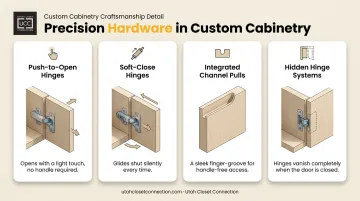
Soft-close and push-to-open hinges make handle-less designs functional. A touch opens the door, and a built-in damper prevents slamming on the way shut. These two functions aren't automatically bundled together, so confirm both are included if you want a fully quiet, hardware-free front.
Integrated or channel pulls offer a middle ground between fully flush, handle-free fronts and traditional hardware. Instead of a knob, a recessed groove along the top or bottom edge of the door gives you a grip point without breaking the flat plane of the cabinet face.
Hardware is only half the equation, though. Matching veneers, laminates, and paint-grade finishes are what allow cabinet fronts to blend with walls or neighboring cabinetry. This is where the "vanishing" effect actually happens.
That vanishing effect only holds up if the hardware behind it disappears too. Hidden hinge systems and full-overlay construction eliminate visible frames and gaps between doors, creating that continuous, unbroken elevation.
A few practical notes on picking hardware:
- Push-to-open hinges, soft-close hinges, and pocket systems each solve a different problem, so don't assume one covers all three
- Confirm door thickness, weight, and clearance requirements before ordering hardware
- Professional-grade mechanisms matter most here, since concealed hardware works constantly and must stay aligned to preserve the illusion
Concealed Cabinets vs. Other Hidden Storage Solutions
Not every hidden storage question is really about kitchen cabinets. Here's how concealed cabinetry compares to a few related solutions.
| Solution | Best used when | Trade-off |
|---|---|---|
| Concealed kitchen cabinets | You want a fully custom, seamless kitchen wall | Higher cost, more planning |
| Recessed medicine cabinets | Wall cavity allows for recessing | Requires structural access; can't always retrofit |
| Surface-mounted mirrored cabinets | Wall cavity has plumbing or structural obstructions | Slightly less flush, but far easier to install |
| Skinny/pantry tower cabinets | You need narrow bulk storage, not full disguise | Functional, but visually simpler than a fully concealed panel |
Recessed medicine cabinets vs. alternatives: When wall cavities can't be modified due to plumbing or framing, surface-mounted mirrored cabinets or built-in wall niches offer similar function without cutting into the wall.
Skinny cabinets: Elsewhere in the kitchen, these narrow pantry or utility units maximize storage in tight spaces, but they don't necessarily disguise themselves visually the way a wall-matched panel does.
When to choose which: If your kitchen layout allows for wall modification and your budget supports full customization, concealed cabinetry delivers the cleanest result.
If you're working with a tighter budget or an existing structure that can't be altered, simpler hidden storage, like a well-placed pantry tower, gets you most of the benefit without the extra cost. A free design consultation with Utah Closet Connection can help you weigh these trade-offs before committing.
Bringing Your Concealed Cabinet Vision to Life
Concealed cabinetry rewards precision. Flush alignment, hidden hardware, and matched finishes only look effortless when the underlying build is exact. Get a measurement off by a few millimeters, and the whole illusion falls apart.
Working with an experienced custom cabinet maker matters here more than in almost any other kitchen project. You need someone who understands:
- Structural support requirements for recessed or built-in sections
- Hardware alignment tolerances for handle-less, push-to-open doors
- Finish-matching techniques across cabinetry, appliance panels, and walls
Utah Closet Connection has been designing and installing custom built-in cabinetry across the Salt Lake City area since 1983, backed by over 50 years of combined team experience.
The company offers a free design consultation covering layout, materials, and hardware options for your space. Installation comes from licensed contractors who understand local building requirements.
Every project comes with a lifetime workmanship warranty. That matters when you're investing in custom joinery designed to look flawless for years, not just at the reveal.
If you're planning a concealed cabinet project in Salt Lake, Utah, Davis, Weber, or Summit County, that's a reasonable place to start the conversation.
Frequently Asked Questions
What is a recessed cabinet?
A recessed cabinet is built into a wall cavity so its face sits flush with the surrounding wall surface, rather than protruding outward. This placement depends on what's inside the wall, since plumbing, electrical, or framing may limit where recessing is possible.
What is an alternative to a recessed medicine cabinet?
Surface-mounted mirrored cabinets or built-in wall niches work well when the wall cavity can't be modified due to plumbing or framing. They offer similar function with far less structural disruption.
What are skinny cabinets called?
These are typically called pantry, utility, or tower cabinets. They're narrow, tall units designed for bulk storage in tight spaces, distinct from disguised wall panels.
How much do concealed kitchen cabinets cost?
Costs vary widely based on materials, hardware, and customization level. Utah Closet Connection offers free design consultations and delivers accurate estimates within 1-2 weeks, making it easy to plan your budget before committing.
Can concealed cabinets be added to an existing kitchen?
Retrofits are possible through panel refacing or custom inserts, provided your existing cabinet boxes are structurally sound. New construction generally allows for a more seamless, fully flush result.
What is the difference between flush and inset cabinets?
Flush cabinets sit level with the surrounding frame or wall, while inset cabinets are recessed within a face frame so the door sits inside it. Both minimize visible gaps, but they achieve it through different construction methods.