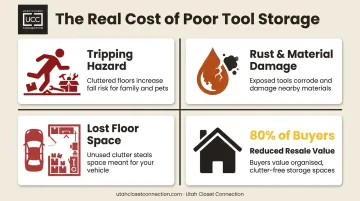
Long-handled tools are some of the hardest items to store in a garage. They're too tall for shelves, too awkward for bins, and too heavy to balance against a wall for long. Left unchecked, they create tripping hazards, rust from ground contact, and eat up floor space you actually need.
This guide covers practical storage options, from $50 weekend builds to fully custom cabinet systems, plus the maintenance habits that keep your tools working longer. Whether you're renting a hook from the hardware store or planning a garage overhaul, there's a solution here that fits your space and budget.
Key Takeaways
- Loose tools on the floor create tripping hazards and accelerate rust from moisture.
- Vertical storage saves floor space and reduces handle warping versus leaning tools flat.
- A basic DIY shovel rack costs $50-$100 and takes about a day to build.
- Custom garage cabinets protect tools from dust, temperature swings, and clutter.
- Garage storage ranks essential or desirable for 80% of home buyers, boosting resale appeal.
Why Proper Storage for Rakes and Shovels Matters
Tools leaning against a wall don't stay put. They slide, they fall, and they end up flat on the floor where someone can trip over them. This risk grows in households with kids or pets running through the garage, or during winter when you're rushing out the door in the dark to grab a snow shovel.
There's also a materials problem tied to how tools rest against surfaces:
- Metal tool heads rust faster on damp concrete, since moisture speeds up oxidation
- Wooden handles absorb humidity over time, leading to mildew or rot
- Overly dry conditions cause the opposite problem: splitting and splinters
Floor space takes a hit too. Every rake and shovel propped against a wall or lying across the floor is space you can't use for your car, a workbench, or bins. In a typical two-car garage, that adds up fast.
Beyond safety and durability, disorganization costs you time. Digging through a pile of tools to find the one you need leads to duplicate purchases, since it's often easier to buy a new rake than locate the old one.
Home buyers notice garage condition too. According to the National Association of Realtors' 2024 report on home buyer preferences, garage storage was rated essential or desirable by at least 80% of surveyed buyers.
If you're prepping a Utah home for sale, an organized garage is one of the easier upgrades that makes a strong first impression.
Top Storage Solutions for Long-Handled Tools
The right storage method depends on how many tools you own, how much wall or ceiling space you have, and what you're willing to spend. Options range from a $15 hook to a full custom cabinet system.
Wall-Mounted Racks and Pegboards
Pegboards remain one of the most flexible options available. Adjustable metal or plastic hooks let you rearrange the layout as your tool collection changes, and most systems work in unconditioned garages without issue.
Slotted wood racks offer a similar benefit with a more built-in feel. These racks use notched wood supports that hold tool handles in place while keeping heads elevated off the floor, which helps prevent rust and reduces clutter along the wall.
Advantages of this approach:
- Costs under $50 for basic hardware in most setups
- Installs easily with just a drill and screws
- Expands or reconfigures as your tool collection grows
Vertical and Ceiling Storage Systems
Ceiling-mounted racks free up wall and floor space entirely. Some models use a pulley system, letting you raise and lower the rack for loading.
Certain reviewed products are rated to hold up to 250 pounds, according to Bob Vila's garage organizer testing, making them useful for bulkier gear. Weight ratings vary by product, so check specs before loading tools onto any single system.
Vertical floor-to-ceiling systems, including PVC pipe racks mounted to a 2x4, keep tools upright in tight corners. This works especially well in smaller garages where wall space is limited but a narrow gap exists between the workbench and the wall.
The trade-off: ceiling systems and vertical builds take more installation effort than a simple hook, and ceiling-mounted units require secure attachment to roof framing, not just drywall.
Custom Garage Storage Cabinets
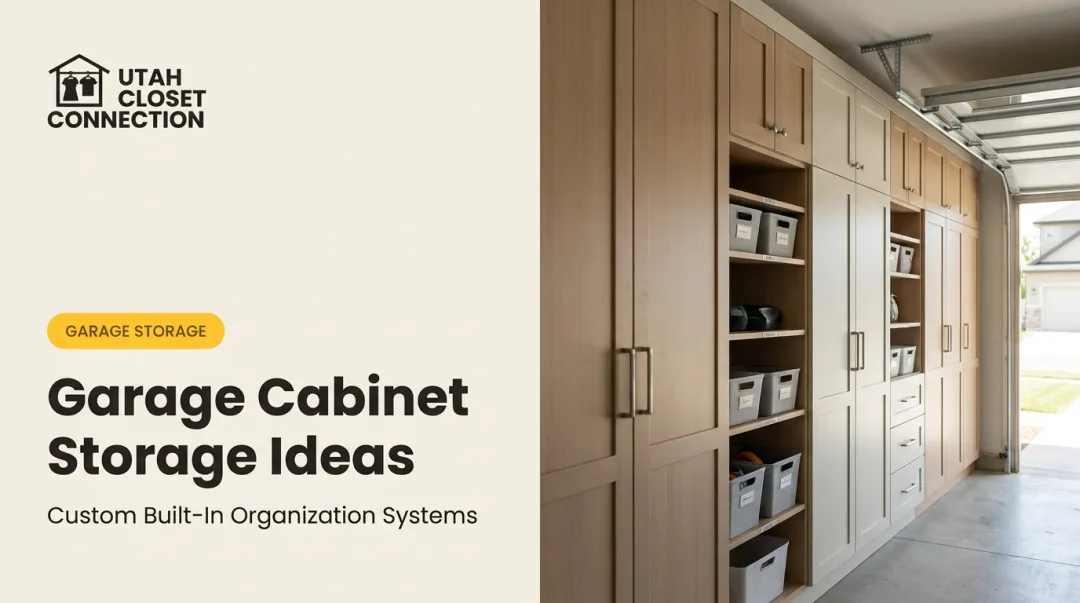
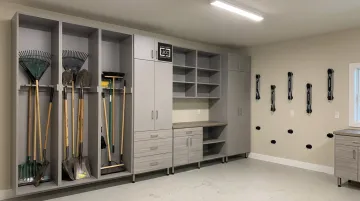
For homeowners who want tools out of sight and protected from dust, custom cabinetry is the more polished option. Tall, narrow compartments can be built specifically to hold rakes, shovels, and other long-handled tools upright, keeping them organized without cluttering the visual space.
This is where a company like Utah Closet Connection comes in. Rather than working from pre-made kits, their design team builds garage systems around your specific tool collection and space, whether that means a slim vertical bay for yard tools or a full wall of modular cabinetry.
Every installation comes with a lifetime workmanship warranty. The process starts with a free design consultation, followed by a quick estimate typically delivered within one to two weeks.
Custom cabinets also shield tools from Utah's seasonal swings better than open racks do. With hot, dry summers and cold winters across the Wasatch Front, enclosed storage limits temperature and dust exposure that can accelerate wear on handles and metal parts over time.
DIY Shovel Rack: Simple Weekend Build
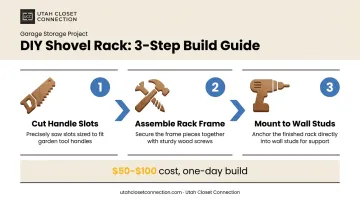
If you're not ready for a full cabinet system, a basic shovel rack is one of the most beginner-friendly garage projects out there. According to Family Handyman's published build, this project costs $50 to $100, takes a full day for a beginner, and holds more than 12 long-handled tools including shovels, rakes, and sledgehammers.
Materials needed:
- One 16 x 48-inch piece of 3/4-inch plywood
- 2x6 lumber for the ledger and projecting supports
- Six 3/8 x 4-1/2-inch lag screws for stud mounting
- 2-inch and 3-inch screws for assembling the rack frame
Three main steps:
- Cut the handle slots into the projecting 2x6 supports, sizing each opening to accommodate different tool widths.
- Assemble the rack frame by attaching the plywood back panel to the 2x6 supports with screws.
- Mount securely to wall studs using the lag screws, making sure the rack sits at a comfortable height for loading and unloading tools.
Pre-drill every hole before driving lag screws. This prevents the wood from splitting and keeps the mounting points strong enough to carry the combined weight of a dozen tools. Locate studs first, and always check for hidden wiring or plumbing before drilling into the wall.
This project suits a handful of tools. For larger collections, Utah Closet Connection designs custom garage systems that combine racks, shelving, and cabinetry into one built-in layout.
Tool Maintenance Tips for Longevity
Storage solves half the problem. The other half is how you treat your tools before they go on the rack.
- Clean and dry tools after every use. Wet tools rust fast, so metal heads should be wiped down and completely dry before storage, according to UC Agriculture and Natural Resources' garden tool guidance.
- Oil wooden handles periodically. A light coat of linseed or mineral oil prevents cracking, especially given Utah's hot summers and cold, dry winters.
- Avoid direct concrete contact. Storing tools on or near a damp garage floor invites moisture damage. Keep tool heads elevated on a rack rather than leaning flat against the ground.
- Choose a ventilated storage spot. Good airflow around stored tools helps prevent the mildew and rot that come from prolonged dampness on wooden handles.
None of these steps take more than a few minutes. Skipping them for even a season is often what leads to a rusted rake head or a handle that splits the next time you lean into it.
DIY vs. Custom Garage Storage: Making the Right Choice
Both approaches solve the same core problem. The difference comes down to time, budget, and how much you want the garage to look finished versus functional.
| Factor | DIY Rack | Custom Cabinets |
|---|---|---|
| Upfront cost | Roughly $50-$100 for a basic build | Higher initial investment |
| Time to complete | About one day for a beginner | Design consultation plus installation scheduling |
| Best for | Small tool collections, tight budgets | Larger collections, multi-use garages, resale prep |
| Appearance | Visible, functional | Enclosed, dust-free, streamlined |
| Long-term durability | Depends on build quality and materials | Backed by warranty and professional construction |
A DIY rack makes sense if you own a handful of tools and don't mind an open, exposed look. It's affordable, quick, and gets the job done for straightforward storage needs.
Custom storage is the better fit if you're combining tool storage with cabinets, a workbench, and overhead racks into one cohesive system. It's also the right call if you want the garage to look finished, not just functional.
Utah Closet Connection offers a free design consultation for exactly this kind of project. The team walks through your space and tool inventory, then delivers a tailored plan backed by a lifetime workmanship warranty.
Frequently Asked Questions
What is the best way to store rakes and shovels in a garage?
For a handful of tools, wall-mounted racks or vertical storage work well and cost little. Larger or mixed tool collections benefit more from custom cabinetry, which keeps everything upright, protected, and out of sight.
How do you keep garden tools from rusting in storage?
Clean and dry tools thoroughly after every use before putting them away. Store them in a moisture-free, well-ventilated area, and apply a light coat of oil to metal heads periodically.
Should I store shovels and rakes vertically or horizontally?
Vertical storage is preferred. It saves floor space, keeps tool heads off the ground, and reduces handle warping that can happen when tools lie flat for long periods.
How much space do I need for a tool storage rack or cabinet?
A basic wall rack needs only a few feet of open wall space to hold a dozen tools. Custom cabinets require pre-measurement, which is typically handled during a free design consultation.
Can custom garage cabinets replace open tool racks?
Yes. Custom cabinets can fully replace open racks, offering enclosed, dust-free storage that also protects tools from Utah's seasonal temperature and humidity swings.
How do I organize a small garage for tools and equipment?
Combine ceiling storage, pegboards, and slim vertical cabinets to make the most of limited square footage. This layered approach frees up floor space while keeping tools easy to reach.